Homalolepis ferruginea
Homalolepis ferruginea · Accepted scientific name
Scientific literature: Very Sparse (4 studies) · ★☆☆☆☆
Homalolepis ferruginea, scientifically known as Homalolepis ferruginea, is a remarkable medicinal plant valued for its unique therapeutic properties. Often utilized in traditional healing practices, this species contains bioactive compounds believed to offer antioxidant and anti-inflammatory benefits, making it a subject of significant interest in ethnobotanical research and pharmacology.
- Family
- Simaroubaceae
- Native range
- Southern America
- Parts used
- Not available
- Common names
- Not available
- Scientific synonyms
- Picrodendron Calunga · Simaba Ferruginea Var. Blanchetii · 6 more
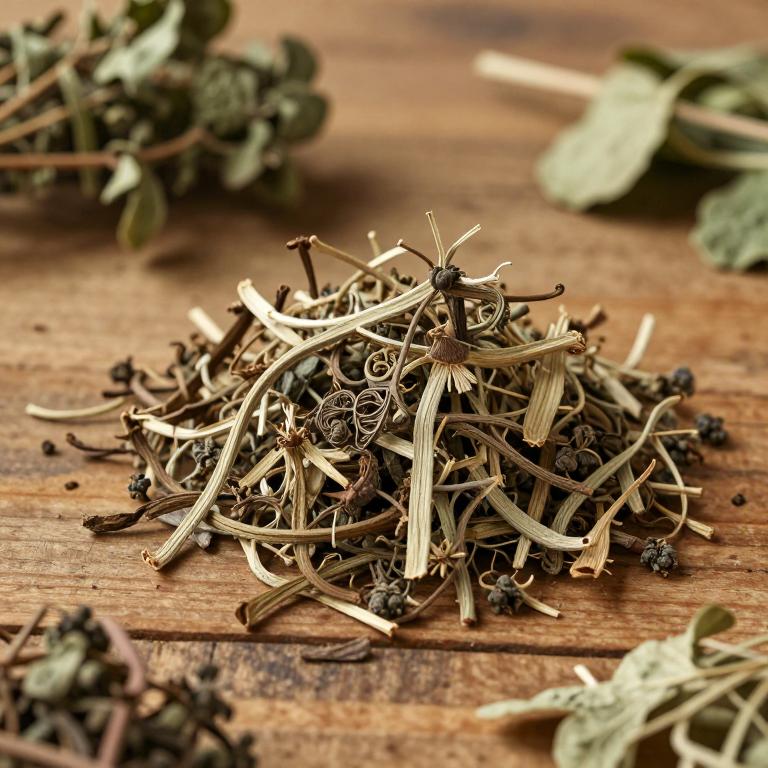
Names and Synonyms
Scientific Names
Accepted name
Homalolepis ferrugineaSynonyms
- Picrodendron calunga
- Simaba ferruginea var. blanchetii
- Aruba ferruginea
- Zwingera ferruginea
- Quassia ferruginea
- Homalolepis blanchetii
- Simaba ferruginea
- Simaba blanchetii
Sources: Wikidata, Catalogue of Life
Taxonomical Classification
This plant belongs to the kingdom Plantae and the phylum Streptophyta, falling under the class Equisetopsida and subclass Magnoliidae. Within the order Sapindales, it is classified under the family Simaroubaceae. Specifically, its taxonomic placement is within the genus Homalolepis.
| Rank | Classification |
|---|---|
| Kingdom | Plantae |
| Phylum | Streptophyta |
| Class | Equisetopsida |
| Subclass | Magnoliidae |
| Order | Sapindales |
| Family | Simaroubaceae |
| Genus | Homalolepis |
Sources: The World Checklist of Vascular Plants (WCVP)
Distribution
This plant exhibits a wide and varied geographical distribution across several major regions of Brazil. It can be found growing within the diverse ecosystems of Brazil North. Additionally, its presence extends into the landscapes of Brazil Northeast. The species is also documented throughout the territories of Brazil West-Central. Finally, its range includes the specific environmental zones located in Brazil Southeast.
| Region | Area |
|---|---|
| Brazil | Brazil West-Central |
| Brazil | Brazil Northeast |
| Brazil | Brazil Southeast |
| Brazil | Brazil North |
Sources: The World Checklist of Vascular Plants (WCVP)
Botanical Identification
Ecology
The ecology of Homalolepis ferruginea is characterized by its adaptability to diverse Brazilian biomes, spanning from the semi-arid Caatinga (stricto sensu) to the more seasonal Cerrado (lato sensu) and the humid environments of the Floresta Ombrófila (Rainforest). This broad ecological distribution allows the species to inhabit varying moisture regimes and vegetation structures. Regarding its topographic distribution, the species is primarily found at low altitudes, with a mean elevational range of approximately 10 m AMSL (meters above sea level), indicating a preference for lowland ecosystems.
- Elevational range mean:
- 10 m AMSL
- Habitat :
- Caatinga (stricto sensu), Cerrado (lato sensu), Floresta Ombrófila (= Floresta Pluvial)
Life history
The life history of Homalolepis ferruginea is characterized by a perennial lifecycle, allowing the plant to persist in its environment over multiple growing seasons. As a perennial species, it does not complete its life cycle in a single season like annuals or two seasons like biennials, but instead maintains established vegetative structures that facilitate long-term survival and repeated reproductive efforts. This enduring growth habit enables the plant to establish a stable presence within its ecological niche, accumulating resources over several years to support its physiological functions and periodic flowering cycles.
- Lifecycle :
- perennial
Morphology
The morphology of Homalolepis ferruginea is characterized by a woody growth form, specifically manifesting as a tree. It functions as an independent organism, lacking any parasitic tendencies, and maintains a terrestrial habitat rather than being aquatic or semiaquatic. Although it possesses qualities often associated with climbing structures, its growth habit is classified as self-supporting, rather than acting as an obligatory or facultative liana or vine. Additionally, the plant is strictly terrestrial in its ecological positioning, showing no epiphytic tendencies such as holoepiphytic or hemiepiphytic growth.
- Aquatic :
- terrestrial
- Climber :
- self-supporting
- Epiphyte :
- terrestrial
- Growth form :
- tree
- Parasite :
- independent
- Woodiness :
- woody
Physiology
The physiology of Homalolepis ferruginea is characterized by specialized metabolic processes adapted to its specific ecological niche, though it does not possess the biological mechanisms required to function as a nitrogen fixer. Unlike legumes or other actinorhizal plants that maintain symbiotic relationships with bacteria to convert atmospheric nitrogen into ammonia, this species relies on the uptake of inorganic nitrogen, such as nitrates and ammonium, directly from the soil through its root system. Its nutritional strategy is strictly dependent on the availability of nitrogenous compounds within the substrate, as it lacks the specialized root nodules or the necessary enzymatic pathways, such as nitrogenase activity, to facilitate biological nitrogen fixation. Consequently, its growth and physiological vigor are closely tied to the nitrogen cycling and nutrient concentrations of its immediate environment.
- Nitrogen fixer :
- no
Sources: Global Inventory of Floras and Traits (GIFT)
Chemicals
Homalolepis ferruginea has 2 reported phytochemicals identified across 0 scientific publications and several other databases. The most consistently reported chemicals include 4-methoxycanthin-6-one, Canthin-6-one.
| Chemical | Supporting sources | Consensus |
|---|---|---|
| 4-methoxycanthin-6-one | 1 supporting sources | ★☆☆☆☆ |
| Canthin-6-one | 1 supporting sources | ★☆☆☆☆ |
4-methoxycanthin-6-one
- Zeitschrift fur Naturforschung. C, Journal of biosciences
Canthin-6-one
- Zeitschrift fur Naturforschung. C, Journal of biosciences
Activities
Homalolepis ferruginea has 2 reported activities identified across 0 scientific publications and several other databases. The most consistently reported activities include Antinociceptive, Antiulcerogenic.
| Activity | Supporting sources | Consensus |
|---|---|---|
| Antinociceptive | 1 supporting sources | ★☆☆☆☆ |
| Antiulcerogenic | 1 supporting sources | ★☆☆☆☆ |
Antinociceptive
- Zeitschrift fur Naturforschung. C, Journal of biosciences
Antiulcerogenic
- Zeitschrift fur Naturforschung. C, Journal of biosciences