Burma Lancewood
Homalium tomentosum · Accepted scientific name
Scientific literature: Very Sparse (14 studies) · ★☆☆☆☆
Burma Lancewood, scientifically known as Homalium tomentosum, is a versatile medicinal plant native to Southeast Asia. Renowned for its therapeutic properties, various parts of this tree are utilized in traditional medicine to treat ailments ranging from digestive issues to inflammatory conditions, offering significant potential for modern pharmacological research.
- Family
- Salicaceae
- Native range
- Asia-Tropical
- Parts used
- Leaf
- Common names
- Burma Lancewood
- Scientific synonyms
- Blakwellia Tomentosa · Blakwellia Spiralis
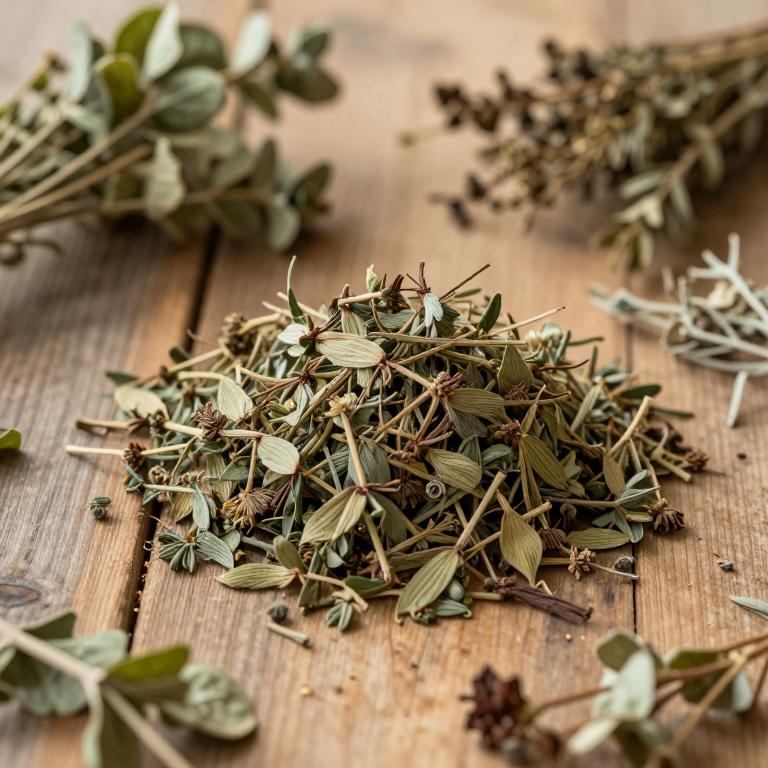
Names and Synonyms
Common Names
- Burma Lancewood
Scientific Names
Accepted name
Homalium tomentosumSynonyms
- Blakwellia tomentosa
- Blakwellia spiralis
Sources: Wikidata, Catalogue of Life
Taxonomical Classification
This plant belongs to the kingdom Plantae and the phylum Streptophyta, falling under the class Equisetopsida and subclass Magnoliidae. It is further classified within the order Malpighiales and the family Salicaceae. Ultimately, it is identified by the genus Homalium, specifically as the species Homalium tomentosum.
| Rank | Classification |
|---|---|
| Kingdom | Plantae |
| Phylum | Streptophyta |
| Class | Equisetopsida |
| Subclass | Magnoliidae |
| Order | Malpighiales |
| Family | Salicaceae |
| Genus | Homalium |
Sources: The World Checklist of Vascular Plants (WCVP)
Distribution
This plant exhibits a broad geographical distribution across parts of South and Southeast Asia. Within the Indian Subcontinent, it can be found growing in both India and Bangladesh. Its presence extends further into the Indo-China region, where it inhabits several distinct countries. Specifically, the species is documented to grow in Cambodia and Laos. Additionally, its range includes the nation of Myanmar, completing its regional footprint.
| Region | Area |
|---|---|
| Indian Subcontinent | Bangladesh |
| Indian Subcontinent | India |
| Indo-China | Cambodia |
| Indo-China | Laos |
| Indo-China | Myanmar |
| Indo-China | Thailand |
| Indo-China | Vietnam |
| Malesia | Jawa |
| Malesia | Lesser Sunda Is. |
| Malesia | Malaya |
Sources: The World Checklist of Vascular Plants (WCVP)
Botanical Identification
Life history
The life history of Homalium tomentosum is characterized by its status as a perennial plant, allowing it to persist through multiple growing seasons and establish a long-term presence in its natural habitat. As a deciduous species, it undergoes a seasonal cycle of shedding its foliage, a physiological adaptation that typically helps the plant manage resource conservation or environmental stressors during specific periods of the year. This combination of a multi-year lifespan and a seasonal shedding pattern dictates its rhythmic growth and survival strategies within its ecosystem.
- Deciduousness :
- deciduous
- Lifecycle :
- perennial
Morphology
The morphology of Homalium tomentosum is characterized by its significant stature and structural complexity, typically manifesting as a large tree with a mean plant height of approximately 25 m. In terms of its growth form, the species is classified as a tree, exhibiting a robust and woody constitution. While its primary structure is that of a woody perennial, its climbing tendencies are identified as self-supporting, allowing it to maintain its vertical orientation within its ecological niche.
- Climber :
- self-supporting
- Growth form :
- tree
- Plant height mean:
- 25 m
- Woodiness :
- woody
Physiology
The physiology of Homalium tomeentum is characterized by its metabolic processes and structural adaptations designed for survival in specific ecological niches. As a woody shrub or small tree, its physiological functions are centered around efficient photosynthesis and nutrient acquisition within its native habitats. Regarding its nutrient cycling capabilities, the plant does not function as a nitrogen fixer; it lacks the symbiotic relationship with diazotrophic bacteria, such as Rhizobium, necessary to convert atmospheric nitrogen into bioavailable forms. Instead, its nitrogen uptake is dependent on the availability of nitrates and ammonium ions present in the soil. The plant's physiological vigor is further supported by its secondary metabolism, which involves the synthesis of various bioactive compounds, including alkaloids and terpenoids, which serve as defense mechanisms against herbivory and environmental stressors. These metabolic pathways are closely integrated with its transpiration rates and water-use efficiency, ensuring homeostasis during varying seasonal shifts.
- Nitrogen fixer :
- no
Reproduction
The reproduction of Homalium tomentosum is centered around the production and dispersal of its seeds, which exhibit specific morphological characteristics regarding their weight. The seeds produced by this species are relatively small and lightweight, with a recorded seed mass mean of 0.004485 g. Within the population, there is a measurable degree of variation in seed size, as indicated by a minimum seed mass of 0.0026 g and a maximum seed mass of 0.00637 g. These quantitative traits suggest a standardized reproductive output that facilitates the plant's ability to colonize its environment through the dispersal of these finely scaled units.
- Seed mass max:
- 0.00637 g
- Seed mass mean:
- 0.004485 g
- Seed mass min:
- 0.0026 g
Sources: Global Inventory of Floras and Traits (GIFT)
Plant Parts
Homalium tomentosum has 1 reported plant parts identified across 1 scientific publications and several other databases that are studied for medicinal purposes. The most consistently reported plant part include leaf.
| Plant part | Supporting sources | Consensus |
|---|---|---|
| Leaf | 1 supporting sources | ★☆☆☆☆ |
Leaf
- Natural product research
Chemicals
Homalium tomentosum has 8 reported phytochemicals identified across 1 scientific publications and several other databases. The most consistently reported chemicals include (+)-Borneol, 2-Coumaranone, D-allose, Flavonoid, Flavonoids.
| Chemical | Supporting sources | Consensus |
|---|---|---|
| (+)-Borneol | 1 supporting sources | ★☆☆☆☆ |
| 2-Coumaranone | 1 supporting sources | ★☆☆☆☆ |
| D-allose | 1 supporting sources | ★☆☆☆☆ |
| Flavonoid | 1 supporting sources | ★☆☆☆☆ |
| Flavonoids | 1 supporting sources | ★☆☆☆☆ |
| Levoglucosenone | 1 supporting sources | ★☆☆☆☆ |
| Phenols | 1 supporting sources | ★☆☆☆☆ |
| salicyl alcohol | 1 supporting sources | ★☆☆☆☆ |
(+)-Borneol
- Spectrochimica acta. Part A, Molecular and biomolecular spectroscopy
2-Coumaranone
- Spectrochimica acta. Part A, Molecular and biomolecular spectroscopy
D-allose
- Spectrochimica acta. Part A, Molecular and biomolecular spectroscopy
Flavonoid
- Natural product research
Flavonoids
- Spectrochimica acta. Part A, Molecular and biomolecular spectroscopy
Levoglucosenone
- Spectrochimica acta. Part A, Molecular and biomolecular spectroscopy
Phenols
- Spectrochimica acta. Part A, Molecular and biomolecular spectroscopy
salicyl alcohol
- Spectrochimica acta. Part A, Molecular and biomolecular spectroscopy
Conditions
Homalium tomentosum has 1 reported investigations on conditions identified across 1 scientific publications and several other databases. The most consistently reported conditions include liver cirrhosis.
| Condition | Supporting sources | Consensus |
|---|---|---|
| Liver cirrhosis | 1 supporting sources | ★☆☆☆☆ |
Liver cirrhosis
- Spectrochimica acta. Part A, Molecular and biomolecular spectroscopy
Preparations
Homalium tomentosum has 10 reported preparations identified across 1 scientific publications and several other databases. The most consistently reported preparations include chloroform extract of bark, chloroform extract of leaf, ethyl acetate extract of bark, ethyl acetate extract of leaf, ethyl-acetate extracted fractions of bark (HTEB).
| Preparation | Supporting sources | Consensus |
|---|---|---|
| Chloroform extract of bark | 1 supporting sources | ★☆☆☆☆ |
| Chloroform extract of leaf | 1 supporting sources | ★☆☆☆☆ |
| Ethyl acetate extract of bark | 1 supporting sources | ★☆☆☆☆ |
| Ethyl acetate extract of leaf | 1 supporting sources | ★☆☆☆☆ |
| Ethyl-acetate extracted fractions of bark (hteb) | 1 supporting sources | ★☆☆☆☆ |
| Ethyl-acetate extracted fractions of leaves (htel) | 1 supporting sources | ★☆☆☆☆ |
| Hexane extract of bark | 1 supporting sources | ★☆☆☆☆ |
| Hexane extract of leaf | 1 supporting sources | ★☆☆☆☆ |
| Methanol extract of bark | 1 supporting sources | ★☆☆☆☆ |
| Methanol extract of leaf | 1 supporting sources | ★☆☆☆☆ |
Chloroform extract of bark
- Natural product research
Chloroform extract of leaf
- Natural product research
Ethyl acetate extract of bark
- Natural product research
Ethyl acetate extract of leaf
- Natural product research
Ethyl-acetate extracted fractions of bark (hteb)
- Spectrochimica acta. Part A, Molecular and biomolecular spectroscopy
Ethyl-acetate extracted fractions of leaves (htel)
- Spectrochimica acta. Part A, Molecular and biomolecular spectroscopy
Hexane extract of bark
- Natural product research
Hexane extract of leaf
- Natural product research
Methanol extract of bark
- Natural product research
Methanol extract of leaf
- Natural product research