conessi-bark
Holarrhena floribunda · Accepted scientific name
Scientific literature: Very Sparse (28 studies) · ★☆☆☆☆
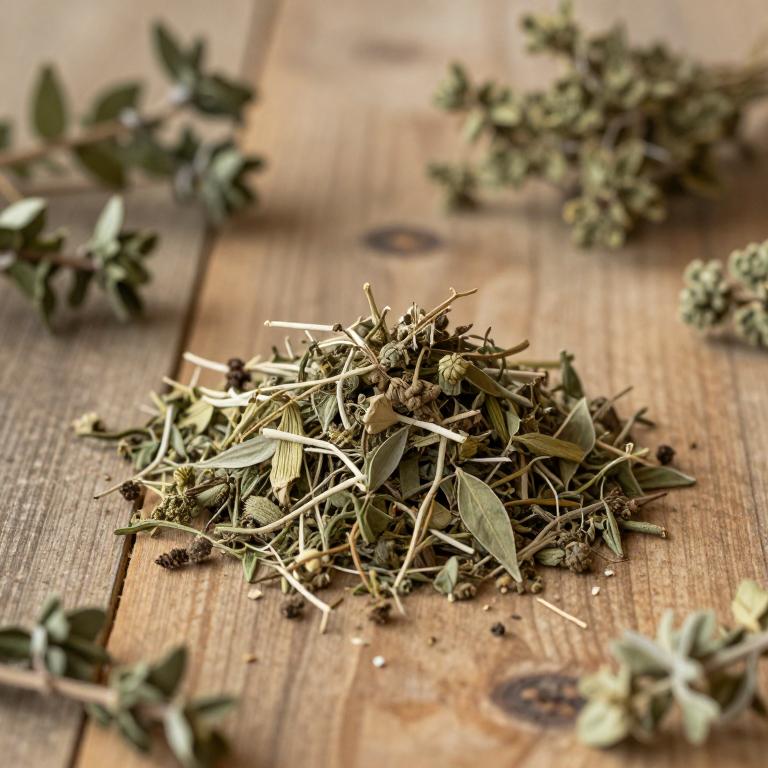
conessi-bark, scientifically known as Holarrhena floribunda, is a remarkable medicinal plant native to tropical regions. Renowned for its diverse therapeutic properties, it is frequently utilized in traditional healing to treat inflammation and infections. Understanding its botanical characteristics and bioactive compounds is essential for exploring its potential in modern pharmacology.
Names and Synonyms
Common Names
- conessi-bark
- false rubbertree
- kurchibark
Scientific Names
Accepted name
Holarrhena floribundaSynonyms
- Holarrhena floribunda var. tomentella
- Holarrhena ovata
- Holarrhena wulfsbergii
- Rondeletia floribunda
- Holarrhena africana
Regional and Traditional Names
French:
- holarrhène
- holarrhène du Sénégal
Sources: Wikidata, Catalogue of Life
Taxonomical Classification
This plant belongs to the kingdom Plantae and is classified under the phylum Streptophyta and the class Equisetopsida. Within the subclass Magnoliidae, it is further organized into the order Gentianaales and the family Apocynaceae. Finally, it is identified by the genus Holarrhena, specifically the species Holarrhena floribunda.
| Rank | Classification |
|---|---|
| Kingdom | Plantae |
| Phylum | Streptophyta |
| Class | Equisetopsida |
| Subclass | Magnoliidae |
| Order | Gentianales |
| Family | Apocynaceae |
| Genus | Holarrhena |
Sources: The World Checklist of Vascular Plants (WCVP)
Distribution
This plant, known scientifically as Holarrhena floribunda, possesses a specific distribution across the West Tropical Africa region. Its presence can be documented within the borders of Benin. Furthermore, it is found growing in the territories of Burkina and Gambia. The species also extends its range into the country of Ghana. Finally, its geographical reach includes the nation of Guinea-Bissau.
| Region | Area |
|---|---|
| West Tropical Africa | Benin |
| West Tropical Africa | Burkina |
| West Tropical Africa | Gambia |
| West Tropical Africa | Ghana |
| West Tropical Africa | Guinea-Bissau |
| West Tropical Africa | Guinea |
| West Tropical Africa | Ivory Coast |
| West Tropical Africa | Liberia |
| West Tropical Africa | Mali |
| West Tropical Africa | Nigeria |
Sources: The World Checklist of Vascular Plants (WCVP)
Botanical Identification
Life history
The life history of Holarrhena floribunda is characterized by its status as a perennial species, allowing it to persist in its ecosystem over many growing seasons. Regarding its structural growth habit, the plant exhibits characteristics of both a phanerophyte, as it develops significant woody stems that elevate its photosynthetic organs above the ground, and a nanophanerophyte, reflecting its capacity for smaller-scale woody growth patterns.
- Life form :
- nanophanerophyte
- Life form :
- phanerophyte
- Lifecycle :
- perennial
Morphology
The morphology of Holarrhena floribunda is characterized by a robust growth form, specifically classified as a tree. This woody species exhibits a significant vertical presence, with plant heights ranging from a minimum of approximately 1.52 meters to a maximum of 15.24 meters, maintaining an average height of 15 meters. It is a terrestrial plant that functions as an independent organism, showing no parasitic behavior, and it does not exist as an epiphyte. Although it possesses a self-supporting structural habit rather than acting as a liana or vine, its substantial woody architecture allows it to maintain its upright stature within its ecosystem.
- Aquatic :
- terrestrial
- Climber :
- self-supporting
- Epiphyte :
- terrestrial
- Growth form :
- tree
- Parasite :
- independent
- Plant height max:
- 15.24018532 m
- Plant height mean:
- 15 m
- Plant height min:
- 1.524018532 m
- Woodiness :
- woody
Physiology
The physiology of Holarrhrena floribunda is characterized by metabolic processes centered on nutrient acquisition and reproductive development. In terms of its nitrogen cycle interactions, the plant functions as a non-nitrogen fixer, meaning it does not possess the symbiotic relationship with diazotrophic bacteria necessary to convert atmospheric nitrogen into ammonia; instead, it relies on the uptake of dissolved nitrates and ammonium from the soil through its root system. Its metabolic pathways are optimized for the assimilation of organic compounds to support its growth cycles and the energetic demands of its flowering stages. The plant's internal regulation involves complex hormonal signaling to coordinate seasonal physiological shifts, ensuring that resource allocation is directed toward biomass production and floral emergence based on environmental stimuli.
- Nitrogen fixer :
- no
Reproduction
Reproduction in Hallorrhœna floribunda is characterized by specific reproductive parameters, including the presence of self-fertilization, which allows the plant to complete its life cycle through autonomous means. The seeds produced by this species exhibit highly consistent physical dimensions, with a recorded seed volume that remains constant at a minimum, maximum, and mean value of 16 mm³. Similarly, the seed mass displays no variability in the measured data, maintaining a uniform mass across the minimum, maximum, and mean values of 0.01632 g.
- Seed mass mean:
- 0.01632 g
- Seed volume max:
- 16 mm³
- Self fertilization :
- present
Sources: Global Inventory of Floras and Traits (GIFT)
Plant Parts
Holarrhena floribunda has 2 reported plant parts identified across 3 scientific publications and several other databases that are studied for medicinal purposes. The most consistently reported plant part include stem, leaf.
| Plant part | Supporting sources | Consensus |
|---|---|---|
| Stem | 2 supporting sources | ★☆☆☆☆ |
| Leaf | 1 supporting sources | ★☆☆☆☆ |
Stem
- Journal of natural products
- Advances in pharmacological and pharmaceutical sciences
Leaf
- Molecules (Basel, Switzerland)
Chemicals
Holarrhena floribunda has 10 reported phytochemicals identified across 3 scientific publications and several other databases. The most consistently reported chemicals include conessine, Conessimine, ETHYL ACETATE, Holadienine, Holadysamine.
| Chemical | Supporting sources | Consensus |
|---|---|---|
| conessine | 2 supporting sources | ★☆☆☆☆ |
| Conessimine | 1 supporting sources | ★☆☆☆☆ |
| ETHYL ACETATE | 1 supporting sources | ★☆☆☆☆ |
| Holadienine | 1 supporting sources | ★☆☆☆☆ |
| Holadysamine | 1 supporting sources | ★☆☆☆☆ |
| Holonamine | 1 supporting sources | ★☆☆☆☆ |
| Isoconessimine | 1 supporting sources | ★☆☆☆☆ |
| Lupeol | 1 supporting sources | ★☆☆☆☆ |
| PETROLEUM ETHER | 1 supporting sources | ★☆☆☆☆ |
| methanol | 1 supporting sources | ★☆☆☆☆ |
conessine
- Advances in pharmacological and pharmaceutical sciences
- Molecules (Basel, Switzerland)
Conessimine
- Molecules (Basel, Switzerland)
ETHYL ACETATE
- Advances in pharmacological and pharmaceutical sciences
Holadienine
- Advances in pharmacological and pharmaceutical sciences
Holadysamine
- BioMed research international
Holonamine
- Advances in pharmacological and pharmaceutical sciences
Isoconessimine
- Molecules (Basel, Switzerland)
Lupeol
- Journal of natural products
PETROLEUM ETHER
- Advances in pharmacological and pharmaceutical sciences
methanol
- Advances in pharmacological and pharmaceutical sciences
Activities
Holarrhena floribunda has 3 reported activities identified across 3 scientific publications and several other databases. The most consistently reported activities include Antimalarial, Antibacterial, Antitumor.
| Activity | Supporting sources | Consensus |
|---|---|---|
| Antimalarial | 2 supporting sources | ★☆☆☆☆ |
| Antibacterial | 1 supporting sources | ★☆☆☆☆ |
| Antitumor | 1 supporting sources | ★☆☆☆☆ |
Antimalarial
- African journal of traditional, complementary, and alternative medicines : AJTCAM
- Journal of natural products
Antibacterial
- African journal of traditional, complementary, and alternative medicines : AJTCAM
Antitumor
- Phytomedicine : international journal of phytotherapy and phytopharmacology
Conditions
Holarrhena floribunda has 4 reported investigations on conditions identified across 3 scientific publications and several other databases. The most consistently reported conditions include Buruli Ulcer, Plasmodium falciparum, malaria, wounds.
| Condition | Supporting sources | Consensus |
|---|---|---|
| Buruli ulcer | 1 supporting sources | ★☆☆☆☆ |
| Plasmodium falciparum | 1 supporting sources | ★☆☆☆☆ |
| Malaria | 1 supporting sources | ★☆☆☆☆ |
| Wounds | 1 supporting sources | ★☆☆☆☆ |
Buruli ulcer
- BioMed research international
Plasmodium falciparum
- Journal of natural products
Malaria
- African journal of traditional, complementary, and alternative medicines : AJTCAM
Wounds
- Advances in pharmacological and pharmaceutical sciences
Preparations
Holarrhena floribunda has 4 reported preparations identified across 3 scientific publications and several other databases. The most consistently reported preparations include Extracts of the stem barks, alkaloidal extract of the aerial parts, extracts from the bark, extracts from the leaves.
| Preparation | Supporting sources | Consensus |
|---|---|---|
| Extracts of the stem barks | 1 supporting sources | ★☆☆☆☆ |
| Alkaloidal extract of the aerial parts | 1 supporting sources | ★☆☆☆☆ |
| Extracts from the bark | 1 supporting sources | ★☆☆☆☆ |
| Extracts from the leaves | 1 supporting sources | ★☆☆☆☆ |
Extracts of the stem barks
- Journal of natural products
Alkaloidal extract of the aerial parts
- BioMed research international
Extracts from the bark
- Molecules (Basel, Switzerland)
Extracts from the leaves
- Molecules (Basel, Switzerland)