Hofmeisteria schaffneri
Hofmeisteria schaffneri · Accepted scientific name
Scientific literature: Very Sparse (7 studies) · ★☆☆☆☆
Hofmeisteria schaffneri, scientifically known as Hofmeisteria schaffneri, is a remarkable medicinal plant native to tropical regions. Renowned for its diverse therapeutic properties, it is frequently utilized in traditional medicine to treat various ailments. Understanding its botanical characteristics and bioactive compounds is essential for exploring its significant pharmacological potential.
- Family
- Asteraceae
- Native range
- Northern America
- Parts used
- Not available
- Common names
- Not available
- Scientific synonyms
- Fleischmannia Schaffneri
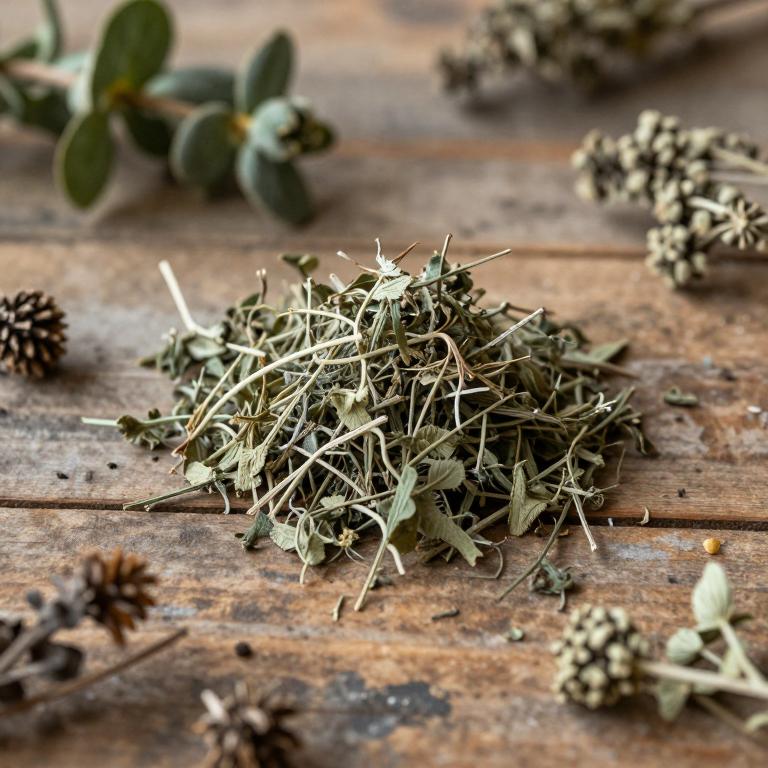
Names and Synonyms
Scientific Names
Accepted name
Hofmeisteria schaffneriSynonyms
- Fleischmannia schaffneri
Sources: Wikidata
Taxonomical Classification
This plant belongs to the kingdom Plantae and the phylum Streptophyta. Within the class Equisetopsida and subclass Magnoliidae, it is categorized under the order Asterales. Finally, it is classified under the family Asteraceae within the genus Hofmeisteria.
| Rank | Classification |
|---|---|
| Kingdom | Plantae |
| Phylum | Streptophyta |
| Class | Equisetopsida |
| Subclass | Magnoliidae |
| Order | Asterales |
| Family | Asteraceae |
| Genus | Hofmeisteria |
Sources: The World Checklist of Vascular Plants (WCVP)
Distribution
This plant is native to specific regions within the country of Mexico. Its geographical distribution is primarily concentrated in three distinct areas. Specifically, it can be found growing throughout Mexico Central. Additionally, the species is documented within the territories of Mexico Northeast. Finally, the plant's presence extends into the regions of Mexico Southwest.
| Region | Area |
|---|---|
| Mexico | Mexico Central |
| Mexico | Mexico Northeast |
| Mexico | Mexico Southwest |
Sources: The World Checklist of Vascular Plants (WCVP)
Chemicals
Hofmeisteria schaffneri has 4 reported phytochemicals identified across 0 scientific publications and several other databases. The most consistently reported chemicals include 3',4',4a',9a'-tetrahydro-6,7'-dimethylspiro[benzofuran-3(2H),2'-pyrano[2,3-b]benzofuran]-2,4a'-diol, Euparin, beta-carotene, hofmeisterin.
| Chemical | Supporting sources | Consensus |
|---|---|---|
| 3',4',4a',9a'-tetrahydro-6,7'-dimethylspiro[benzofuran-3(2H),2'-pyrano[2,3-b]benzofuran]-2,4a'-diol | 1 supporting sources | ★☆☆☆☆ |
| Euparin | 1 supporting sources | ★☆☆☆☆ |
| beta-carotene | 1 supporting sources | ★☆☆☆☆ |
| hofmeisterin | 1 supporting sources | ★☆☆☆☆ |
3',4',4a',9a'-tetrahydro-6,7'-dimethylspiro[benzofuran-3(2H),2'-pyrano[2,3-b]benzofuran]-2,4a'-diol
- Journal of natural products
Euparin
- Journal of natural products
beta-carotene
- Journal of natural products
hofmeisterin
- Journal of natural products
Conditions
Hofmeisteria schaffneri has 1 reported investigations on conditions identified across 0 scientific publications and several other databases. The most consistently reported conditions include pain.
| Condition | Supporting sources | Consensus |
|---|---|---|
| Pain | 1 supporting sources | ★☆☆☆☆ |
Pain
- ACS omega
Preparations
Hofmeisteria schaffneri has 4 reported preparations identified across 0 scientific publications and several other databases. The most consistently reported preparations include CH(2)Cl(2)-MeOH (1:1) extract, aqueous extracts, essential oil, organic extracts.
| Preparation | Supporting sources | Consensus |
|---|---|---|
| Ch(2)cl(2)-meoh (1:1) extract | 1 supporting sources | ★☆☆☆☆ |
| Aqueous extracts | 1 supporting sources | ★☆☆☆☆ |
| Essential oil | 1 supporting sources | ★☆☆☆☆ |
| Organic extracts | 1 supporting sources | ★☆☆☆☆ |
Ch(2)cl(2)-meoh (1:1) extract
- Journal of natural products
Aqueous extracts
- Journal of ethnopharmacology
Essential oil
- Journal of ethnopharmacology
Organic extracts
- Journal of ethnopharmacology