Hippeastrum
Hippeastrum · Accepted scientific name
Scientific literature: Very Sparse (0 studies) · ★☆☆☆☆
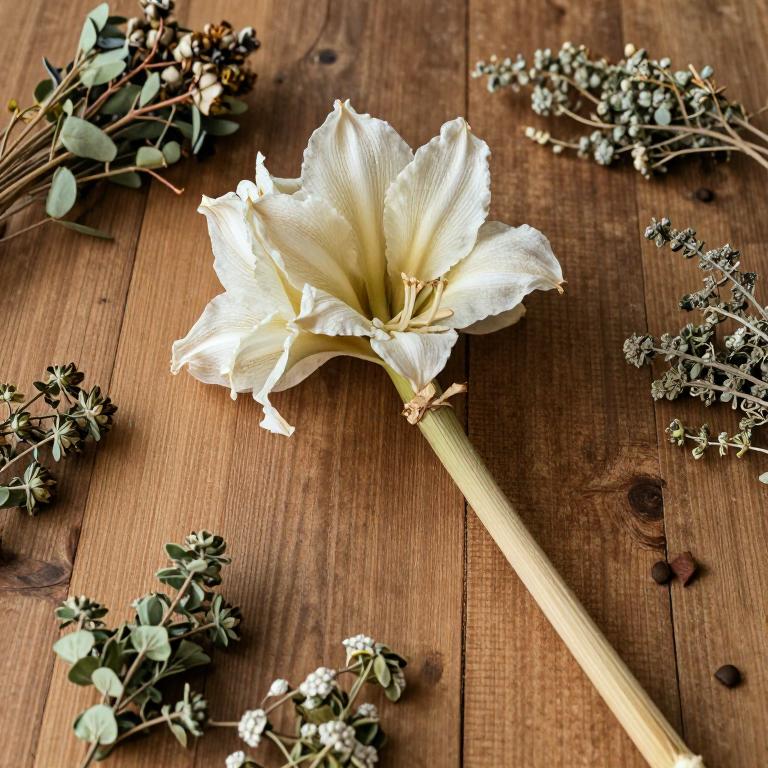
Hippeastrum, commonly known as the Amaryllis, is a stunning genus of bulbous plants celebrated for its large, trumpet-shaped blooms. These striking perennials are favored by indoor gardeners for their ability to produce dramatic displays of color from a single bulb. They thrive in bright, indirect light and require well-draining soil to prevent moisture from damaging their delicate root systems. While they are often treated as annuals in cooler climates, they can be kept indoors year-round with proper care. Whether used as a centerpiece or a seasonal garden highlight, these plants add an unmistakable elegance to any botanical collection.
- Synonyms
- Aschamia · Trisacarpis · 11 more
- Common names
- Not available
- Family
- Amaryllidaceae
- Distribution
- Southern America
- Plant Parts
- Not available
Classification
Common Names
Hippeastrum is a versatile genus that is widely recognized by several different common names depending on the region and specific variety. Many enthusiasts simply refer to these striking plants as Amaryllis, though they are also frequently called Amaryllis-híbrida. In certain contexts, you may encounter them known as Açucenas or specifically as Açucena-híbrida. Some gardeners even use the poetic term Lirio estrella to describe their star-like floral displays. Understanding these various names helps enthusiasts navigate the diverse world of this beautiful flowering plant.
Sources: Catalogue of Life (COL)
Synonyms
Hippeastrum is a diverse genus that has been categorized under several different names throughout botanical history. For instance, the plant has been formally recognized by the synonyms Aschamia and Aulica in various classifications. It has also been referred to as Callicore and Carlotea depending on the taxonomic approach used by researchers. Additionally, the name Chonais has served as another synonym within its evolving scientific lineage. Understanding these multiple designations is essential for anyone studying the complex nomenclature of this beautiful flowering plant.
Sources: The World Checklist of Vascular Plants (WCVP)
Taxonomy
Hippeastrum belongs to the vast kingdom Plantae, encompassing all known forms of plant life. Within this diverse group, it is classified under the class Equisetopsida. The plant is further organized into the order Asparagales, reflecting its evolutionary lineage. It specifically falls under the family Amaryllidaceae, a group known for its striking floral displays. Ultimately, it is defined by its own unique genus, Hippeastrum.
| Rank | Classification |
|---|---|
| Kingdom | Plantae |
| Phylum | Streptophyta |
| Class | Equisetopsida |
| Subclass | Magnoliidae |
| Order | Asparagales |
| Family | Amaryllidaceae |
| Genus | Hippeastrum |
Sources: The World Checklist of Vascular Plants (WCVP)
Distribution
Geographic Regions
Hippeastrum exhibits a diverse natural distribution that spans across several key regions of the African continent. These plants can be found throughout Northern Africa, specifically within the territory of Tunisia. Their presence extends deep into South Tropical Africa, with notable populations located in both Angola and Zimbabwe. Additionally, the genus reaches the West-Central Tropical Africa region, including the islands of the Gulf of Guinea. The range of these species is so broad that it even encompasses isolated areas such as the Middle Atlantic Ocean and Ascension.
Sources: The World Checklist of Vascular Plants (WCVP)
Identification
Biological Activities
Compounds
Conditions
Preparations
Hippeastrum plants are specifically prepared as bulbs for the isolation of various nonalkaloidal secondary metabolites. These bulbs serve as the source for sixteen chemically varied metabolites, including several flavonoids and acetophenones. Researchers utilize the bulb extracts to determine total phenolic and flavonoid contents through specific colorimetric methods. The preparation of these plant materials also facilitates the screening of compound binding affinities against key SARS-CoV-2 target proteins. Consequently, the chemical study of Hippeastrum bulbs provides significant insights into their antioxidant potential and chemotaxonomic importance.