Himatanthus articulatus
Himatanthus articulatus · Accepted scientific name
Scientific literature: Very Sparse (33 studies) · ★☆☆☆☆
, scientifically known as Himatanthus articulatus, is a versatile medicinal shrub native to tropical regions. Often referred to as "jatropha" in certain contexts, this plant is highly valued in traditional medicine for its potent bioactive compounds, which are frequently utilized to treat inflammation, skin ailments, and various digestive issues.
- Family
- Apocynaceae
- Native range
- Southern America
- Parts used
- Stem · Leaf
- Common names
- Not available
- Scientific synonyms
- Himatanthus Sucuuba · Plumeria Microcalyx · 4 more
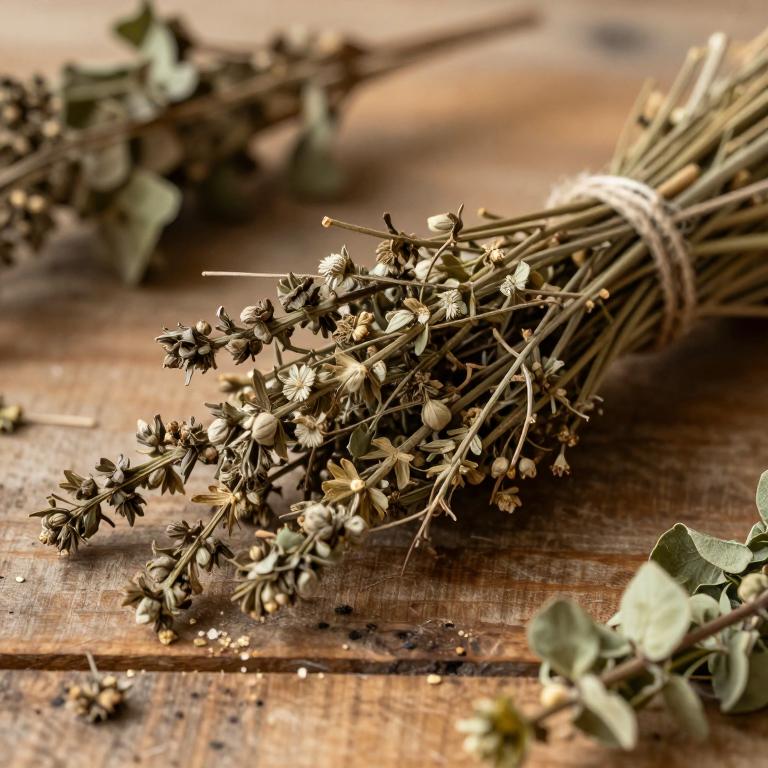
Names and Synonyms
Scientific Names
Accepted name
Himatanthus articulatusSynonyms
- Himatanthus sucuuba
- Plumeria microcalyx
- Plumeria sucuuba
- Himatanthus rigidus
- Plumeria articulata
- Plumeria floribunda
Sources: Wikidata, Catalogue of Life
Taxonomical Classification
This plant belongs to the kingdom Plantae and the phylum Streptophyta, falling under the class Equisetopsida and subclass Magnoliidae. Within the order Gentianales, it is classified under the family Apocynaceae. Finally, its taxonomic identity is completed within the genus Himatanthus.
| Rank | Classification |
|---|---|
| Kingdom | Plantae |
| Phylum | Streptophyta |
| Class | Equisetopsida |
| Subclass | Magnoliidae |
| Order | Gentianales |
| Family | Apocynaceae |
| Genus | Himatanthus |
Sources: The World Checklist of Vascular Plants (WCVP)
Distribution
This plant exhibits a specific distribution pattern concentrated within the tropical regions of the Americas. In Central America, its presence is documented within the borders of Panamá. Moving into Northern South America, it can be found across the vast territories of Venezuela. The species also inhabits the Guianas, specifically occupying French Guiana, Guyana, and Suriname. Together, these locations define the primary geographical range for Himatanthus articulatus.
| Region | Area |
|---|---|
| Central America | Panamá |
| Northern South America | French Guiana |
| Northern South America | Guyana |
| Northern South America | Suriname |
| Northern South America | Venezuela |
| Western South America | Bolivia |
| Western South America | Colombia |
| Western South America | Ecuador |
| Western South America | Peru |
| Brazil | Brazil West-Central |
Sources: The World Checklist of Vascular Plants (WCVP)
Botanical Identification
Ecology
The ecology of Himatanthus articulatus is characterized by its adaptability to diverse landscapes, ranging from undisturbed natural environments to human-modified areas. It is commonly found inhabiting anthropogenic areas, Cerrado (latu sensu), terra firme forests, and the Amazonian savanna. The species thrives across a broad altitudinal gradient, occupying an elevational range that begins at sea level (0 m AMSL) and extends up to a maximum of 1000 m AMSL.
- Elevational range max:
- 1000 m AMSL
- Elevational range min:
- 0 m AMSL
- Habitat :
- Área Antrópica, Cerrado (lato sensu), Floresta de Terra Firme, Savana Amazônica
Life history
The life history of Himatanthus articulatus is characterized by its status as a perennial plant, allowing it to persist through multiple growing seasons. As a phanerophyte, its regenerative buds are located high above the ground on woody stems, a structural adaptation that defines its primary life form. This species maintains an evergreen deciduousness, ensuring that it retains its foliage throughout the year to facilitate continuous photosynthetic activity.
- Deciduousness :
- evergreen
- Life form :
- phanerophyte
- Lifecycle :
- perennial
Morphology
The morphology of Himatanthus articulatus is characterized by its robust, woody growth form, functioning as a self-supporting tree. It typically reaches an average height of 12 m, though it possesses the capacity to grow as large as 40 m. As a terrestrial species, it does not exhibit aquatic or epiphytic tendencies, growing independently in its habitat without the need for host plants or specialized semi-aquatic adaptations. The plant's structure is characterized by a stable, non-climbing habit, maintaining a self-supporting architecture rather than functioning as a liana or vine.
- Aquatic :
- terrestrial
- Climber :
- self-supporting
- Epiphyte :
- terrestrial
- Growth form :
- tree
- Parasite :
- independent
- Plant height max:
- 40 m
- Plant height mean:
- 12 m
- Woodiness :
- woody
Physiology
The physiology of Himatanthus articulatus is characterized by a C3 photosynthetic pathway, which dictates its carbon fixation processes and metabolic efficiency in varying environmental conditions. As a plant utilizing the C3 mechanism, it fixes atmospheric carbon dioxide directly through the enzyme RuBisCO during the Calvin cycle, a process that typically requires moderate temperatures and sufficient water availability to maintain optimal gas exchange via its stomata. Furthermore, regarding its nutrient acquisition capabilities, this species is not a nitrogen fixer, meaning it lacks the symbiotic relationship with nitrogen-fixing bacteria required to convert atmospheric nitrogen into bioavailable forms; instead, it relies on the uptake of nitrates and ammonium present in the soil through its root system to satisfy its nitrogen requirements for protein synthesis and growth.
- Nitrogen fixer :
- no
- Photosynthetic pathway :
- C3
Reproduction
Reproduction in Himatanthus articulatus involves a complex interplay of biological mechanisms and dispersal strategies designed to ensure species propagation. The plant utilizes a variety of dispersal syndromes to facilitate the movement of its offspring across different environments, exhibiting traits that are anemochorous, zoochorous, autochorous, hydrochorous, and unspecialized. This multi-modal approach allows the seeds to be spread by wind (anemochory), transported by animals (zoochory), released through self-ejection mechanisms (autochory), or carried by water currents (hydrochory). By employing these diverse methods alongside unspecialized dispersal tactics, the species maximizes its ability to colonize new habitats and navigate varying ecological landscapes.
- Dispersal syndrome :
- anemochorous
Sources: Global Inventory of Floras and Traits (GIFT)
Plant Parts
Himatanthus articulatus has 2 reported plant parts identified across 4 scientific publications and several other databases that are studied for medicinal purposes. The most consistently reported plant part include stem, leaf.
| Plant part | Supporting sources | Consensus |
|---|---|---|
| Stem | 3 supporting sources | ★★☆☆☆ |
| Leaf | 1 supporting sources | ★☆☆☆☆ |
Stem
- Planta medica
- Journal of ethnopharmacology
- Plants (Basel, Switzerland)
Leaf
- Plants (Basel, Switzerland)
Chemicals
Himatanthus articulatus has 9 reported phytochemicals identified across 4 scientific publications and several other databases. The most consistently reported chemicals include 2'-O-Methylperlatolic acid, Confluentic acid, Fulvoplumierin, Isoplumericin, Lupeol acetate.
| Chemical | Supporting sources | Consensus |
|---|---|---|
| 2'-O-Methylperlatolic acid | 1 supporting sources | ★☆☆☆☆ |
| Confluentic acid | 1 supporting sources | ★☆☆☆☆ |
| Fulvoplumierin | 1 supporting sources | ★☆☆☆☆ |
| Isoplumericin | 1 supporting sources | ★☆☆☆☆ |
| Lupeol acetate | 1 supporting sources | ★☆☆☆☆ |
| Plumericin | 1 supporting sources | ★☆☆☆☆ |
| Triterpenes | 1 supporting sources | ★☆☆☆☆ |
| alpha-Amyrin | 1 supporting sources | ★☆☆☆☆ |
| triterpene | 1 supporting sources | ★☆☆☆☆ |
2'-O-Methylperlatolic acid
- Chemical & pharmaceutical bulletin
Confluentic acid
- Chemical & pharmaceutical bulletin
Fulvoplumierin
- Journal of pharmaceutical sciences
Isoplumericin
- Journal of ethnopharmacology
Lupeol acetate
- Planta medica
Plumericin
- Journal of ethnopharmacology
Triterpenes
- Planta medica
alpha-Amyrin
- Planta medica
triterpene
- Planta medica
Activities
Himatanthus articulatus has 6 reported activities identified across 4 scientific publications and several other databases. The most consistently reported activities include Analgesic, Antibacterial, Antifungal, Antiproliferative, Antiulcer.
| Activity | Supporting sources | Consensus |
|---|---|---|
| Analgesic | 1 supporting sources | ★☆☆☆☆ |
| Antibacterial | 1 supporting sources | ★☆☆☆☆ |
| Antifungal | 1 supporting sources | ★☆☆☆☆ |
| Antiproliferative | 1 supporting sources | ★☆☆☆☆ |
| Antiulcer | 1 supporting sources | ★☆☆☆☆ |
| Cytotoxic | 1 supporting sources | ★☆☆☆☆ |
Analgesic
- Planta medica
Antibacterial
- Memorias do Instituto Oswaldo Cruz
Antifungal
- Memorias do Instituto Oswaldo Cruz
Antiproliferative
- Journal of ethnopharmacology
Antiulcer
- Plants (Basel, Switzerland)
Cytotoxic
- Journal of ethnopharmacology
Conditions
Himatanthus articulatus has 8 reported investigations on conditions identified across 4 scientific publications and several other databases. The most consistently reported conditions include Bacillus subtilis, Candida albicans, Staphylococcus aureus, breast cancer, cancer.
| Condition | Supporting sources | Consensus |
|---|---|---|
| Bacillus subtilis | 1 supporting sources | ★☆☆☆☆ |
| Candida albicans | 1 supporting sources | ★☆☆☆☆ |
| Staphylococcus aureus | 1 supporting sources | ★☆☆☆☆ |
| Breast cancer | 1 supporting sources | ★☆☆☆☆ |
| Cancer | 1 supporting sources | ★☆☆☆☆ |
| Colon adenocarcinoma | 1 supporting sources | ★☆☆☆☆ |
| Non-small cell lung carcinoma | 1 supporting sources | ★☆☆☆☆ |
| Renal cell carcinoma | 1 supporting sources | ★☆☆☆☆ |
Bacillus subtilis
- Memorias do Instituto Oswaldo Cruz
Candida albicans
- Memorias do Instituto Oswaldo Cruz
Staphylococcus aureus
- Memorias do Instituto Oswaldo Cruz
Breast cancer
- Journal of ethnopharmacology
Cancer
- Journal of ethnopharmacology
Colon adenocarcinoma
- Journal of ethnopharmacology
Non-small cell lung carcinoma
- Journal of ethnopharmacology
Renal cell carcinoma
- Journal of ethnopharmacology
Preparations
Himatanthus articulatus has 5 reported preparations identified across 4 scientific publications and several other databases. The most consistently reported preparations include latex, bark, stem bark, ethanol extract of the stem bark, leaves.
| Preparation | Supporting sources | Consensus |
|---|---|---|
| Latex | 3 supporting sources | ★★☆☆☆ |
| Bark | 2 supporting sources | ★☆☆☆☆ |
| Stem bark | 2 supporting sources | ★☆☆☆☆ |
| Ethanol extract of the stem bark | 1 supporting sources | ★☆☆☆☆ |
| Leaves | 1 supporting sources | ★☆☆☆☆ |
Latex
- Planta medica
- Veterinary world
- Plants (Basel, Switzerland)
Bark
- Chemical & pharmaceutical bulletin
- Journal of pharmaceutical sciences
Stem bark
- Planta medica
- Plants (Basel, Switzerland)
Ethanol extract of the stem bark
- Journal of ethnopharmacology
Leaves
- Plants (Basel, Switzerland)