Himalrandia tetrasperma
Himalrandia tetrasperma · Accepted scientific name
Scientific literature: Very Sparse (6 studies) · ★☆☆☆☆
Himalrandia tetrasperma, is a medicinal plant native to the Himalayan regions, cherished in traditional healing practices. Renowned for its potent bioactive compounds, it is frequently utilized to treat inflammatory conditions and digestive ailments. This resilient species offers significant pharmacological potential, serving as a vital resource for natural medicine.
- Family
- Rubiaceae
- Native range
- Asia-Temperate
- Parts used
- Not available
- Common names
- Not available
- Scientific synonyms
- Himalrandia Densa · Aidia Tetrasperma · 3 more
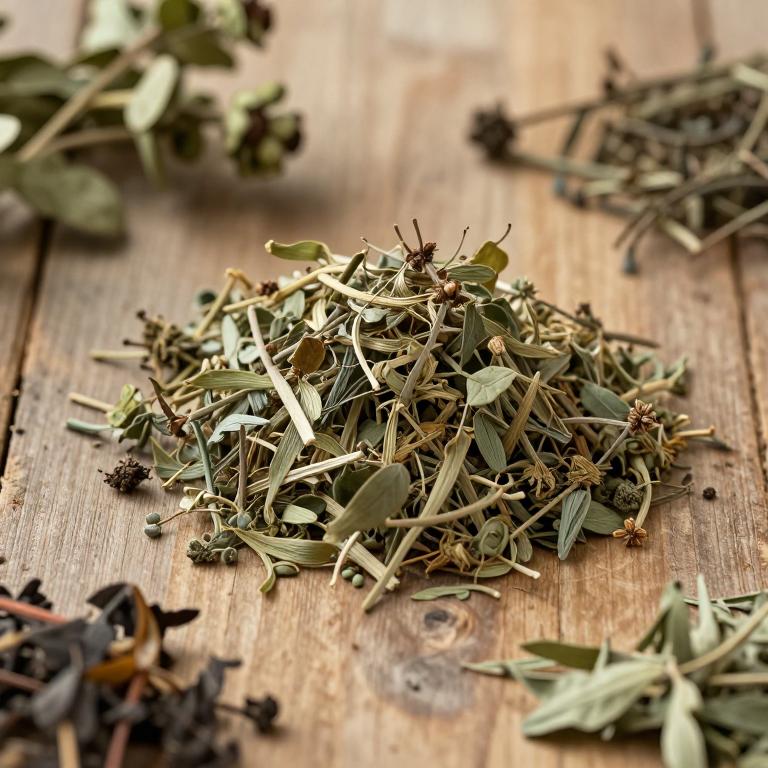
Names and Synonyms
Scientific Names
Accepted name
Himalrandia tetraspermaSynonyms
- Himalrandia densa
- Aidia tetrasperma
- Gardenia densa
- Randia tetrasperma
- Gardenia tetrasperma
Sources: Wikidata
Taxonomical Classification
This plant, Himalrandia tetrasperma, belongs to the kingdom Plantae and the phylum Streptophyta. Within the class Equisetopsida and subclass Magnoliidae, it is categorized under the order Gentianaales. Finally, it is classified under the family Rubiaceae and the genus Himalrandia.
| Rank | Classification |
|---|---|
| Kingdom | Plantae |
| Phylum | Streptophyta |
| Class | Equisetopsida |
| Subclass | Magnoliidae |
| Order | Gentianales |
| Family | Rubiaceae |
| Genus | Himalrandia |
Sources: The World Checklist of Vascular Plants (WCVP)
Distribution
This plant exhibits a broad geographical range spanning across several distinct regions. In Western Asia, its presence has been documented within the borders of Afghanistan. Moving into the Indian Subcontinent, it can be found growing in the state of Assam and throughout Bangladesh. Furthermore, the species is widely distributed across the East Himalaya region. Finally, its natural habitat extends significantly into the mountainous landscapes of Nepal.
| Region | Area |
|---|---|
| Western Asia | Afghanistan |
| Indian Subcontinent | Assam |
| Indian Subcontinent | Bangladesh |
| Indian Subcontinent | East Himalaya |
| Indian Subcontinent | Nepal |
| Indian Subcontinent | Pakistan |
| Indian Subcontinent | West Himalaya |
Sources: The World Checklist of Vascular Plants (WCVP)
Botanical Identification
Ecology
The ecology of Himalrandia tetrasperma is characterized by its specific vertical distribution within montane ecosystems, where it occupies a distinct altitudinal niche. This species is primarily found at a mean elevation of 1200 m AMSL, which also serves as its minimum recorded elevation, indicating a preference for mid-elevation subtropical or temperate transitional zones. Its habitat extends upward through the montane landscape, reaching a maximum elevational range of 2100 m AMSL. This altitudinal stratification suggests that the plant is adapted to the specific climatic gradients, moisture levels, and soil compositions found between these elevations, playing a specialized role in the biodiversity of its high-altitude environment.
- Elevational range max:
- 2100 m AMSL
- Elevational range mean:
- 1200 m AMSL
Life history
The life history of Himalrandia tetrasperma is characterized by a perennial lifecycle, allowing the plant to persist through multiple growing seasons. In terms of its structural growth and survival strategies, it exhibits a dual life form classification, functioning as both a phanerophyte and a nanophanerophyte. This indicates that while it possesses woody stems that allow it to maintain elevated structures, its growth habit also aligns with low-growing, dwarf-like characteristics typical of plants that keep their buds close to the ground or at very low heights.
- Life form :
- nanophanerophyte
- Life form :
- phanerophyte
- Lifecycle :
- perennial
Morphology
The morphology of Himalrandia tetrasperma is characterized by its distinct growth habit and structural composition. It functions as a self-supporting climber, manifesting as a liana or vine that does not require external hosts for upward movement, a trait categorized as a self-supporting climbing mechanism. While its growth form is primarily described as a shrub, it maintains a robust, woody structure throughout its development. The plant is an independent organism, meaning it does not exhibit parasitic behavior, and it follows a terrestrial life cycle rather than an epiphytic one.
- Climber :
- self-supporting
- Epiphyte :
- terrestrial
- Growth form :
- shrub
- Parasite :
- independent
- Woodiness :
- woody
Reproduction
The reproduction of Himalrandia tetrasperma is characterized by a specific seasonal flowering cycle that dictates its reproductive availability. The flowering period typically commences in May and continues through the warmer and wetter months, eventually reaching its conclusion in September. This seasonal window ensures that the plant's reproductive efforts are synchronized with favorable environmental conditions, facilitating the processes necessary for pollination and subsequent seed development.
- Flowering time :
- May
- Flowering time :
- Sep
Sources: Global Inventory of Floras and Traits (GIFT)
Chemicals
Himalrandia tetrasperma has 4 reported phytochemicals identified across 0 scientific publications and several other databases. The most consistently reported chemicals include Flavonoids, Phenols, Saponins, Tannins.
| Chemical | Supporting sources | Consensus |
|---|---|---|
| Flavonoids | 1 supporting sources | ★☆☆☆☆ |
| Phenols | 1 supporting sources | ★☆☆☆☆ |
| Saponins | 1 supporting sources | ★☆☆☆☆ |
| Tannins | 1 supporting sources | ★☆☆☆☆ |
Flavonoids
- Pakistan journal of pharmaceutical sciences
Phenols
- Pakistan journal of pharmaceutical sciences
Saponins
- Pakistan journal of pharmaceutical sciences
Tannins
- Pakistan journal of pharmaceutical sciences
Conditions
Himalrandia tetrasperma has 1 reported investigations on conditions identified across 0 scientific publications and several other databases. The most consistently reported conditions include pain.
| Condition | Supporting sources | Consensus |
|---|---|---|
| Pain | 1 supporting sources | ★☆☆☆☆ |
Pain
- Pakistan journal of pharmaceutical sciences
Preparations
Himalrandia tetrasperma has 1 reported preparations identified across 0 scientific publications and several other databases. The most consistently reported preparations include Methanolic extracts.
| Preparation | Supporting sources | Consensus |
|---|---|---|
| Methanolic extracts | 1 supporting sources | ★☆☆☆☆ |
Methanolic extracts
- Pakistan journal of pharmaceutical sciences