false arnica
Heterotheca inuloides · Accepted scientific name
Scientific literature: Sparse (60 studies) · ★★☆☆☆
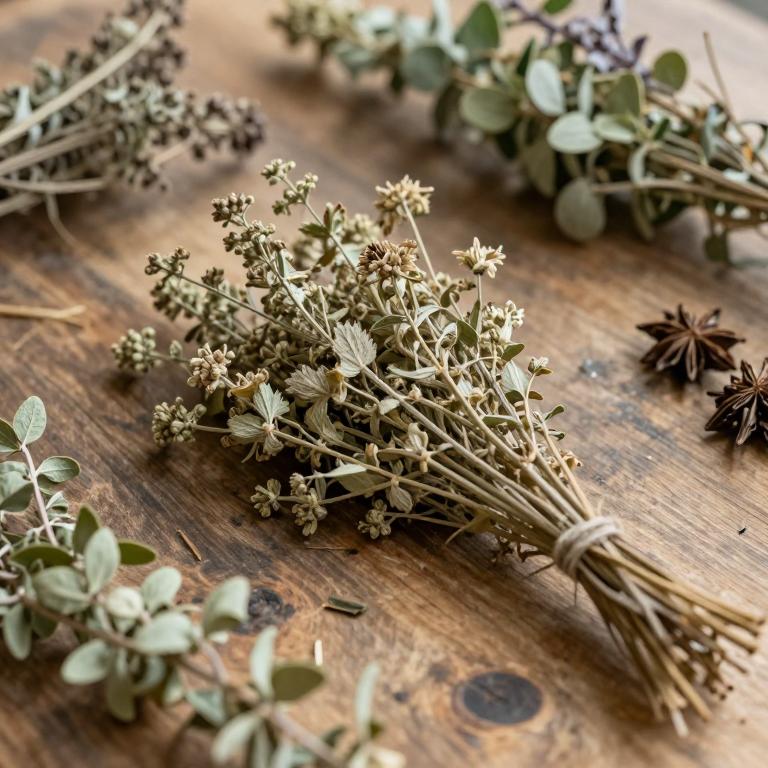
False arnica, scientifically known as Heterotheca inuloides, is a resilient perennial herb native to North America. Often found in open woodlands, this plant is valued in traditional medicine for its potential anti-inflammatory and antimicrobial properties. Its bright, daisy-like blooms make it both a botanical interest and a medicinal resource.
- Family
- Asteraceae
- Native range
- Northern America
- Parts used
- Flower
- Common names
- False Arnica · Mexican Arnica
- Scientific synonyms
- Not available
Names and Synonyms
Common Names
- false arnica
- Mexican Arnica
Scientific Names
Accepted name
Heterotheca inuloidesRegional and Traditional Names
Spanish:
- árnica mexicana
Sources: Wikidata, Catalogue of Life
Taxonomical Classification
This plant belongs to the kingdom Plantae within the phylum Streptophyta and the class Equisetopsida. It is further classified under the subclass Magnoliidae and the order Asterales. Finally, it is a member of the family Asteraceae and is categorized under the genus Heterotheca.
| Rank | Classification |
|---|---|
| Kingdom | Plantae |
| Phylum | Streptophyta |
| Class | Equisetopsida |
| Subclass | Magnoliidae |
| Order | Asterales |
| Family | Asteraceae |
| Genus | Heterotheca |
Sources: The World Checklist of Vascular Plants (WCVP)
Distribution
This plant is native to various regions throughout the country of Mexico. Its presence is documented across Mexico Central, where it thrives in specific local ecosystems. Additionally, the species can be found extending into Mexico Northeast and Mexico Gulf. The distribution continues through the arid landscapes of Mexico Northwest. Finally, the range of this medicinal plant reaches as far as Mexico Southwest.
| Region | Area |
|---|---|
| Mexico | Mexico Central |
| Mexico | Mexico Northeast |
| Mexico | Mexico Gulf |
| Mexico | Mexico Northwest |
| Mexico | Mexico Southwest |
Sources: The World Checklist of Vascular Plants (WCVP)
Botanical Identification
Morphology
The morphology of Heterotheca inuloides is characterized by a growth form categorized as a herb, displaying a non-woody structure throughout its development. This species is fundamentally terrestrial in its habitat, lacking aquatic or semiaquatic tendencies, and it functions as an independent organism rather than a parasite. In terms of its structural support, the plant is entirely self-supporting, exhibiting neither climbing nor vining habits such as lianas or facultative climbers. Furthermore, it is a strictly terrestrial species, showing no epiphytic characteristics.
- Aquatic :
- terrestrial
- Climber :
- self-supporting
- Epiphyte :
- terrestrial
- Growth form :
- herb
- Parasite :
- independent
- Woodiness :
- non-woody
Sources: Global Inventory of Floras and Traits (GIFT)
Plant Parts
Heterotheca inuloides has 1 reported plant parts identified across 3 scientific publications and several other databases that are studied for medicinal purposes. The most consistently reported plant part include flower.
| Plant part | Supporting sources | Consensus |
|---|---|---|
| Flower | 3 supporting sources | ★★☆☆☆ |
Flower
- Journal of ethnopharmacology
- Planta medica
- Bioorganic & medicinal chemistry
Chemicals
Heterotheca inuloides has 19 reported phytochemicals identified across 3 scientific publications and several other databases. The most consistently reported chemicals include quercetin, 7-hydroxy-3,4-dihydrocadalin, 7-Hydroxycadalin, Flavonoids, -Spinasterol.
| Chemical | Supporting sources | Consensus |
|---|---|---|
| quercetin | 4 supporting sources | ★★☆☆☆ |
| 7-hydroxy-3,4-dihydrocadalin | 3 supporting sources | ★★☆☆☆ |
| 7-Hydroxycadalin | 2 supporting sources | ★☆☆☆☆ |
| Flavonoids | 2 supporting sources | ★☆☆☆☆ |
| -Spinasterol | 1 supporting sources | ★☆☆☆☆ |
| 7-Hydroxycadalene | 1 supporting sources | ★☆☆☆☆ |
| 7-hydroxy-4alphaH-3,4-dihydrocadalene | 1 supporting sources | ★☆☆☆☆ |
| BETA-CARYOPHYLLENE | 1 supporting sources | ★☆☆☆☆ |
| D-chiro-Inositol | 1 supporting sources | ★☆☆☆☆ |
| Galangin | 1 supporting sources | ★☆☆☆☆ |
quercetin
- Oxidative medicine and cellular longevity
- Journal of natural products
- Bioorganic & medicinal chemistry
- Toxicology
7-hydroxy-3,4-dihydrocadalin
- The Journal of pharmacy and pharmacology
- Planta medica
- Bioorganic & medicinal chemistry
7-Hydroxycadalin
- Planta medica
- Bioorganic & medicinal chemistry
Flavonoids
- Journal of ethnopharmacology
- Bioorganic & medicinal chemistry
-Spinasterol
- Toxicology
7-Hydroxycadalene
- Journal of natural products
7-hydroxy-4alphaH-3,4-dihydrocadalene
- Journal of natural products
BETA-CARYOPHYLLENE
- Planta medica
D-chiro-Inositol
- Toxicology
Galangin
- Bioorganic & medicinal chemistry
Activities
Heterotheca inuloides has 6 reported activities identified across 3 scientific publications and several other databases. The most consistently reported activities include Antioxidant, Cytotoxic, Analgesic, Antiinflammatory, Antitumor.
| Activity | Supporting sources | Consensus |
|---|---|---|
| Antioxidant | 3 supporting sources | ★★☆☆☆ |
| Cytotoxic | 2 supporting sources | ★☆☆☆☆ |
| Analgesic | 1 supporting sources | ★☆☆☆☆ |
| Antiinflammatory | 1 supporting sources | ★☆☆☆☆ |
| Antitumor | 1 supporting sources | ★☆☆☆☆ |
| Phytotoxic | 1 supporting sources | ★☆☆☆☆ |
Antioxidant
- The Journal of pharmacy and pharmacology
- Plants (Basel, Switzerland)
- Journal of ethnopharmacology
Cytotoxic
- Toxicology
- Journal of ethnopharmacology
Analgesic
- Toxicology
Antiinflammatory
- Journal of natural products
Antitumor
- Journal of ethnopharmacology
Phytotoxic
- Journal of ethnopharmacology
Conditions
Heterotheca inuloides has 13 reported investigations on conditions identified across 3 scientific publications and several other databases. The most consistently reported conditions include lipid peroxidation, oxidative stresses, Gram-positive bacteria, Trichinella spiralis, analgesic.
| Condition | Supporting sources | Consensus |
|---|---|---|
| Lipid peroxidation | 2 supporting sources | ★☆☆☆☆ |
| Oxidative stresses | 2 supporting sources | ★☆☆☆☆ |
| Gram-positive bacteria | 1 supporting sources | ★☆☆☆☆ |
| Trichinella spiralis | 1 supporting sources | ★☆☆☆☆ |
| Analgesic | 1 supporting sources | ★☆☆☆☆ |
| Cancer | 1 supporting sources | ★☆☆☆☆ |
| Dental diseases | 1 supporting sources | ★☆☆☆☆ |
| Edema | 1 supporting sources | ★☆☆☆☆ |
| Gastrointestinal disorders | 1 supporting sources | ★☆☆☆☆ |
| Inflammation | 1 supporting sources | ★☆☆☆☆ |
Lipid peroxidation
- The Journal of pharmacy and pharmacology
- Toxicology
Oxidative stresses
- The Journal of pharmacy and pharmacology
- Bioorganic & medicinal chemistry
Gram-positive bacteria
- Planta medica
Trichinella spiralis
- Plants (Basel, Switzerland)
Analgesic
- Toxicology
Cancer
- Journal of ethnopharmacology
Dental diseases
- Journal of ethnopharmacology
Edema
- Journal of ethnopharmacology
Gastrointestinal disorders
- Journal of ethnopharmacology
Inflammation
- Journal of ethnopharmacology
Preparations
Heterotheca inuloides has 8 reported preparations identified across 3 scientific publications and several other databases. The most consistently reported preparations include acetonic (AE) extracts, aqueous extract, dried flower, dried flowers, extract.
| Preparation | Supporting sources | Consensus |
|---|---|---|
| Acetonic (ae) extracts | 1 supporting sources | ★☆☆☆☆ |
| Aqueous extract | 1 supporting sources | ★☆☆☆☆ |
| Dried flower | 1 supporting sources | ★☆☆☆☆ |
| Dried flowers | 1 supporting sources | ★☆☆☆☆ |
| Extract | 1 supporting sources | ★☆☆☆☆ |
| Methanol extracts | 1 supporting sources | ★☆☆☆☆ |
| Methanolic (me) extracts | 1 supporting sources | ★☆☆☆☆ |
| Methanolic extract | 1 supporting sources | ★☆☆☆☆ |
Acetonic (ae) extracts
- Oxidative medicine and cellular longevity
Aqueous extract
- Journal of ethnopharmacology
Dried flower
- Bioorganic & medicinal chemistry
Dried flowers
- Planta medica
Extract
- Plants (Basel, Switzerland)
Methanol extracts
- Plants (Basel, Switzerland)
Methanolic (me) extracts
- Oxidative medicine and cellular longevity
Methanolic extract
- Toxicology