Heterophyllaea pustulata
Heterophyllaea pustulata · Accepted scientific name
Scientific literature: Very Sparse (4 studies) · ★☆☆☆☆
Heterophyllaea pustulata, scientifically known as Heterophyllaea pustulata, is a remarkable medicinal shrub native to the tropical rainforests of Brazil. Renowned for its unique leaf morphology, this botanical treasure is deeply embedded in traditional folk medicine, where its bioactive compounds are utilized to treat various ailments and promote healing.
- Family
- Rubiaceae
- Native range
- Southern America
- Parts used
- Leaf
- Common names
- Not available
- Scientific synonyms
- Heterophyllaea Fiebrigii · Heterophyllaea Lanceolata · 1 more
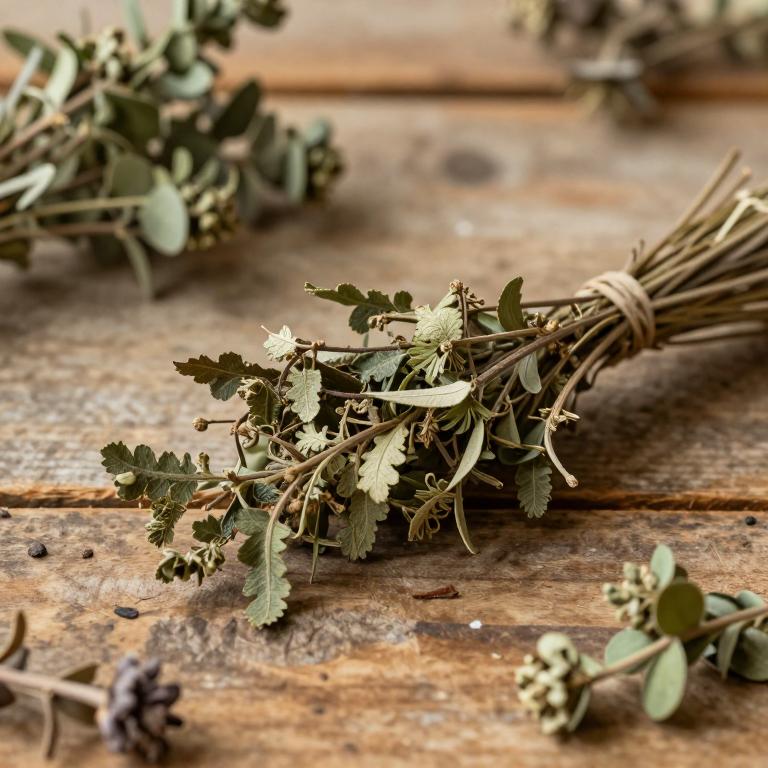
Names and Synonyms
Scientific Names
Accepted name
Heterophyllaea pustulataSynonyms
- Heterophyllaea fiebrigii
- Heterophyllaea lanceolata
- Hindsia fiebrigii
Sources: Wikidata
Taxonomical Classification
This plant belongs to the kingdom Plantae and is classified under the phylum Streptophyta and class Equisetopsida. Within the subclass Magnoliidae, it falls under the order Gentianaales and is a member of the Rubiaceae family. Specifically, its taxonomic identity is defined by the genus Heterophyllaea.
| Rank | Classification |
|---|---|
| Kingdom | Plantae |
| Phylum | Streptophyta |
| Class | Equisetopsida |
| Subclass | Magnoliidae |
| Order | Gentianales |
| Family | Rubiaceae |
| Genus | Heterophyllaea |
Sources: The World Checklist of Vascular Plants (WCVP)
Distribution
This plant exhibits a specific geographical distribution located primarily within the South American continent. In Western South America, its presence is documented in the country of Bolivia. The species is also found across parts of Peru within the same western region. Moving toward the southern portion of the continent, its range extends into the Northwest of Argentina. Consequently, these findings highlight its ability to thrive in distinct ecological zones across these three nations.
| Region | Area |
|---|---|
| Western South America | Bolivia |
| Western South America | Peru |
| Southern South America | Argentina Northwest |
Sources: The World Checklist of Vascular Plants (WCVP)
Botanical Identification
Ecology
The ecology of Heterophyllaea pustulata is primarily defined by its presence within high-altitude montane ecosystems, where it occupies a specific vertical niche in the landscape. This species is specialized to thrive within a distinct altitudinal band, ranging from a minimum elevation of 1700 m AMSL to a maximum elevation of 3000 m AMSL. This elevational range suggests an adaptation to the cooler temperatures, increased ultraviolet exposure, and specific moisture regimes characteristic of mid-to-high mountain environments. By inhabiting these specific altitudinal gradients, the plant exists within a specialized ecological zone that likely dictates its competition dynamics, soil requirements, and phenological patterns.
- Elevational range max:
- 3000 m AMSL
- Elevational range min:
- 1700 m AMSL
Life history
The life history of Heterophyllaea pustulata is characterized by its status as a perennial organism, ensuring its long-term presence within its ecological niche through multiple growing seasons. In terms of its structural development and growth habit, the species exhibits a dual classification of life forms depending on its developmental stage or environmental context, functioning as both a phanerophyte and a nanophanerophyte. As a phanerophyte, it possesses visible woody stems that elevate its foliage above the ground level, while its nanophanerophytic characteristics indicate periods or conditions where its reproductive and vegetative structures are maintained close to the substrate.
- Life form :
- nanophanerophyte
- Life form :
- phanerophyte
- Lifecycle :
- perennial
Morphology
The morphology of Heterophyllaea pustulata is characterized by a woody growth form, specifically classified as a shrub. As a terrestrial species, it does not exhibit aquatic or semiaquatic tendencies, nor does it function as an epiphyte, remaining firmly grounded in its soil substrate. The plant is an independent organism, lacking any parasitic relationship with host plants, and it maintains a self-supporting structure rather than growing as a liana, vine, or any other form of climber. Its physical development is defined by its persistent woodiness, providing the structural integrity necessary for its shrubby habit.
- Aquatic :
- terrestrial
- Climber :
- self-supporting
- Epiphyte :
- terrestrial
- Growth form :
- shrub
- Parasite :
- independent
- Woodiness :
- woody
Sources: Global Inventory of Floras and Traits (GIFT)
Plant Parts
Heterophyllaea pustulata has 1 reported plant parts identified across 1 scientific publications and several other databases that are studied for medicinal purposes. The most consistently reported plant part include leaf.
| Plant part | Supporting sources | Consensus |
|---|---|---|
| Leaf | 1 supporting sources | ★☆☆☆☆ |
Leaf
- Journal of natural products
Chemicals
Heterophyllaea pustulata has 3 reported phytochemicals identified across 1 scientific publications and several other databases. The most consistently reported chemicals include Asperuloside, Isoquercitrin, quercetin.
| Chemical | Supporting sources | Consensus |
|---|---|---|
| Asperuloside | 1 supporting sources | ★☆☆☆☆ |
| Isoquercitrin | 1 supporting sources | ★☆☆☆☆ |
| quercetin | 1 supporting sources | ★☆☆☆☆ |
Asperuloside
- Journal of natural products
Isoquercitrin
- Journal of natural products
quercetin
- Journal of natural products