Hesperozygis myrtoides
Hesperozygis myrtoides · Accepted scientific name
Scientific literature: Very Sparse (5 studies) · ★☆☆☆☆
, scientifically known as Hesperozygis myrtoides, is a resilient medicinal shrub native to the arid regions of Mexico. Valued in traditional folk medicine, this plant possesses unique phytochemical properties. It is primarily utilized for its potential therapeutic effects, offering promising insights into natural treatments for various health conditions.
- Family
- Lamiaceae
- Native range
- Southern America
- Parts used
- Not available
- Common names
- Not available
- Scientific synonyms
- Glechon Myrtoides · Hedeoma Itatiaiae
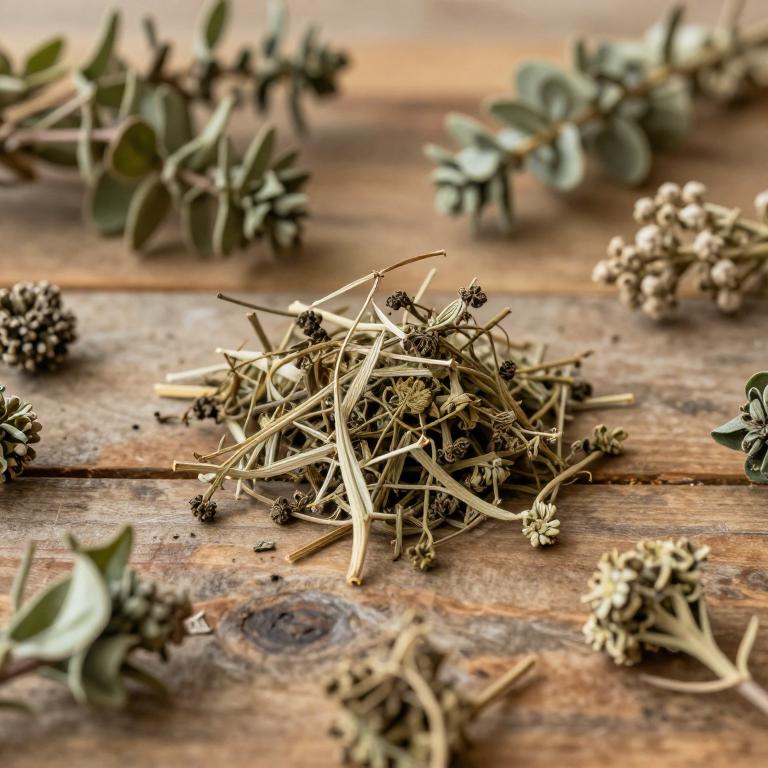
Names and Synonyms
Scientific Names
Accepted name
Hesperozygis myrtoidesSynonyms
- Glechon myrtoides
- Hedeoma itatiaiae
Sources: Wikidata
Taxonomical Classification
This plant belongs to the kingdom Plantae and is classified under the phylum Streptophyta within the class Equisetopsida. It is further organized into the subclass Magnoliidae, the order Lamiales, and the family Lamiaceae. Finally, it is identified by the genus Hesperozygis.
| Rank | Classification |
|---|---|
| Kingdom | Plantae |
| Phylum | Streptophyta |
| Class | Equisetopsida |
| Subclass | Magnoliidae |
| Order | Lamiales |
| Family | Lamiaceae |
| Genus | Hesperozygis |
Sources: The World Checklist of Vascular Plants (WCVP)
Distribution
This plant, known scientifically as Hesperozygis myrtoides, possesses a very specific and localized geographical range. Its presence is strictly limited to the South American continent within the borders of Brazil. More specifically, the species is found inhabiting the southeastern region of the country. Because its distribution is concentrated in this particular area, it is considered a regional component of the local flora. Therefore, anyone searching for this medicinal species must focus their efforts on the Southeast Brazilian landscape.
| Region | Area |
|---|---|
| Brazil | Brazil Southeast |
Sources: The World Checklist of Vascular Plants (WCVP)
Botanical Identification
Ecology
The ecology of Hesperozygis myrtoides is fundamentally defined by its specialization within the Campo de Altitude, a high-altitude grassland ecosystem characteristic of certain Brazilian mountainous regions. This specific habitat provides a unique set of environmental stressors, including intense solar radiation, high UV exposure, and significant temperature fluctuations between day and night. The plant is adapted to the open, well-drained landscapes of these montane grasslands, where it must contend with periodic seasonal droughts and nutrient-poor soils. The vegetation structure of the Campo de Altitude, dominated by grasses and small shrubs, dictates the microclimatic conditions under which Hesperozygis myrtoides thrives, influencing its growth patterns and its role within the local biodiversity of these high-elevation specialized communities.
- Habitat :
- Campo de Altitude
Morphology
The morphology of Hesperozygis myrtoides is characterized by its growth form as a herb, exhibiting a life strategy that is primarily terrestrial in nature. While its ecological niche can vary across moisture gradients, its habit is classified as terrestrial rather than aquatic or semiaquatic. The plant functions as an independent organism, lacking any obligatory or facultative parasitic relationships with other species. Furthermore, it does not exhibit epiphytic behavior, maintaining a terrestrial existence instead of growing as a holoepiphyte, hemiepiphyte, or any other form of epiphyte. In terms of structural support, it is characterized as self-supporting, meaning it does not require external structures to climb, distinguishing it from obligatory or facultative climbers.
- Aquatic :
- terrestrial
- Climber :
- self-supporting
- Epiphyte :
- terrestrial
- Growth form :
- herb
- Parasite :
- independent
Sources: Global Inventory of Floras and Traits (GIFT)
Chemicals
Hesperozygis myrtoides has 3 reported phytochemicals identified across 0 scientific publications and several other databases. The most consistently reported chemicals include Isomenthone, LIMONENE, Pulegone.
| Chemical | Supporting sources | Consensus |
|---|---|---|
| Isomenthone | 1 supporting sources | ★☆☆☆☆ |
| LIMONENE | 1 supporting sources | ★☆☆☆☆ |
| Pulegone | 1 supporting sources | ★☆☆☆☆ |
Isomenthone
- Natural product communications
LIMONENE
- Natural product communications
Pulegone
- Natural product communications
Conditions
Hesperozygis myrtoides has 2 reported investigations on conditions identified across 0 scientific publications and several other databases. The most consistently reported conditions include C. parapsilosis, Candida albicans.
| Condition | Supporting sources | Consensus |
|---|---|---|
| C. parapsilosis | 1 supporting sources | ★☆☆☆☆ |
| Candida albicans | 1 supporting sources | ★☆☆☆☆ |
C. parapsilosis
- Natural product communications
Candida albicans
- Natural product communications