Mexican cedar
Hesperocyparis lusitanica · Accepted scientific name
Scientific literature: Very Sparse (12 studies) · ★☆☆☆☆
Mexican cedar, scientifically known as Hesperocyparis lusitaniica, is a resilient evergreen prized for its aromatic qualities. Traditionally used in herbal medicine, its essential oils and resins offer potential therapeutic benefits, including antimicrobial and anti-inflammatory properties. This versatile plant remains a significant subject in both ethnobotany and modern pharmacology.
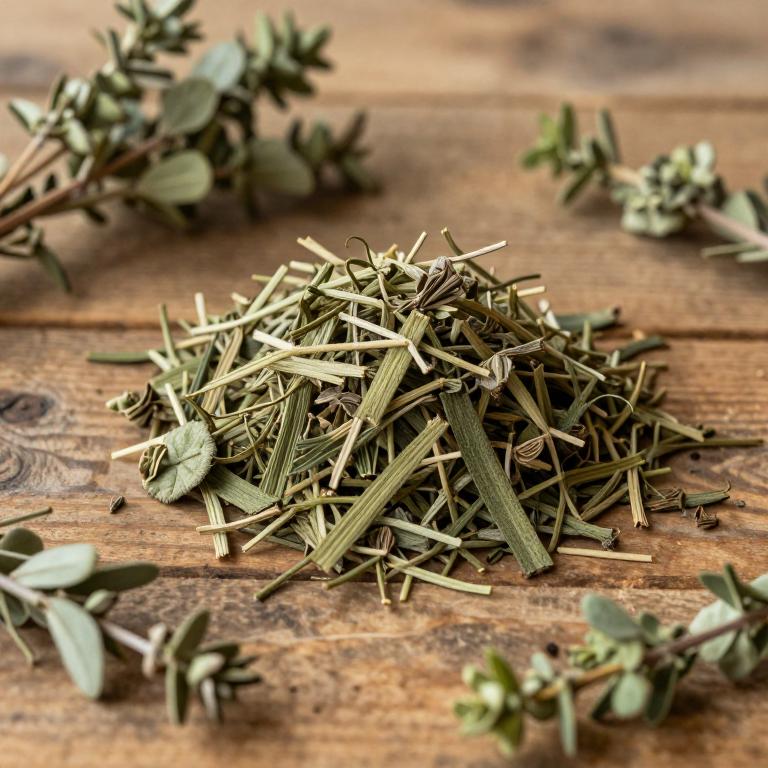
Names and Synonyms
Common Names
- Mexican cedar
- Mexican cypress
- cedar of Goa
Scientific Names
Accepted name
Hesperocyparis lusitanicaSynonyms
- Cupressus lusitanica var. lindleyi
- Cupressus lusitanica var. skinneri
- Cupressus lusitanica var. tristis
- Cupressus benthamii var. lindleyi
- Cupressus glauca
- Cupressus lindleyi
- Hesperocyparis lindleyi
- Hesperocyparis lindleyi subsp. hondurensis
- Cupressus lusitanica subsp. mexicana
- Juniperus uhdeana
- Cupressus lusitanica var. uhdeana
- Cupressus lusitanica var. glauca
- Cupressus glauca var. tristis
- Cupressus uhdeana
- Cupressus mexicana
- Cupressus coulteri
- Cupressus karwinskiana
- Cupressus excelsa
- Cupressus lusitanica var. chlorocarpa
- Cupressus sinensis
- Cupressus coerulea var. nana
- Cupressus lusitanica glauca-pendula
- Callitropsis lusitanica
- Neocupressus lusitanica
- Cupressus lusitanica var. communis
- Neocupressus lusitanica var. lindleyi
- Cupressus lusitanica var. epruinosa
- Cupressus lusitanica subsp. genuina
- Cupressus lusitanica var. hondurensis
- Cupressus lusitanica f. vulgaris
- Cupressus lindleyi var. hondurensis
- Cupressus lindleyi subsp. hondurensis
- Cupressus lusitanica
- Cupressus assamica
- Hesperocyparis lusitanica var. lindleyi
Regional and Traditional Names
Spanish:
- Ciprés mexicano
- cedro blanco
German:
- Mexikanische Zypresse
French:
- Cyprès du Mexique
Sources: Wikidata, Catalogue of Life
Taxonomical Classification
This plant belongs to the kingdom Plantae and the phylum Streptophyta, falling under the class Equisetopsida. Within the subclass Pinidae and order Pinales, it is classified under the family Cupressaceae. Finally, it is identified by its specific genus, Hesperocyparis.
| Rank | Classification |
|---|---|
| Kingdom | Plantae |
| Phylum | Streptophyta |
| Class | Equisetopsida |
| Subclass | Pinidae |
| Order | Pinales |
| Family | Cupressaceae |
| Genus | Hesperocyparis |
Sources: The World Checklist of Vascular Plants (WCVP)
Distribution
This plant exhibits a wide geographical distribution that spans across several continents. In Northern Europe, its presence can be noted within Great Britain. Moving toward Southwestern Europe, the species is found throughout both Portugal and Spain. Its range extends further east into Southeastern Europe, specifically within Italy. Finally, the plant reaches Northeast Tropical Africa, where it is located in Eritrea.
| Region | Area |
|---|---|
| Northern Europe | Great Britain |
| Southwestern Europe | Portugal |
| Southwestern Europe | Spain |
| Southeastern Europe | Italy |
| Northeast Tropical Africa | Eritrea |
| Northeast Tropical Africa | Ethiopia |
| Northeast Tropical Africa | Sudan-South Sudan |
| Middle Atlantic Ocean | St.Helena |
| Indian Subcontinent | East Himalaya |
| Australia | Norfolk Is. |
Sources: The World Checklist of Vascular Plants (WCVP)
Botanical Identification
Ecology
The ecology of Hesperocyparis lusitanica is characterized by a versatile adaptive capacity, primarily found within cultivated environments where it is managed for various purposes. This species occupies a broad vertical distribution across diverse landscapes, thriving at elevations ranging from a minimum of 275 m AMSL to a maximum of 3000 m AMSL. This extensive elevational range allows the plant to encounter a wide variety of altitudinal gradients and associated microclimates.
- Elevational range max:
- 3000 m AMSL
- Elevational range min:
- 275 m AMSL
- Habitat :
- cultivated
Life history
The life history of Hesperocyparis lusitanica is characterized by a perennial lifecycle, allowing the plant to persist through multiple growing seasons. As a phanerophyte, it maintains its photosynthetic organs on elevated structures above the ground, specifically functioning as a phanerophyte to ensure survival against various environmental stressors. Throughout its existence, the species exhibits an evergreen deciduousness, retaining its foliage year-round rather than shedding it seasonally.
- Deciduousness :
- evergreen
- Life form :
- phanerophyte
- Lifecycle :
- perennial
Morphology
The morphology of Cupressus lusitanica is characterized by its robust, woody growth form, typically manifesting as a large tree. It is a self-supporting, independent organism that does not function as a climber, liana, or vine, nor does it exhibit parasitic or epiphytic behavior, maintaining a strictly terrestrial existence. The plant reaches significant dimensions, with a height ranging from a minimum of 25 meters to a maximum of 30 meters, maintaining an average height of approximately 30 meters.
- Aquatic :
- terrestrial
- Climber :
- self-supporting
- Epiphyte :
- terrestrial
- Growth form :
- tree
- Parasite :
- independent
- Plant height mean:
- 30 m
- Plant height min:
- 25 m
- Woodiness :
- woody
Physiology
The physiology of Hesperocyparis lusitanica is characterized by specific metabolic and morphological adaptations suited to its environmental niche. It utilizes a C3 photosynthetic pathway, a standard mechanism for temperate conifers that relies on the direct fixation of carbon dioxide through the enzyme Rubisco. Morphologically, the plant exhibits highly reduced foliage, with a leaf length reaching a maximum of only 0.2 cm, a trait that contributes to its structural efficiency. Unlike many desert-adapted species, it does not exhibit succulence, maintaining a non-succulent tissue structure. Furthermore, the plant does not function as a nitrogen fixer, meaning it relies on external soil nitrogen sources rather than symbiotic diazotrophic processes to support its nutrient requirements.
- Leaf length max:
- 0.2 cm
- Nitrogen fixer :
- no
- Photosynthetic pathway :
- C3
- Succulence :
- no
Reproduction
The reproduction of Hesperocyparis lusitanica is characterized by an abiotic pollination syndrome, specifically utilizing wind as the primary mechanism for pollen transfer. Following successful fertilization, the plant produces fruits with an average width of 1.5 cm. The resulting seeds are relatively small and uniform in dimension, featuring a consistent seed length of 4 mm (with both minimum and maximum values recorded at 4 mm). These seeds exhibit a mean mass of approximately 0.00456025 g, with individual weights ranging from a minimum of 0.003811 g to a maximum of 0.00584 g. For the distribution of offspring, the species employs an anemochorous dispersal syndrome, relying on wind to transport its seeds away from the parent plant.
- Dispersal syndrome :
- anemochorous
- Fruit width mean:
- 1.5 cm
- Pollination syndrome :
- wind
- Pollination syndrome :
- abiotic
- Seed length mean:
- 4 mm
- Seed mass max:
- 0.00584 g
- Seed mass mean:
- 0.00456025 g
- Seed mass min:
- 0.003811 g
Sources: Global Inventory of Floras and Traits (GIFT)
Plant Parts
Hesperocyparis lusitanica has 2 reported plant parts identified across 2 scientific publications and several other databases that are studied for medicinal purposes. The most consistently reported plant part include leaf, root.
| Plant part | Supporting sources | Consensus |
|---|---|---|
| Leaf | 1 supporting sources | ★☆☆☆☆ |
| Root | 1 supporting sources | ★☆☆☆☆ |
Leaf
- Environmental toxicology and pharmacology
Root
- Environmental toxicology and pharmacology
Chemicals
Hesperocyparis lusitanica has 9 reported phytochemicals identified across 2 scientific publications and several other databases. The most consistently reported chemicals include ALPHA-PINENE, EICOSANE, HEPTACOSANE, Kaurenoic acid, PIMARIC ACID.
| Chemical | Supporting sources | Consensus |
|---|---|---|
| ALPHA-PINENE | 1 supporting sources | ★☆☆☆☆ |
| EICOSANE | 1 supporting sources | ★☆☆☆☆ |
| HEPTACOSANE | 1 supporting sources | ★☆☆☆☆ |
| Kaurenoic acid | 1 supporting sources | ★☆☆☆☆ |
| PIMARIC ACID | 1 supporting sources | ★☆☆☆☆ |
| TRICOSANE | 1 supporting sources | ★☆☆☆☆ |
| beta-Himachalene | 1 supporting sources | ★☆☆☆☆ |
| epi-bicyclosesquiphellandrene | 1 supporting sources | ★☆☆☆☆ |
| epi-zonarene | 1 supporting sources | ★☆☆☆☆ |
ALPHA-PINENE
- Journal of ethnopharmacology
EICOSANE
- Journal of ethnopharmacology
HEPTACOSANE
- Journal of ethnopharmacology
Kaurenoic acid
- Journal of ethnopharmacology
PIMARIC ACID
- Journal of ethnopharmacology
TRICOSANE
- Journal of ethnopharmacology
beta-Himachalene
- Journal of ethnopharmacology
epi-bicyclosesquiphellandrene
- Journal of ethnopharmacology
epi-zonarene
- Journal of ethnopharmacology
Preparations
Hesperocyparis lusitanica has 5 reported preparations identified across 2 scientific publications and several other databases. The most consistently reported preparations include Methanol extracts from the bark, Methanol extracts from the leaves, Methanol extracts from the roots, crude extract, hexanic leaf extract.
| Preparation | Supporting sources | Consensus |
|---|---|---|
| Methanol extracts from the bark | 1 supporting sources | ★☆☆☆☆ |
| Methanol extracts from the leaves | 1 supporting sources | ★☆☆☆☆ |
| Methanol extracts from the roots | 1 supporting sources | ★☆☆☆☆ |
| Crude extract | 1 supporting sources | ★☆☆☆☆ |
| Hexanic leaf extract | 1 supporting sources | ★☆☆☆☆ |
Methanol extracts from the bark
- Environmental toxicology and pharmacology
Methanol extracts from the leaves
- Environmental toxicology and pharmacology
Methanol extracts from the roots
- Environmental toxicology and pharmacology
Crude extract
- Journal of ethnopharmacology
Hexanic leaf extract
- Journal of ethnopharmacology