Arizona cypress
Hesperocyparis arizonica · Accepted scientific name
Scientific literature: Very Sparse (6 studies) · ★☆☆☆☆
Arizona cypress, scientifically known as Hesperocyparis arizonica, is a resilient conifer native to the American Southwest. Beyond its role in stabilizing arid landscapes, this evergreen holds traditional significance. Historically, various parts of the plant have been utilized in folk medicine for their potential antimicrobial and soothing botanical properties.
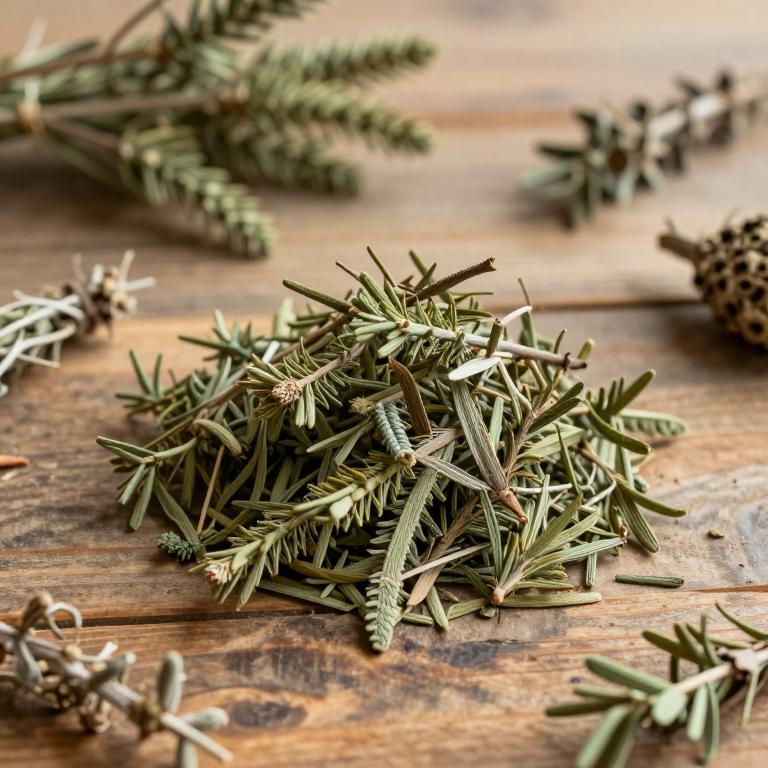
Names and Synonyms
Common Names
- Arizona cypress
- Cuyamaca cypress
- Piute cypress
- Rough-Barked Arizona Cypress
- Rough-Barked Cypress
Scientific Names
Accepted name
Hesperocyparis arizonicaSynonyms
- Cupressus lusitanica subsp. arizonica
- Neocupressus arizonica
- Cupressus arizonica var. compacta
- Cupressus arizonica glauca
- Cupressus arizonica f. glomerata
- Cupressus arizonica f. minor
- Cupressus arizonica f. glauca
- Cupressus arizonica f. compacta
- Cupressus benthamii var. arizonica
- Cupressus arizonica
- Cupressus arizonica var. bonita
- Callitropsis arizonica
Regional and Traditional Names
Spanish:
- Ciprés
- cedro blanco norteño
French:
- Cyprès de l'Arizona
Sources: Wikidata, Catalogue of Life
Taxonomical Classification
This plant belongs to the kingdom Plantae and the phylum Streptophyta, falling under the class Equisetopsida and subclass Pinidae. Within the order Pinales and the family Cupressaceae, it is classified under the genus Hesperocypress.
| Rank | Classification |
|---|---|
| Kingdom | Plantae |
| Phylum | Streptophyta |
| Class | Equisetopsida |
| Subclass | Pinidae |
| Order | Pinales |
| Family | Cupressaceae |
| Genus | Hesperocyparis |
Sources: The World Checklist of Vascular Plants (WCVP)
Distribution
This plant exhibits a diverse and widespread geographical distribution across several continents. In Southwestern Europe, it can be found growing within the borders of Spain. Its presence extends into Southeastern Europe, specifically located in Italy and the European portion of Türkiye. Moving toward Western Asia, the species is also established throughout Türkiye. Finally, its range reaches the Southern Africa region, particularly within the Free State.
| Region | Area |
|---|---|
| Southwestern Europe | Spain |
| Southeastern Europe | Italy |
| Southeastern Europe | Türkiye-in-Europe |
| Southern Africa | Free State |
| Western Asia | Türkiye |
| Southwestern U.S.A. | Arizona |
| South-Central U.S.A. | New Mexico |
| South-Central U.S.A. | Texas |
| Mexico | Mexico Northeast |
| Mexico | Mexico Northwest |
Sources: The World Checklist of Vascular Plants (WCVP)
Botanical Identification
Ecology
The ecology of Hesperocyparis arizonica is strictly defined by its specialized niche within montane environments, where it thrives within a specific vertical distribution. This species is predominantly found across a defined altitudinal gradient, occupying an elevational range that begins at a minimum of 1500 m AMSL and extends to a maximum of 1900 m AMSL. Within this specific range, the plant adapts to the unique climatic and soil conditions characteristic of mid-to-high elevation coniferous zones, which dictate its distribution patterns and competitive interactions within its ecosystem.
- Elevational range max:
- 1900 m AMSL
- Elevational range min:
- 1500 m AMSL
Life history
The life history of Hesperocyparis arizonica is characterized by a perennial lifecycle, allowing the individual to persist across multiple years within its native habitat. As a woody species, its biological structure is classified as a phanerophyte, a life form defined by having its perennating buds located high above the ground on branches. This phanerophyte status ensures the plant's survival through seasonal environmental shifts, maintaining its structural integrity and photosynthetic capacity over an extended duration.
- Life form :
- phanerophyte
- Lifecycle :
- perennial
Morphology
The morphology of Hesperocyparis arizonica is characterized by its growth form as a woody tree that functions as a self-supporting structure. It is an independent organism, neither a parasite nor an epiphyte, maintaining a strictly terrestrial habitat. The plant's stature is defined by a height that typically ranges from a minimum of 3 m to a maximum of 12 m. As a self-supporting woody species, it does not exhibit climbing or vining habits, instead establishing a robust, upright architecture suitable for its terrestrial environment.
- Aquatic :
- terrestrial
- Climber :
- self-supporting
- Epiphyte :
- terrestrial
- Growth form :
- tree
- Parasite :
- independent
- Plant height max:
- 12 m
- Plant height min:
- 3 m
- Woodiness :
- woody
Physiology
The physiology of Hesperocyparis arizonica is characterized by highly specialized adaptations for survival in arid, montane environments, most notably through its photosynthetic pathway, which utilizes the C3 mechanism. As a C3 plant, its carbon fixation process occurs primarily through the enzyme RuBisCO during the day, requiring efficient stomatal regulation to balance the intake of carbon dioxide with the prevention of excessive transpirational water loss. To mitigate the physiological stress imposed by high temperatures and seasonal droughts typical of its habitat, the species exhibits significant xerophytic adaptations, such as reduced leaf surface area through scale-like foliage and a thick cuticle that minimizes non-stomatal water loss. Its metabolic processes are further supported by a robust root system designed to maximize moisture uptake from rocky, well-drained soils, ensuring that the hydration requirements for C3 photosynthesis are met even under fluctuating environmental conditions.
- Photosynthetic pathway :
- C3
Reproduction
The reproduction of Cupressus arizonica (often referred to in botanical contexts as Hesperocyparis arizonica) is primarily driven by the production of small, winged seeds contained within woody cones. The reproductive output is characterized by significant variability in seed size, which plays a crucial role in its dispersal and establishment strategies. Quantitative analysis of its seed mass reveals a mean value of approximately 0.006799409 g. Within the population, there is a notable range of seed weights, with the smallest recorded seed mass measuring 0.002286 g and the largest individual seeds reaching a maximum mass of 0.0111 g. This variation in seed mass likely reflects different developmental stages or environmental adaptations intended to optimize germination success in its native habitat.
- Seed mass max:
- 0.0111 g
- Seed mass mean:
- 0.006799409 g
- Seed mass min:
- 0.002286 g
Sources: Global Inventory of Floras and Traits (GIFT)
Plant Parts
Hesperocyparis arizonica has 2 reported plant parts identified across 2 scientific publications and several other databases that are studied for medicinal purposes. The most consistently reported plant part include fruit, leaf.
| Plant part | Supporting sources | Consensus |
|---|---|---|
| Fruit | 1 supporting sources | ★☆☆☆☆ |
| Leaf | 1 supporting sources | ★☆☆☆☆ |
Fruit
- Jundishapur journal of natural pharmaceutical products
Leaf
- Jundishapur journal of natural pharmaceutical products
Chemicals
Hesperocyparis arizonica has 4 reported phytochemicals identified across 2 scientific publications and several other databases. The most consistently reported chemicals include Limonen, Terpinen-4-ol, Umbellulone, a-pinene.
| Chemical | Supporting sources | Consensus |
|---|---|---|
| Limonen | 1 supporting sources | ★☆☆☆☆ |
| Terpinen-4-ol | 1 supporting sources | ★☆☆☆☆ |
| Umbellulone | 1 supporting sources | ★☆☆☆☆ |
| a-pinene | 1 supporting sources | ★☆☆☆☆ |
Limonen
- Scientific reports
Terpinen-4-ol
- Scientific reports
Umbellulone
- Scientific reports
a-pinene
- Scientific reports
Preparations
Hesperocyparis arizonica has 1 reported preparations identified across 2 scientific publications and several other databases. The most consistently reported preparations include Methanol extracts of leaves and fruits.
| Preparation | Supporting sources | Consensus |
|---|---|---|
| Methanol extracts of leaves and fruits | 1 supporting sources | ★☆☆☆☆ |
Methanol extracts of leaves and fruits
- Jundishapur journal of natural pharmaceutical products