Herniaria polygama
Herniaria polygama · Accepted scientific name
Scientific literature: Very Sparse (4 studies) · ★☆☆☆☆
Herniaria polygama, scientifically known as Herniaria polygama, is a small, creeping herbaceous plant belonging to the Caryophyllaceae family. Often found in disturbed soils, it is valued in traditional medicine for its potential diuretic and anti-inflammatory properties, serving as a botanical subject for studying diverse bioactive compounds.
- Family
- Caryophyllaceae
- Native range
- Europe
- Parts used
- Not available
- Common names
- Not available
- Scientific synonyms
- Herniaria Euxina · Herniaria Odorata · 1 more
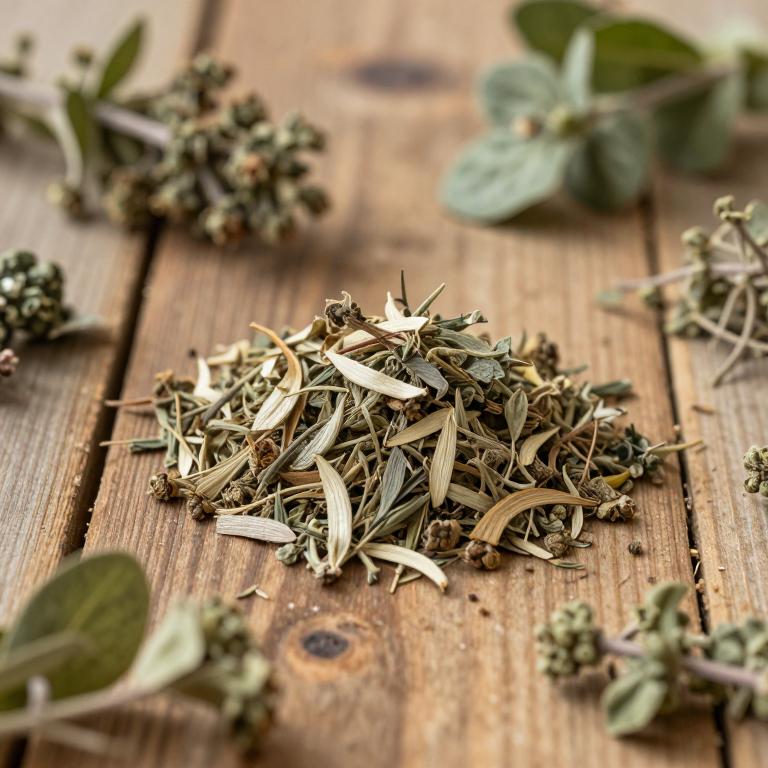
Names and Synonyms
Scientific Names
Accepted name
Herniaria polygamaSynonyms
- Herniaria euxina
- Herniaria odorata
- Herniaria odorata
Sources: Wikidata, Catalogue of Life
Taxonomical Classification
This plant belongs to the kingdom Plantae and is classified under the phylum Streptophyta and class Equisetopsida. Within the subclass Magnoliidae, it is further categorized under the order Caryophyllales and the family Caryophyllaceae. Finally, it is identified by the genus Herniaria.
| Rank | Classification |
|---|---|
| Kingdom | Plantae |
| Phylum | Streptophyta |
| Class | Equisetopsida |
| Subclass | Magnoliidae |
| Order | Caryophyllales |
| Family | Caryophyllaceae |
| Genus | Herniaria |
Sources: The World Checklist of Vascular Plants (WCVP)
Distribution
This plant exhibits a diverse geographical distribution across several regions of the European continent. In Middle Europe, its presence is specifically documented within the borders of Poland. Moving toward Eastern Europe, the species can be found throughout Belarus. Its range also extends significantly into the vast territories of Central European Russia. Furthermore, the distribution continues through East European Russia and reaches into South European Russia.
| Region | Area |
|---|---|
| Middle Europe | Poland |
| Eastern Europe | Belarus |
| Eastern Europe | Central European Russia |
| Eastern Europe | East European Russia |
| Eastern Europe | South European Russia |
| Eastern Europe | Ukraine |
| Siberia | Altay |
| Siberia | Krasnoyarsk |
| Siberia | Tuva |
| Central Asia | Kazakhstan |
Sources: The World Checklist of Vascular Plants (WCVP)
Botanical Identification
Ecology
The ecology of Herniaria polygama is characterized by its preference for specific terrain and altitudinal niches, primarily occupying habitats such as fallows, sandy steppe slopes, and dry pinewoods. This species exhibits a highly specialized distribution pattern within its environment, maintaining a consistent presence at an elevation of approximately 550 m AMSL. This specific altitudinal data indicates a narrow ecological band, as both the minimum, mean, and maximum elevational ranges are recorded at exactly 550 m AMSL, suggesting a strict requirement for these particular topographical and soil conditions.
- Elevational range max:
- 550 m AMSL
- Habitat :
- fallows, sandy steppe slopes, dry pinewoods
Life history
The life history of Herniaria polygama is characterized by its classification as a perennial plant, though its growth pattern can exhibit variability depending on environmental conditions. As a perennial species, it maintains its presence in the ecosystem over multiple growing seasons, often forming low-growing, mat-like mats through its spreading habit. Its developmental cycle involves establishing a robust root system that allows it to persist through various seasonal changes, facilitating continuous vegetative spread and periodic reproductive phases. This enduring lifecycle enables the plant to colonize stable habitats where it can establish long-term dominance within its specific ecological niche.
- Lifecycle :
- perennial
Morphology
The morphology of Herniaria polygama is characterized by its growth form as a non-woody herb, existing primarily as a small, herbaceous plant. It exhibits a diminutive stature, with plant heights ranging from a minimum of 0.03 m to a maximum of 0.2 m, maintaining an average height of approximately 0.09 m. The shoots demonstrate an ascending orientation, and the plant functions as a self-supporting species rather than an obligatory or facultative climber. Overall, its structural development is defined by its herbaceous nature and lack of woody tissue.
- Climber :
- self-supporting
- Growth form :
- herb
- Plant height max:
- 0.2 m
- Plant height mean:
- 0.09 m
- Plant height min:
- 0.03 m
- Shoot orientation :
- ascending
- Woodiness :
- non-woody
Physiology
The physiological profile of Herniaria polygama is characterized by a highly specialized foliar morphology adapted for efficient resource management. The plant exhibits significant variation in its leaf dimensions, with leaf lengths ranging from a minimum of 0.3 cm to a maximum of 1 cm, maintaining a mean length of approximately 0.65 cm. Complementing this longitudinal dimension, the leaf width is notably narrow, fluctuating between a minimum of 0.1 cm and a maximum of 0.3 cm, resulting in a mean width of 0.2 cm. This slender, linear leaf structure suggests a physiological adaptation to minimize transpiration while maximizing surface area for light interception within its specific ecological niche.
- Leaf length max:
- 1 cm
- Leaf length mean:
- 0.65 cm
- Leaf length min:
- 0.3 cm
- Leaf width max:
- 0.3 cm
- Leaf width mean:
- 0.2 cm
- Leaf width min:
- 0.1 cm
Sources: Global Inventory of Floras and Traits (GIFT)
Chemicals
Herniaria polygama has 2 reported phytochemicals identified across 0 scientific publications and several other databases. The most consistently reported chemicals include Narcissin, RUTIN.
| Chemical | Supporting sources | Consensus |
|---|---|---|
| Narcissin | 1 supporting sources | ★☆☆☆☆ |
| RUTIN | 1 supporting sources | ★☆☆☆☆ |
Narcissin
- Molecules (Basel, Switzerland)
RUTIN
- Molecules (Basel, Switzerland)
Activities
Herniaria polygama has 1 reported activities identified across 0 scientific publications and several other databases. The most consistently reported activities include Antioxidant.
| Activity | Supporting sources | Consensus |
|---|---|---|
| Antioxidant | 1 supporting sources | ★☆☆☆☆ |
Antioxidant
- Molecules (Basel, Switzerland)
Conditions
Herniaria polygama has 1 reported investigations on conditions identified across 0 scientific publications and several other databases. The most consistently reported conditions include oxidative stress.
| Condition | Supporting sources | Consensus |
|---|---|---|
| Oxidative stress | 1 supporting sources | ★☆☆☆☆ |
Oxidative stress
- Molecules (Basel, Switzerland)