Persian hogweed
Heracleum persicum · Accepted scientific name
Scientific literature: Sparse (54 studies) · ★★☆☆☆
Persian hogweed, scientifically known as Heracleum persicum, is a robust perennial herb native to the Middle East. Renowned in traditional medicine, its roots and seeds are utilized for their diverse therapeutic properties. However, caution is essential, as its sap can cause severe skin irritation upon contact with sunlight.
- Family
- Apiaceae
- Native range
- Europe
- Parts used
- Flower · Leaf
- Common names
- Persian Hogweed
- Scientific synonyms
- Heracleum Pubescens Var. Laeve · Heracleum Pubescens Var. Persicum · 2 more
Names and Synonyms
Common Names
- Persian Hogweed
Scientific Names
Accepted name
Heracleum persicumSynonyms
- Heracleum pubescens var. laeve
- Heracleum pubescens var. persicum
- Heracleum amplissimum
- Heracleum glabrescens
Regional and Traditional Names
German:
- Golpar
- Persicher Bärenklau
- Golpar
- Persischer Bärenklau
French:
- berce de Perse
- Berce de Perse
Sources: Wikidata, Catalogue of Life
Taxonomical Classification
This plant belongs to the kingdom Plantae and the phylum Streptophyta, falling under the class Equisetopsida and subclass Magnoliidae. Within the order Apiales, it is classified under the family Apiaceae. It is further identified by the genus Heracleum, which includes the specific species Heracleum persicum.
| Rank | Classification |
|---|---|
| Kingdom | Plantae |
| Phylum | Streptophyta |
| Class | Equisetopsida |
| Subclass | Magnoliidae |
| Order | Apiales |
| Family | Apiaceae |
| Genus | Heracleum |
Sources: The World Checklist of Vascular Plants (WCVP)
Distribution
This plant exhibits a specific distribution pattern across the northern reaches of the European continent. It can be found growing within the territories of Denmark and Finland. Additionally, its presence extends to the island nation of Iceland. The species is also documented throughout the landscapes of Norway. Finally, its geographical range includes the country of Sweden.
| Region | Area |
|---|---|
| Northern Europe | Denmark |
| Northern Europe | Finland |
| Northern Europe | Iceland |
| Northern Europe | Norway |
| Northern Europe | Sweden |
| Middle Europe | Czechia-Slovakia |
| Middle Europe | Germany |
| Eastern Europe | Baltic States |
| Western Asia | Iran |
| Western Asia | Türkiye |
Sources: The World Checklist of Vascular Plants (WCVP)
Botanical Identification
Life history
The life history of Heracleum persicum is characterized by its classification as a hemicryptophyte, a life form where the perennating buds are located at or just below the soil surface, protected by leaf litter or soil during unfavorable seasons. This botanical strategy allows the plant to persist through seasonal environmental shifts, emerging from its underground structures to complete its growth cycle. Its developmental progression typically involves a period of vegetative growth where large, deeply lobed leaves develop to maximize photosynthetic efficiency, followed by the production of massive, branched inflorescences that bear numerous small flowers. As a perennial species, it undergoes cyclic patterns of growth and dormancy, relying on its protected bud structures to ensure survival and subsequent regrowth in successive growing seasons.
- Life form :
- hemicryptophyte
Morphology
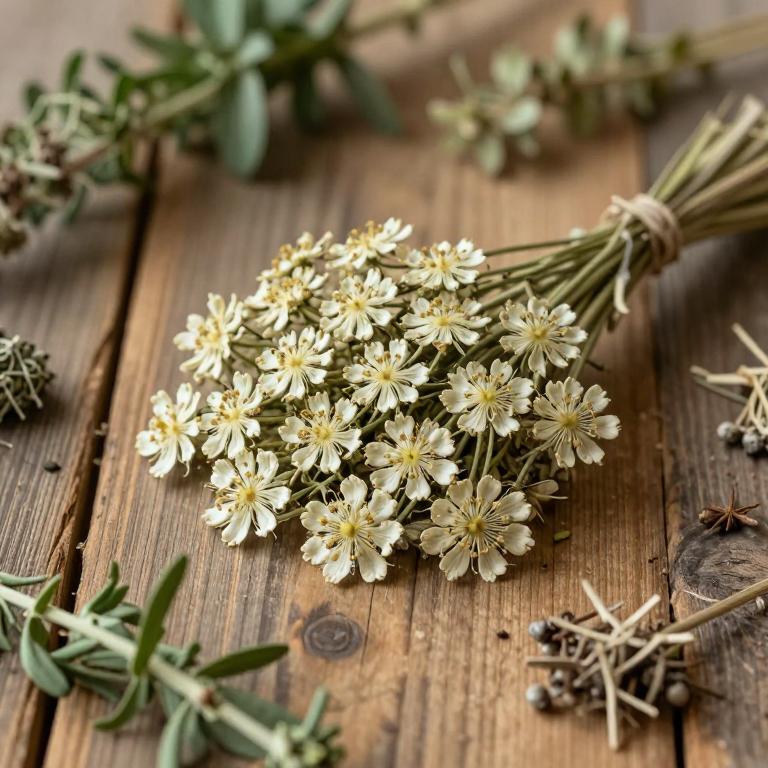
The morphology of Heracleum persicum is characterized by a robust, perennial herbaceous structure featuring large, compound leaves that are deeply lobed or pinnately divided, often exhibiting a broad, spreading habit. The stem is typically stout, erect, and can reach significant heights, often possessing a hollow interior and a slightly furrowed texture. The inflorescence is a large, compound umbel composed of numerous small, white flowers arranged in multiple tiers, supported by long, spreading rays. The root system is well-developed, often consisting of a thick taproot that facilitates nutrient storage. Regarding its biological lifestyle and nutritional dependency, this species is an independent organism; it does not function as a parasite, meaning its nutritional status is classified as independent rather than being an obligatory or facultative parasite.
- Parasite :
- independent
Sources: Global Inventory of Floras and Traits (GIFT)
Plant Parts
Heracleum persicum has 3 reported plant parts identified across 3 scientific publications and several other databases that are studied for medicinal purposes. The most consistently reported plant part include flower, leaf, seed.
| Plant part | Supporting sources | Consensus |
|---|---|---|
| Flower | 1 supporting sources | ★☆☆☆☆ |
| Leaf | 1 supporting sources | ★☆☆☆☆ |
| Seed | 1 supporting sources | ★☆☆☆☆ |
Flower
- Mycotoxin research
Leaf
- Mycotoxin research
Seed
- Mycotoxin research
Chemicals
Heracleum persicum has 23 reported phytochemicals identified across 3 scientific publications and several other databases. The most consistently reported chemicals include HEXYL BUTYRATE, Octyl acetate, ANETHOLE, 1,8-Cineole, BETA-SITOSTEROL.
| Chemical | Supporting sources | Consensus |
|---|---|---|
| HEXYL BUTYRATE | 5 supporting sources | ★★★☆☆ |
| Octyl acetate | 4 supporting sources | ★★☆☆☆ |
| ANETHOLE | 2 supporting sources | ★☆☆☆☆ |
| 1,8-Cineole | 1 supporting sources | ★☆☆☆☆ |
| BETA-SITOSTEROL | 1 supporting sources | ★☆☆☆☆ |
| CARVACROL | 1 supporting sources | ★☆☆☆☆ |
| CHLOROPHYLL | 1 supporting sources | ★☆☆☆☆ |
| CINNAMIC ACID | 1 supporting sources | ★☆☆☆☆ |
| Carotenoid | 1 supporting sources | ★☆☆☆☆ |
| Caryophyllene | 1 supporting sources | ★☆☆☆☆ |
HEXYL BUTYRATE
- Plants (Basel, Switzerland)
- Pakistan journal of pharmaceutical sciences
- Chemistry & biodiversity
- Food science & nutrition
- Journal de mycologie medicale
Octyl acetate
- Plants (Basel, Switzerland)
- Pakistan journal of pharmaceutical sciences
- Chemistry & biodiversity
- Food science & nutrition
ANETHOLE
- Chemistry & biodiversity
- Food science & nutrition
1,8-Cineole
- Journal de mycologie medicale
BETA-SITOSTEROL
- Foods (Basel, Switzerland)
CARVACROL
- Journal de mycologie medicale
CHLOROPHYLL
- Foods (Basel, Switzerland)
CINNAMIC ACID
- Food science & nutrition
Carotenoid
- Foods (Basel, Switzerland)
Caryophyllene
- Food science & nutrition
Activities
Heracleum persicum has 3 reported activities identified across 3 scientific publications and several other databases. The most consistently reported activities include Anticancer, Antifungal, Antioxidant.
| Activity | Supporting sources | Consensus |
|---|---|---|
| Anticancer | 1 supporting sources | ★☆☆☆☆ |
| Antifungal | 1 supporting sources | ★☆☆☆☆ |
| Antioxidant | 1 supporting sources | ★☆☆☆☆ |
Anticancer
- Antioxidants (Basel, Switzerland)
Antifungal
- Mycotoxin research
Antioxidant
- Antioxidants (Basel, Switzerland)
Conditions
Heracleum persicum has 8 reported investigations on conditions identified across 3 scientific publications and several other databases. The most consistently reported conditions include Aspergillus flavus, Fusarium infections, candidiasis, contraceptive, coronary artery disease.
| Condition | Supporting sources | Consensus |
|---|---|---|
| Aspergillus flavus | 1 supporting sources | ★☆☆☆☆ |
| Fusarium infections | 1 supporting sources | ★☆☆☆☆ |
| Candidiasis | 1 supporting sources | ★☆☆☆☆ |
| Contraceptive | 1 supporting sources | ★☆☆☆☆ |
| Coronary artery disease | 1 supporting sources | ★☆☆☆☆ |
| Hormones | 1 supporting sources | ★☆☆☆☆ |
| Hypertriglyceridemia | 1 supporting sources | ★☆☆☆☆ |
| Infertility | 1 supporting sources | ★☆☆☆☆ |
Aspergillus flavus
- Journal de mycologie medicale
Fusarium infections
- Current medical mycology
Candidiasis
- Journal de mycologie medicale
Contraceptive
- Cell journal
Coronary artery disease
- Phytotherapy research : PTR
Hormones
- Biomolecular concepts
Hypertriglyceridemia
- Phytotherapy research : PTR
Infertility
- Cell journal
Preparations
Heracleum persicum has 16 reported preparations identified across 3 scientific publications and several other databases. The most consistently reported preparations include EOs, Essential Oil Nanoemulsion, Essential oils, Hydroalcoholic Extract, essential oils.
| Preparation | Supporting sources | Consensus |
|---|---|---|
| Eos | 1 supporting sources | ★☆☆☆☆ |
| Essential oil nanoemulsion | 1 supporting sources | ★☆☆☆☆ |
| Essential oils | 1 supporting sources | ★☆☆☆☆ |
| Hydroalcoholic extract | 1 supporting sources | ★☆☆☆☆ |
| Essential oils | 1 supporting sources | ★☆☆☆☆ |
| Ethyl acetate extract of flowers | 1 supporting sources | ★☆☆☆☆ |
| Ethyl acetate extract of leaves | 1 supporting sources | ★☆☆☆☆ |
| Ethyl acetate extract of seeds | 1 supporting sources | ★☆☆☆☆ |
| Extract | 1 supporting sources | ★☆☆☆☆ |
| Flower extract | 1 supporting sources | ★☆☆☆☆ |
Eos
- Journal de mycologie medicale
Essential oil nanoemulsion
- Antioxidants (Basel, Switzerland)
Essential oils
- Pakistan journal of pharmaceutical sciences
Hydroalcoholic extract
- Cell journal
Essential oils
- Journal de mycologie medicale
Ethyl acetate extract of flowers
- Mycotoxin research
Ethyl acetate extract of leaves
- Mycotoxin research
Ethyl acetate extract of seeds
- Mycotoxin research
Extract
- Current medical mycology
Flower extract
- Mycotoxin research