Heracleum pastinacifolium
Heracleum pastinacifolium · Accepted scientific name
Scientific literature: Very Sparse (3 studies) · ★☆☆☆☆
Heracleum pastinacifolium, scientifically known as Heracleum pastinacifolium, is a perennial herb belonging to the Apiaceae family. Native to mountainous regions, it is valued in traditional herbalism for its aromatic roots and foliage. This plant is studied for its unique phytochemical properties and its potential therapeutic applications in medicine.
- Family
- Apiaceae
- Native range
- Asia-Temperate
- Parts used
- Not available
- Common names
- Not available
- Scientific synonyms
- Pastinaca Brevivittata · Wendtia Brevivittata · 6 more
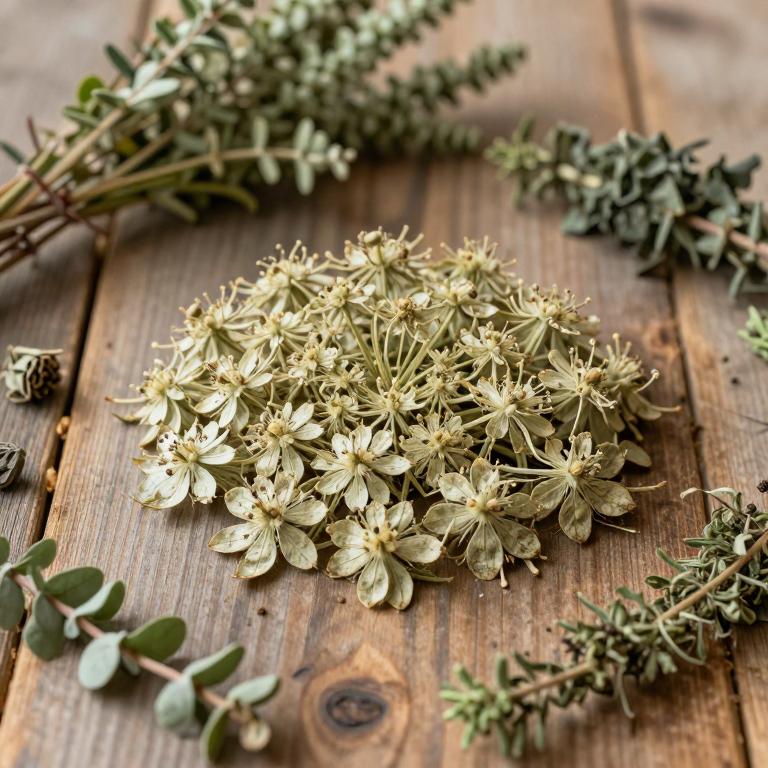
Names and Synonyms
Scientific Names
Accepted name
Heracleum pastinacifoliumSynonyms
- Pastinaca brevivittata
- Wendtia brevivittata
- Pastinaca caroli-kochii
- Wendtia pastinacifolia
- Heracleum brevivittatum
- Heracleum transcaucasicum
- Heracleum sisianense
- Heracleum pastinacifolium subsp. transcaucasicum
Sources: Wikidata, Catalogue of Life
Taxonomical Classification
This plant belongs to the kingdom Plantae and the phylum Streptophyta, falling under the class Equisetopsida and subclass Magnoliidae. Within the order Apiales, it is classified under the family Apiaceae. Finally, it is identified by the genus Heracleum and the specific species pastiinacifolium.
| Rank | Classification |
|---|---|
| Kingdom | Plantae |
| Phylum | Streptophyta |
| Class | Equisetopsida |
| Subclass | Magnoliidae |
| Order | Apiales |
| Family | Apiaceae |
| Genus | Heracleum |
Sources: The World Checklist of Vascular Plants (WCVP)
Distribution
This plant exhibits a specific geographical distribution across several key regions of Western Eurasia. It is found within the Caucasus, particularly throughout the Transcaucasus area. Additionally, its range extends into Western Asia, where it grows in the country of Iran. The species also inhabits various parts of Western Asia located within Türkiye. Together, these locations define the primary natural habitat for Heracleum pastinacifolium.
| Region | Area |
|---|---|
| Caucasus | Transcaucasus |
| Western Asia | Iran |
| Western Asia | Türkiye |
Sources: The World Checklist of Vascular Plants (WCVP)
Botanical Identification
Ecology
The ecology of Heracleum pastinacifolium is characterized by its preference for diverse and often rugged landscapes, where it thrives across a variety of environmental niches. It is commonly found inhabiting forest edges, open meadows, and mountainous regions, demonstrating a notable adaptability to varying elevations and light availability. Within these ecosystems, the plant typically colonizes areas with moist, nutrient-rich soils, often benefiting from the dappled sunlight found in woodland margins or the full exposure of alpine meadows. Its presence in these specific habitats allows it to integrate into complex biological communities, where it interacts with diverse soil microbiota and local pollinator populations typical of temperate forest and montane zones.
- Habitat :
- forest, meadows, mountains
Life history
The life history of Heracleum pastinacifolium is characterized by its status as a perennial plant, though its developmental stages can exhibit variable patterns among different populations. As a perennial species, it maintains a persistent presence in its habitat, typically establishing itself through a robust root system that allows it to survive through multiple growing seasons. The lifecycle often involves an initial establishment phase where the plant focuses on vegetative growth and the accumulation of energy reserves within its roots. As it matures, it transitions into its reproductive phase, producing large, compound umbels of white flowers that facilitate pollination. Depending on environmental conditions and resource availability, the timing of its flowering and seed production may vary, reflecting the inherent variability in its perennial life strategy.
- Lifecycle :
- perennial
Morphology
The morphology of Heracleum pastinacifolium is characterized by its growth form as a non-woody herb. The plant typically exhibits a height ranging from a minimum of 0.6 m to a maximum of 1.5 m.
- Growth form :
- herb
- Plant height max:
- 1.5 m
- Plant height min:
- 0.6 m
- Woodiness :
- non-woody
Reproduction
The reproduction of Heracleum pastinacifolium is primarily driven by its flowering cycle, which is characterized by a specific seasonal window. The flowering process typically commences in June, marking the initiation of its reproductive phase. This period of blooming continues through the summer months, eventually reaching its conclusion in August. This temporal window ensures that the plant's reproductive efforts are concentrated during the peak of the growing season, facilitating pollination and subsequent seed development.
- Flowering time :
- Jun
- Flowering time :
- Aug
Sources: Global Inventory of Floras and Traits (GIFT)
Chemicals
Heracleum pastinacifolium has 3 reported phytochemicals identified across 0 scientific publications and several other databases. The most consistently reported chemicals include HEXYL BUTYRATE, Isoelemicin, Octyl acetate.
| Chemical | Supporting sources | Consensus |
|---|---|---|
| HEXYL BUTYRATE | 1 supporting sources | ★☆☆☆☆ |
| Isoelemicin | 1 supporting sources | ★☆☆☆☆ |
| Octyl acetate | 1 supporting sources | ★☆☆☆☆ |
HEXYL BUTYRATE
- Chemistry & biodiversity
Isoelemicin
- Chemistry & biodiversity
Octyl acetate
- Chemistry & biodiversity