Heracleum orphanidis
Heracleum orphanidis · Accepted scientific name
Scientific literature: Very Sparse (8 studies) · ★☆☆☆☆
, scientifically known as Heracleum orphanidis, is a rare medicinal herb distinguished by its unique botanical characteristics. Found in specific ecological niches, this plant holds significant potential in traditional pharmacology. Research continues to explore its bioactive compounds, offering promising insights into its therapeutic applications for various health conditions.
- Family
- Apiaceae
- Native range
- Europe
- Parts used
- Not available
- Common names
- Not available
- Scientific synonyms
- Pastinaca Orphanidis
Names and Synonyms
Scientific Names
Accepted name
Heracleum orphanidisSynonyms
- Pastinaca orphanidis
Sources: Wikidata
Taxonomical Classification
This plant belongs to the kingdom Plantae within the phylum Streptophyta and the class Equisetopsida. It is further classified under the subclass Magnoliidae and the order Apiales, falling into the family Apiaceae. Finally, it is categorized under the genus Heracleum.
| Rank | Classification |
|---|---|
| Kingdom | Plantae |
| Phylum | Streptophyta |
| Class | Equisetopsida |
| Subclass | Magnoliidae |
| Order | Apiales |
| Family | Apiaceae |
| Genus | Heracleum |
Sources: The World Checklist of Vascular Plants (WCVP)
Distribution
This plant is primarily distributed across specific regions of Southeastern Europe. Its presence is notable within the territory of Greece, where it can be found in local habitats. Additionally, the species extends its range into the northwestern part of the Balkan Peninsula. These localized areas define the core geographical footprint of the species. Consequently, its natural occurrence is restricted to these particular European landscapes.
| Region | Area |
|---|---|
| Southeastern Europe | Greece |
| Southeastern Europe | NW. Balkan Pen. |
Sources: The World Checklist of Vascular Plants (WCVP)
Botanical Identification
Life history
The life history of Heracleum orphanidis is characterized by its classification as a hemicryptophyte, a life form in which the perennating buds are located at the soil surface, protected by leaf litter or debris during unfavorable seasons. This strategic growth habit allows the plant to persist through seasonal variations by maintaining its regenerative potential at the ground level. Within the spectrum of plant life forms, it specifically aligns with the hemicryptophyte category, distinguishing it from phanerophytes, chamaephytes, cryptophytes, or therophytes. By utilizing this hemicryptophytic development, the species effectively manages its resource allocation to ensure survival and regrowth in its specific ecological niche.
- Life form :
- hemicryptophyte
Morphology
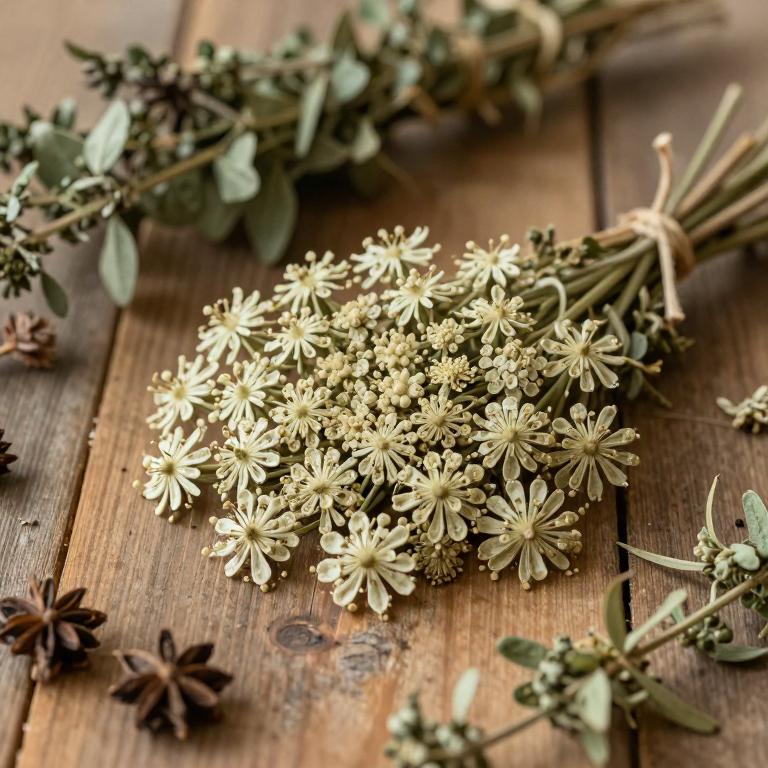
The morphology of Heracleum orphanidis is characterized by its robust, herbaceous structure, which exhibits a versatile growth habit adapted to varying moisture levels, ranging from aquatic and semiaquatic to terrestrial environments. The plant typically features large, deeply divided compound leaves with serrated margins, supported by thick, hollow, and often purplish-tinged stems that provide the necessary structural integrity for its sprawling habit. The inflorescence is arranged in large, compound umbels, consisting of numerous small, white, five-petaled flowers clustered on secondary stalks. Its root system is typically sturdy and fleshy, allowing the plant to anchor itself effectively in the saturated soils of wetland margins or the firmer substrates of terrestrial habitats.
- Aquatic :
- terrestrial
Sources: Global Inventory of Floras and Traits (GIFT)
Chemicals
Heracleum orphanidis has 4 reported phytochemicals identified across 0 scientific publications and several other databases. The most consistently reported chemicals include Coumarins, N-octanol, Octyl hexanoate, n-Octyl acetate.
| Chemical | Supporting sources | Consensus |
|---|---|---|
| Coumarins | 1 supporting sources | ★☆☆☆☆ |
| N-octanol | 1 supporting sources | ★☆☆☆☆ |
| Octyl hexanoate | 1 supporting sources | ★☆☆☆☆ |
| n-Octyl acetate | 1 supporting sources | ★☆☆☆☆ |
Coumarins
- Food & function
N-octanol
- Food & function
Octyl hexanoate
- Food & function
n-Octyl acetate
- Food & function
Activities
Heracleum orphanidis has 2 reported activities identified across 0 scientific publications and several other databases. The most consistently reported activities include Antimicrobial, Antioxidant.
| Activity | Supporting sources | Consensus |
|---|---|---|
| Antimicrobial | 1 supporting sources | ★☆☆☆☆ |
| Antioxidant | 1 supporting sources | ★☆☆☆☆ |
Antimicrobial
- Food & function
Antioxidant
- Food & function
Conditions
Heracleum orphanidis has 1 reported investigations on conditions identified across 0 scientific publications and several other databases. The most consistently reported conditions include free radicals.
| Condition | Supporting sources | Consensus |
|---|---|---|
| Free radicals | 1 supporting sources | ★☆☆☆☆ |
Free radicals
- Food & function