cow parsnip
Heracleum maximum · Accepted scientific name
Scientific literature: Very Sparse (17 studies) · ★☆☆☆☆
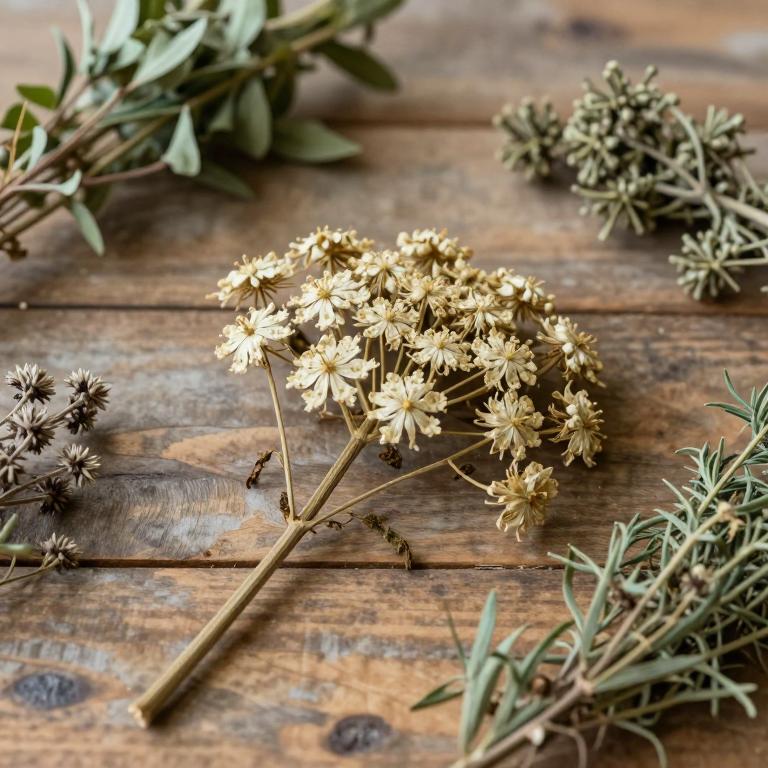
Cow parsnip, scientifically known as Heracleum maximum, is a robust perennial herb native to North America. Distinguished by its large, umbellifer flowers and broad leaves, this plant holds significant historical medicinal value. However, it requires careful handling due to phototoxic sap that can cause severe skin irritation and burns.
Names and Synonyms
Common Names
- American cow-parsnip
- American hogweed
- cow-parsnip
- masterwort
- American cowparsnip
- Indian celery
- Pushki
- common cowparsnip
- cow parsnip
Scientific Names
Accepted name
Heracleum maximumSynonyms
- Sphondylium lanatum
- Heracleum barbatum var. turugisanense
- Heracleum auritum
- Heracleum douglasii
- Heracleum sphondylium f. rubriflorum
- Pastinaca lanata
- Heracleum dulce
- Heracleum lanatum var. asiaticum
- Heracleum lanatum
- Heracleum lanatum subsp. asiaticum
- Heracleum lanatum f. dissectum
- Heracleum lanatum f. rubriflorum
- Heracleum moellendorffii var. turugisanense
- Heracleum sphondylium subsp. lanatum
- Heracleum sphondylium var. lanatum
- Heracleum turugisanense
- Heracleum sphondylium var. turugisanense
Regional and Traditional Names
French:
- Berce laineuse
- Heracleum lanatum
- Berce Laineuse
- berce laineuse
- berce très grande
- grande berce
- poglus
Sources: Wikidata, Catalogue of Life
Taxonomical Classification
This plant belongs to the kingdom Plantae and is classified under the phylum Streptophyta within the class Equisetopsida. It is further categorized under the subclass Magnoliidae and the order Apiales, falling into the family Apiaceae. Ultimately, it is identified by the genus Heracleum.
| Rank | Classification |
|---|---|
| Kingdom | Plantae |
| Phylum | Streptophyta |
| Class | Equisetopsida |
| Subclass | Magnoliidae |
| Order | Apiales |
| Family | Apiaceae |
| Genus | Heracleum |
Sources: The World Checklist of Vascular Plants (WCVP)
Distribution
This plant exhibits a specific geographical range concentrated within the regions of the Russian Far East and Eastern Asia. It can be found growing across the Kamchatka Peninsula and throughout the Khabarovsk region. Furthermore, its distribution extends to the island territories of Sakhalin and the Kuril Islands. Moving into Eastern Asia, the species is also well-established in Japan. These locations highlight the plant's preference for the temperate climates of the North Pacific rim.
| Region | Area |
|---|---|
| Russian Far East | Kamchatka |
| Russian Far East | Khabarovsk |
| Russian Far East | Kuril Is. |
| Russian Far East | Sakhalin |
| Eastern Asia | Japan |
| Subarctic America | Aleutian Is. |
| Subarctic America | Alaska |
| Subarctic America | Northwest Territories |
| Subarctic America | Yukon |
| Western Canada | Alberta |
Sources: The World Checklist of Vascular Plants (WCVP)
Botanical Identification
Ecology
The ecology of Heracleum maximum is defined by its preference for transitional zones where varying levels of light and moisture intersect, specifically flourishing within forest edges and meadows. These environments provide the necessary balance of dappled sunlight and nutrient-rich, moist soils required for its robust growth. By occupying the ecotone between dense woodland and open grasslands, the plant benefits from the protection of forest canopies while utilizing the increased solar radiation available in meadow clearings. This strategic positioning allows it to thrive in stable, temperate ecosystems where soil moisture is consistently maintained, supporting its development from a basal rosette into a large, structural component of the herbaceous layer.
- Habitat :
- forest edges, meadows
Genetics
The genetics of Heracleum maximum are characterized by a stable chromosomal configuration, specifically exhibiting a diploid nature. Based on cytogenetic data, the species possesses a ploidy level of 2, indicating that its somatic cells contain two complete sets of chromosomes. This diploidy serves as the foundational genomic structure for the species, influencing its reproductive strategies, genetic diversity, and the expression of secondary metabolites within its tissues. Such a consistent ploidy level plays a critical role in maintaining the genetic integrity of the population across its natural habitats.
- Ploidy :
- 2
Life history
The life history of Heracleum maximum is characterized by its status as a perennial species, though its developmental patterns can exhibit variable tendencies across different environments. The plant begins its life cycle from seed, often germinating in the moist, shaded soils of woodland edges or riparian zones. As a perennial, it undergoes a cycle of seasonal growth, typically establishing a robust root system that allows it to persist through multiple growing seasons. During the early stages of its life, it may function with a biennial-like growth habit, focusing on vegetative expansion and the development of its large, deeply lobed leaves to accumulate energy reserves. Once sufficient resources are stored, the plant enters its reproductive phase, sending up thick, hollow stems that culminate in large, compound umbels of white flowers. Following successful pollination and seed dispersal, the above-ground structures may die back, but the perennial rootstock remains dormant, ensuring the plant's survival to emerge again in subsequent years to continue its life cycle.
- Lifecycle :
- perennial
Morphology
The morphology of Heracleum maximum is characterized by its stature as a large, non-woody herb and forb. This self-supporting plant grows in a terrestrial habit, functioning as an independent organism rather than a parasite or epiphyte. In terms of physical dimensions, it exhibits significant vertical growth, with a plant height that typically ranges from a minimum of 1.5 m to a maximum of 2 m, reaching a mean height of approximately 2.4 m. As a self-supporting species, it does not exhibit climbing behaviors such as those seen in lianas or vines.
- Aquatic :
- terrestrial
- Climber :
- self-supporting
- Epiphyte :
- terrestrial
- Growth form :
- herb
- Growth form :
- forb
- Parasite :
- independent
- Plant height max:
- 2 m
- Plant height mean:
- 2.4 m
- Plant height min:
- 1.5 m
- Woodiness :
- non-woody
Physiology
The physiology of Heracleum maximum is characterized by a robust metabolic framework adapted to temperate forest environments, primarily driven by a C3 photosynthetic pathway. As a C3 plant, it utilizes the Calvin cycle to fix atmospheric carbon dioxide directly through the enzyme Rubisco, a process that is highly efficient under the cool, moist, and often shaded conditions typical of its native woodland habitats. This photosynthetic strategy allows the plant to optimize energy production during the spring and early summer growing seasons, supporting the rapid development of its large, compound leaves and extensive root systems. The plant's physiological processes are tightly regulated by seasonal temperature fluctuations and moisture availability, with its water relations and nutrient uptake being essential to sustain the high transpiration rates required to maintain turgor pressure in its broad foliar structures.
- Photosynthetic pathway :
- C3
Reproduction
The reproduction of Heracleum maximum is characterized by a specific seasonal flowering window and a distinct range of seed characteristics. The plant typically begins its flowering period in July and continues through August. During this reproductive phase, it produces seeds that exhibit notable variation in mass; the mean seed mass is approximately 0.00843 g, with individual seeds ranging from a minimum of 0.004 g to a maximum of 0.01401 g.
- Flowering time :
- Jul
- Flowering time :
- Aug
- Seed mass max:
- 0.01401 g
- Seed mass mean:
- 0.00842863633333333 g
- Seed mass min:
- 0.004 g
Sources: Global Inventory of Floras and Traits (GIFT)
Plant Parts
Heracleum maximum has 2 reported plant parts identified across 2 scientific publications and several other databases that are studied for medicinal purposes. The most consistently reported plant part include leaf, root.
| Plant part | Supporting sources | Consensus |
|---|---|---|
| Leaf | 1 supporting sources | ★☆☆☆☆ |
| Root | 1 supporting sources | ★☆☆☆☆ |
Leaf
- Plants (Basel, Switzerland)
Root
- Journal of ethnopharmacology
Chemicals
Heracleum maximum has 10 reported phytochemicals identified across 2 scientific publications and several other databases. The most consistently reported chemicals include (3R,8S)-Falcarindiol, 6(E)-phomopsolide A, 6-Isopentenyloxyisobergapten, Angelicin, Bergapten.
| Chemical | Supporting sources | Consensus |
|---|---|---|
| (3R,8S)-Falcarindiol | 1 supporting sources | ★☆☆☆☆ |
| 6(E)-phomopsolide A | 1 supporting sources | ★☆☆☆☆ |
| 6-Isopentenyloxyisobergapten | 1 supporting sources | ★☆☆☆☆ |
| Angelicin | 1 supporting sources | ★☆☆☆☆ |
| Bergapten | 1 supporting sources | ★☆☆☆☆ |
| FE | 1 supporting sources | ★☆☆☆☆ |
| Flavonoid | 1 supporting sources | ★☆☆☆☆ |
| Furanocoumarins | 1 supporting sources | ★☆☆☆☆ |
| Isobergapten | 1 supporting sources | ★☆☆☆☆ |
| phomopsolide A | 1 supporting sources | ★☆☆☆☆ |
(3R,8S)-Falcarindiol
- Journal of ethnopharmacology
6(E)-phomopsolide A
- Natural product communications
6-Isopentenyloxyisobergapten
- Journal of ethnopharmacology
Angelicin
- Journal of ethnopharmacology
Bergapten
- Journal of ethnopharmacology
FE
- Plants (Basel, Switzerland)
Flavonoid
- Plants (Basel, Switzerland)
Furanocoumarins
- Journal of ethnopharmacology
Isobergapten
- Journal of ethnopharmacology
phomopsolide A
- Natural product communications
Conditions
Heracleum maximum has 2 reported investigations on conditions identified across 2 scientific publications and several other databases. The most consistently reported conditions include tuberculosis, infectious diseases.
| Condition | Supporting sources | Consensus |
|---|---|---|
| Tuberculosis | 2 supporting sources | ★☆☆☆☆ |
| Infectious diseases | 1 supporting sources | ★☆☆☆☆ |
Tuberculosis
- Journal of ethnopharmacology
- Canadian journal of microbiology
Infectious diseases
- Journal of ethnopharmacology
Preparations
Heracleum maximum has 3 reported preparations identified across 2 scientific publications and several other databases. The most consistently reported preparations include An extract of an unidentified endophyte from the Canadian medicinal plant Heracleum maximum, Aqueous extracts, roots.
| Preparation | Supporting sources | Consensus |
|---|---|---|
| An extract of an unidentified endophyte from the canadian medicinal plant heracleum maximum | 1 supporting sources | ★☆☆☆☆ |
| Aqueous extracts | 1 supporting sources | ★☆☆☆☆ |
| Roots | 1 supporting sources | ★☆☆☆☆ |
An extract of an unidentified endophyte from the canadian medicinal plant heracleum maximum
- Natural product communications
Aqueous extracts
- Canadian journal of microbiology
Roots
- Journal of ethnopharmacology