Heracleum humile
Heracleum humile · Accepted scientific name
Scientific literature: Very Sparse (7 studies) · ★☆☆☆☆
Scientifically known as Heracleum humile, is a rare medicinal herb native to specific mountainous regions. Valued in traditional practices for its unique phytochemical properties, this plant offers potential therapeutic benefits. Understanding its botanical characteristics and ecological niche is essential for exploring its pharmacological significance in modern herbal medicine research.
- Family
- Apiaceae
- Native range
- Europe
- Parts used
- Not available
- Common names
- Not available
- Scientific synonyms
- Pastinaca Humilis · Heracleum Massyciticum
Names and Synonyms
Scientific Names
Accepted name
Heracleum humileSynonyms
- Pastinaca humilis
- Heracleum massyciticum
Sources: Wikidata, Catalogue of Life
Taxonomical Classification
This plant, known scientifically as Heracleum humile, belongs to the kingdom Plantae and the phylum Streptophyta. Within the class Equisetopsida and subclass Magnoliidae, it is classified under the order Apiales and the family Apiaceae. Finally, it is situated within the genus Heracleum.
| Rank | Classification |
|---|---|
| Kingdom | Plantae |
| Phylum | Streptophyta |
| Class | Equisetopsida |
| Subclass | Magnoliidae |
| Order | Apiales |
| Family | Apiaceae |
| Genus | Heracleum |
Sources: The World Checklist of Vascular Plants (WCVP)
Distribution
This plant, known as Heracleum humile, possesses a specific and somewhat limited geographical distribution across several regions. In Southeastern Europe, its presence is primarily documented within the country of Greece. The species also extends into Western Asia, where it can be found inhabiting the territories of Lebanon and Syria. Furthermore, its range continues through Western Asia to include the landscapes of Türkiye. Collectively, these locations define the natural habitat where this medicinal plant thrives.
| Region | Area |
|---|---|
| Southeastern Europe | Greece |
| Western Asia | Lebanon-Syria |
| Western Asia | Türkiye |
Sources: The World Checklist of Vascular Plants (WCVP)
Botanical Identification
Life history
The life history of Heracleum humile is characterized by its status as a perennial plant, a trait that allows it to persist in its habitat through multiple growing seasons. As a perennial, the plant undergoes a cyclical development pattern that involves establishing a robust root system to support its growth and survival over several years. This lifecycle enables the species to navigate seasonal fluctuations, often remaining in a vegetative state during unfavorable conditions before transitioning into a reproductive phase. During its reproductive years, the plant invests energy into producing flowering structures, contributing to the long-term stability of its population within its specific ecological niche.
- Lifecycle :
- perennial
Morphology
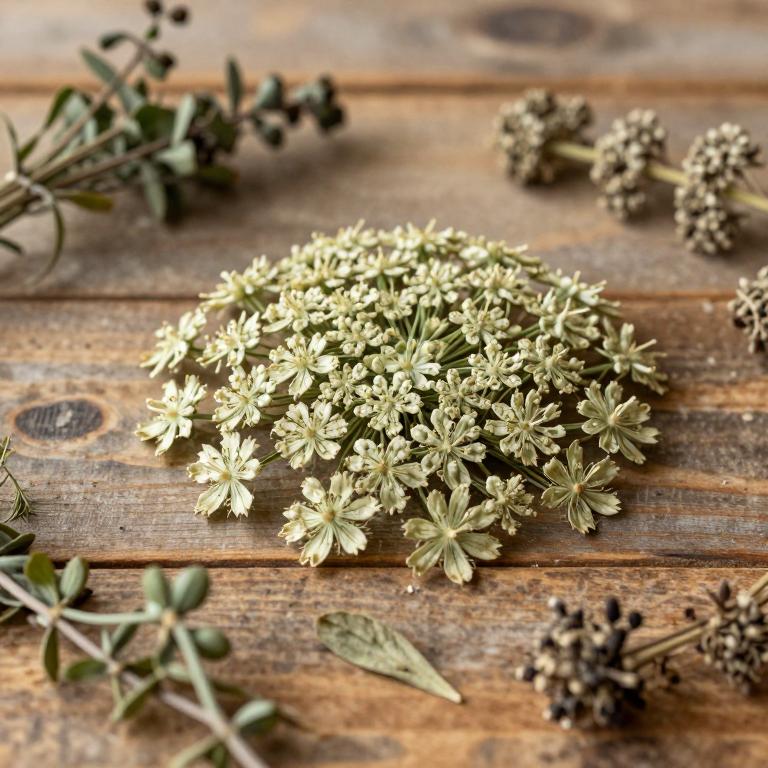
The morphology of Heracleum humile is characterized by a robust, herbaceous structure that thrives in diverse environments, ranging from aquatic and semiaquatic habitats to terrestrial landscapes. As an independent organism, it does not function as a parasite, relying instead on its own physiological processes for nutrient acquisition. The plant typically features large, deeply lobed leaves with serrated margins and thick, hollow stems that provide structural support. Its inflorescence is composed of large, compound umbels consisting of numerous small, white flowers arranged in a flat-topped cluster. The root system is well-developed to facilitate stability across its varying ecological niches, ensuring efficient water and mineral absorption whether situated in moist soils or drier terrestrial terrains.
- Aquatic :
- terrestrial
- Parasite :
- independent
Sources: Global Inventory of Floras and Traits (GIFT)
Chemicals
Heracleum humile has 4 reported phytochemicals identified across 0 scientific publications and several other databases. The most consistently reported chemicals include ETHYL ACETATE, Flavonoids, methanol, water.
| Chemical | Supporting sources | Consensus |
|---|---|---|
| ETHYL ACETATE | 1 supporting sources | ★☆☆☆☆ |
| Flavonoids | 1 supporting sources | ★☆☆☆☆ |
| methanol | 1 supporting sources | ★☆☆☆☆ |
| water | 1 supporting sources | ★☆☆☆☆ |
ETHYL ACETATE
- Chemistry & biodiversity
Flavonoids
- Chemistry & biodiversity
methanol
- Chemistry & biodiversity
water
- Chemistry & biodiversity
Activities
Heracleum humile has 3 reported activities identified across 0 scientific publications and several other databases. The most consistently reported activities include Anticancer, Antimicrobial, Antioxidant.
| Activity | Supporting sources | Consensus |
|---|---|---|
| Anticancer | 1 supporting sources | ★☆☆☆☆ |
| Antimicrobial | 1 supporting sources | ★☆☆☆☆ |
| Antioxidant | 1 supporting sources | ★☆☆☆☆ |
Anticancer
- Chemistry & biodiversity
Antimicrobial
- Chemistry & biodiversity
Antioxidant
- Chemistry & biodiversity
Preparations
Heracleum humile has 3 reported preparations identified across 0 scientific publications and several other databases. The most consistently reported preparations include ethyl acetate extract, methanol extract, water extract.
| Preparation | Supporting sources | Consensus |
|---|---|---|
| Ethyl acetate extract | 1 supporting sources | ★☆☆☆☆ |
| Methanol extract | 1 supporting sources | ★☆☆☆☆ |
| Water extract | 1 supporting sources | ★☆☆☆☆ |
Ethyl acetate extract
- Chemistry & biodiversity
Methanol extract
- Chemistry & biodiversity
Water extract
- Chemistry & biodiversity