large blue hepatica
Hepatica transsilvanica · Accepted scientific name
Scientific literature: Very Sparse (1 studies) · ★☆☆☆☆
Large blue hepatica, scientifically known as Hepatica transsilvaniica, is a resilient perennial herb native to Eastern Europe. Renowned for its delicate, azure blossoms and heart-shaped foliage, this woodland species holds historical significance in traditional herbalism, often studied for its unique bioactive properties and its role in forest ecosystems.
- Family
- Ranunculaceae
- Native range
- Europe
- Parts used
- Not available
- Common names
- Large Blue Hepatica
- Scientific synonyms
- Anemone Transsilvanica · Hepatica Multiloba · 1 more
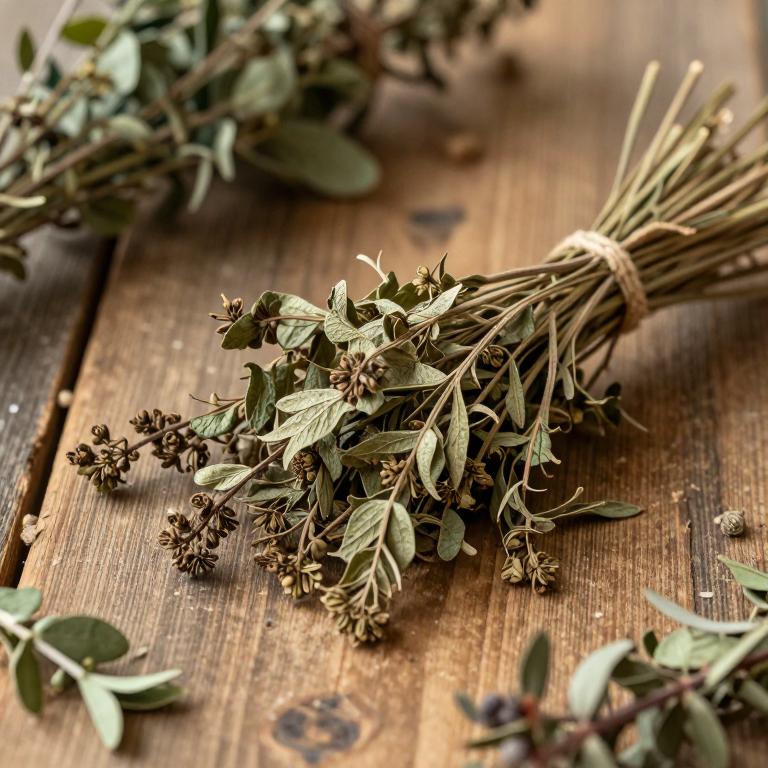
Names and Synonyms
Common Names
- large blue hepatica
Scientific Names
Accepted name
Hepatica transsilvanicaSynonyms
- Anemone transsilvanica
- Hepatica multiloba
- Anemone hepatica var. transylvanica
Regional and Traditional Names
German:
- Siebenbürger Leberblümchen
- Anemone transsilvanica
- Siebenbürger Leberblümchen
Sources: Wikidata, Catalogue of Life
Taxonomical Classification
This plant, Hepatica transsilvaniica, belongs to the kingdom Plantae and the phylum Streptophyta. Within the class Equisetopsida and subclass Magnoliidae, it is categorized under the order Ranunculales and the family Ranunculaceae. Finally, its taxonomic classification is completed by its placement within the genus Hepatica.
| Rank | Classification |
|---|---|
| Kingdom | Plantae |
| Phylum | Streptophyta |
| Class | Equisetopsida |
| Subclass | Magnoliidae |
| Order | Ranunculales |
| Family | Ranunculaceae |
| Genus | Hepatica |
Sources: The World Checklist of Vascular Plants (WCVP)
Distribution
This plant exhibits a specific and limited geographical distribution within the European continent. In Middle Europe, its presence can be documented in the country of Germany. Moving toward the eastern part of the continent, it also thrives in Southeastern Europe. Specifically, Romania serves as a key region for this species' natural habitat. Therefore, its range is primarily concentrated within these distinct European territories.
| Region | Area |
|---|---|
| Middle Europe | Germany |
| Southeastern Europe | Romania |
Sources: The World Checklist of Vascular Plants (WCVP)
Botanical Identification
Morphology
The morphology of Hepatica transsilvanica is characterized by a low-growing, perennial herbaceous habit, being strictly non-woody in its structural development. The plant emerges from a short, somewhat woody rhizome that serves as the underground storage organ, though the aerial parts remain entirely herbaceous. The leaves are the most distinctive vegetative feature, being simple, leathery, and deeply three-lobed (reniform to kidney-shaped), often appearing in clusters at the base of the plant. These leaves are typically dark green with a slightly shiny surface and prominent venation. During the flowering period, the plant produces solitary, actinomorphic flowers borne on slender, leafless pedicels. The flowers are characterized by a ring of white, petaloid sepals—as true petals are absent—surrounding a central cluster of numerous stamens and pistils. The overall architecture is compact and ground-hugging, adapted to the shaded forest floor environments it inhabits.
- Woodiness :
- non-woody
Sources: Global Inventory of Floras and Traits (GIFT)
Activities
Hepatica transsilvanica has 1 reported activities identified across 0 scientific publications and several other databases. The most consistently reported activities include Antiproliferative.
| Activity | Supporting sources | Consensus |
|---|---|---|
| Antiproliferative | 1 supporting sources | ★☆☆☆☆ |
Antiproliferative
- International journal of molecular sciences
Preparations
Hepatica transsilvanica has 1 reported preparations identified across 0 scientific publications and several other databases. The most consistently reported preparations include ethanolic extracts.
| Preparation | Supporting sources | Consensus |
|---|---|---|
| Ethanolic extracts | 1 supporting sources | ★☆☆☆☆ |
Ethanolic extracts
- International journal of molecular sciences