Hemionitis farinosa
Hemionitis farinosa · Accepted scientific name
Scientific literature: Very Sparse (4 studies) · ★☆☆☆☆
, scientifically known as Hemionitis farinosa, is a resilient perennial herb belonging to the Asteraceae family. Often found in arid, rocky terrains, this plant is valued in traditional medicine for its unique phytochemical properties. Its ability to thrive in harsh environments makes it a subject of significant ethnobotanical interest.
- Family
- Pteridaceae
- Native range
- Africa
- Parts used
- Not available
- Common names
- Not available
- Scientific synonyms
- Aleuritopteris Farinosa · Aleuritopteris Decursiva · 26 more
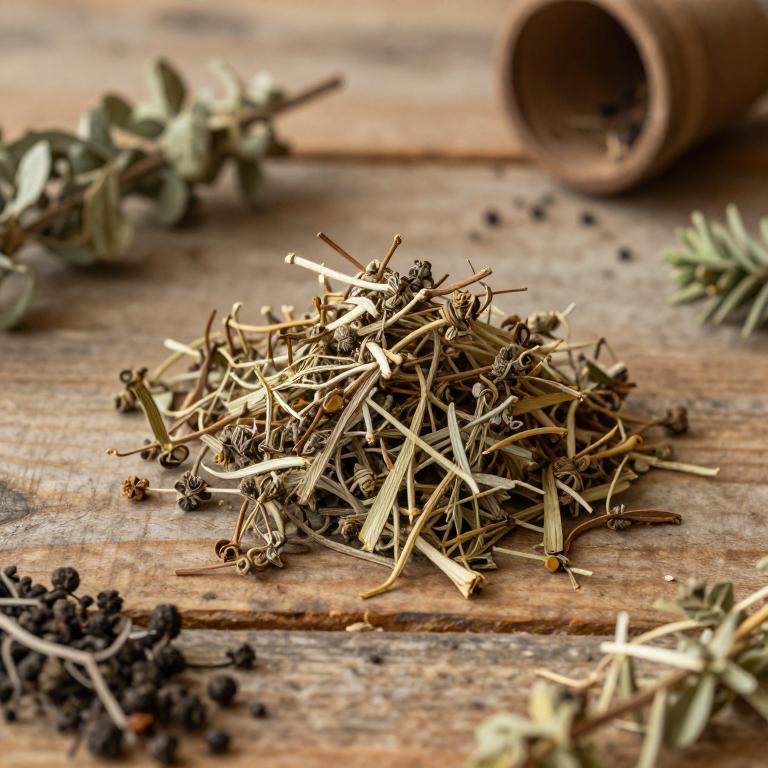
Names and Synonyms
Scientific Names
Accepted name
Hemionitis farinosaSynonyms
- Aleuritopteris farinosa
- Aleuritopteris decursiva
- Aleuritopteris vandervekenii
- Aleuritopteris argyrophylla
- Aleuritopteris aethiopica
- Pteris decursiva
- Aleuritopteris peruviana
- Aleuritopteris flava
- Aleuritopteris centrafricana
- Aleuritopteris leptophylla
- Aleuritopteris longifrons
- Hemionitis argyrophylla
- Hemionitis chihuahuaensis
- Hemionitis decursiva
- Hemionitis aethiopica
- Hemionitis vandervekenii
- Cheilanthes argyrophylla
- Cheilanthes farinosa
- Cheilanthes chihuahuaensis
- Allosorus argyrophyllus
- Allosorus farinosus
- Cassebeera farinosa
- Cheilanthes afra
- Pteris argyrophylla
- Pteris farinosa
- Aleuritopteris afra
- Aleuritopteris chihuahuaensis
- Aleuritopteris mexicana
Sources: Wikidata
Taxonomical Classification
This plant belongs to the kingdom Plantae and is classified under the phylum Streptophyta within the class Equisetopsida. It is further categorized under the subclass Polypodiinae and the order Polypodiales. Finally, it is a member of the family Pteridaceae and falls under the genus Hemionitis.
| Rank | Classification |
|---|---|
| Kingdom | Plantae |
| Phylum | Streptophyta |
| Class | Equisetopsida |
| Subclass | Polypodiinae |
| Order | Polypodiales |
| Family | Pteridaceae |
| Genus | Hemionitis |
Sources: The World Checklist of Vascular Plants (WCVP)
Distribution
This plant exhibits a diverse distribution pattern spanning across several regions of the African continent. In West Tropical Africa, its presence is documented in both Nigeria and Sierra Leone. The species also extends into West-Central Tropical Africa, where it can be found in Burundi and Cameroon. Additionally, its range includes the specific coastal area of the Gulf of Guinea Islands. These locations highlight the plant's ability to inhabit various tropical environments across the western and central zones.
| Region | Area |
|---|---|
| West Tropical Africa | Nigeria |
| West Tropical Africa | Sierra Leone |
| West-Central Tropical Africa | Burundi |
| West-Central Tropical Africa | Cameroon |
| West-Central Tropical Africa | Gulf of Guinea Is. |
| West-Central Tropical Africa | Rwanda |
| West-Central Tropical Africa | DR Congo |
| Northeast Tropical Africa | Djibouti |
| Northeast Tropical Africa | Eritrea |
| Northeast Tropical Africa | Ethiopia |
Sources: The World Checklist of Vascular Plants (WCVP)
Botanical Identification
Ecology
The ecology of Hemioniis farinosa is primarily defined by its specialized habitat preferences within high-altitude mountainous ecosystems. This species thrives within a specific vertical distribution, occupying an elevational range that begins at 1900 m AMSL and extends up to a maximum of 3000 m AMSL. Within this altitudinal belt, the plant is adapted to the distinct environmental stressors characteristic of montane zones, including fluctuating temperatures, varying levels of solar radiation, and the specific soil compositions found in these high-elevation niches. Its presence is closely tied to the climatic conditions prevalent between these two altitudinal limits, which dictate its reproductive cycles and competitive interactions with surrounding vegetation.
- Elevational range max:
- 3000 m AMSL
- Elevational range min:
- 1900 m AMSL
Life history
The life history of Hemionitis farinosa is characterized by its status as a perennial plant, allowing it to persist through multiple growing seasons within its habitat. As a perennial species, it undergoes a complex developmental cycle that involves establishing a robust root system to ensure survival during unfavorable environmental conditions. Its life cycle typically begins with seed germination, followed by a period of vegetative growth where it develops its characteristic foliage and structural components. Over successive years, the plant transitions through various stages of maturation, eventually reaching reproductive maturity to produce flowers and seeds. This perennial nature enables the species to maintain a consistent presence in its ecosystem, contributing to its long-term survival and ability to reproduce across different seasonal cycles.
- Lifecycle :
- perennial
Morphology
The morphology of Hemionitis farinosa is characterized by a growth form classified as an herb, exhibiting a non-woody structure throughout its development. As a self-supporting plant, it does not function as a climber, liana, or vine, nor does it possess any obligatory or facultative climbing habits. The species is strictly terrestrial in its ecological niche, lacking aquatic or semiaquatic tendencies, and it does not exhibit epiphytic behavior, remaining grounded rather than growing as a holoepiphyte, hemiepiphyte, or other epiphytic forms. Furthermore, Hemionitis farinosa is an independent organism, showing no parasitic traits such as obligatory or facultative dependency on a host plant.
- Aquatic :
- terrestrial
- Climber :
- self-supporting
- Epiphyte :
- terrestrial
- Growth form :
- herb
- Parasite :
- independent
- Woodiness :
- non-woody
Sources: Global Inventory of Floras and Traits (GIFT)
Chemicals
Hemionitis farinosa has 3 reported phytochemicals identified across 0 scientific publications and several other databases. The most consistently reported chemicals include CHLOROGENIC ACID, RUTIN, caffeic acid.
| Chemical | Supporting sources | Consensus |
|---|---|---|
| CHLOROGENIC ACID | 1 supporting sources | ★☆☆☆☆ |
| RUTIN | 1 supporting sources | ★☆☆☆☆ |
| caffeic acid | 1 supporting sources | ★☆☆☆☆ |
CHLOROGENIC ACID
- Journal of ethnopharmacology
RUTIN
- Journal of ethnopharmacology
caffeic acid
- Journal of ethnopharmacology
Preparations
Hemionitis farinosa has 4 reported preparations identified across 0 scientific publications and several other databases. The most consistently reported preparations include methanol extract, methanol fraction, methanolic extract, water extract.
| Preparation | Supporting sources | Consensus |
|---|---|---|
| Methanol extract | 1 supporting sources | ★☆☆☆☆ |
| Methanol fraction | 1 supporting sources | ★☆☆☆☆ |
| Methanolic extract | 1 supporting sources | ★☆☆☆☆ |
| Water extract | 1 supporting sources | ★☆☆☆☆ |
Methanol extract
- Journal of ethnopharmacology
Methanol fraction
- Journal of ethnopharmacology
Methanolic extract
- Journal of ethnopharmacology
Water extract
- Journal of ethnopharmacology