Helleborus cyclophyllus
Helleborus cyclophyllus · Accepted scientific name
Scientific literature: Very Sparse (5 studies) · ★☆☆☆☆
Helleborus cyclophyllus, scientifically known as Helleborus cyclophyllus, is a perennial herb prized in traditional herbalism. Characterized by its distinctive foliage and delicate blooms, this plant has historically been used for its potent bioactive compounds. However, caution is essential, as it contains toxic elements requiring expert medicinal application.
- Family
- Ranunculaceae
- Native range
- Europe
- Parts used
- Root
- Common names
- Not available
- Scientific synonyms
- Helleborus Odorus Subsp. Cyclophyllus · Helleborus Viridis Var. Cyclophyllus
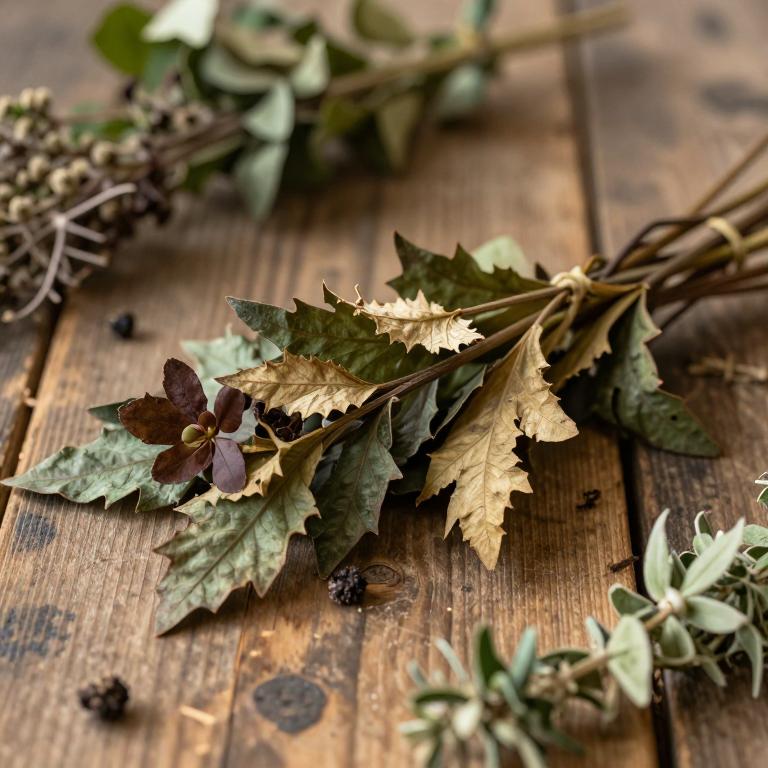
Names and Synonyms
Scientific Names
Accepted name
Helleborus cyclophyllusSynonyms
- Helleborus odorus subsp. cyclophyllus
- Helleborus viridis var. cyclophyllus
Sources: Wikidata
Taxonomical Classification
This plant belongs to the kingdom Plantae and the phylum Streptophyta, falling under the class Equisetopsida and subclass Magnoliidae. Within the order Ranunculales, it is classified under the family Ranunculaceae. It is specifically identified by the genus Helleborus, with its species name being cyclophyllus.
| Rank | Classification |
|---|---|
| Kingdom | Plantae |
| Phylum | Streptophyta |
| Class | Equisetopsida |
| Subclass | Magnoliidae |
| Order | Ranunculales |
| Family | Ranunculaceae |
| Genus | Helleborus |
Sources: The World Checklist of Vascular Plants (WCVP)
Distribution
This plant exhibits a specific geographical range concentrated within the Southeastern Europe region. It can be found growing in the natural landscapes of Albania. Additionally, its presence extends into the territories of Bulgaria. The species is also widely distributed throughout Greece. Finally, its habitat includes the northwestern portions of the Balkan Peninsula.
| Region | Area |
|---|---|
| Southeastern Europe | Albania |
| Southeastern Europe | Bulgaria |
| Southeastern Europe | Greece |
| Southeastern Europe | NW. Balkan Pen. |
Sources: The World Checklist of Vascular Plants (WCVP)
Botanical Identification
Life history
The life history of Helleborus cyclophyllus is characterized by a perennial existence defined by its specific survival strategies in temperate forest ecosystems. As a plant that maintains its perennating buds below the soil surface, it is classified as a geophyte, a life form that allows it to withstand seasonal environmental fluctuations and freezing temperatures by storing energy in underground structures. This life history is further categorized by its status as a cryptophyte, meaning its regenerative organs are protected from the elements beneath the substrate, ensuring its long-term persistence. Throughout its life cycle, the plant emerges from its subterranean storage to complete its vegetative and reproductive stages, relying on these protected buds to re-establish itself annually.
- Life form :
- geophyte
- Life form :
- cryptophyte
Morphology
The morphology of Helleborus cyclophyllus is characterized by its robust, perennial growth habit and a complex structural arrangement suited to its specific environmental niche. The plant exhibits a versatile ecological plasticity, displaying a range of growth forms that transition between aquatic, semiaquatic, and terrestrial habitats. Its root system is typically fleshy and rhizomatous, providing stability in moist soils or submerged substrates. The leaves are large, leathery, and deeply lobed, often featuring a palmate or pinnatifid arrangement that maximizes surface area for light absorption in varied light conditions. The flowering structures consist of large, nodding, bell-shaped blossoms that emerge from the leaf axils, typically possessing a distinct petaloid calyx that surrounds the central reproductive organs. The overall architectural form reflects its adaptability to varying moisture levels, ranging from fully emergent in semiaquatic settings to stable, upright growth in terrestrial environments.
- Aquatic :
- terrestrial
Sources: Global Inventory of Floras and Traits (GIFT)
Plant Parts
Helleborus cyclophyllus has 1 reported plant parts identified across 1 scientific publications and several other databases that are studied for medicinal purposes. The most consistently reported plant part include root.
| Plant part | Supporting sources | Consensus |
|---|---|---|
| Root | 1 supporting sources | ★☆☆☆☆ |
Root
- Journal of ethnopharmacology
Chemicals
Helleborus cyclophyllus has 3 reported phytochemicals identified across 1 scientific publications and several other databases. The most consistently reported chemicals include 20-HYDROXYECDYSONE, Deglucohellebrin, Hellebrin.
| Chemical | Supporting sources | Consensus |
|---|---|---|
| 20-HYDROXYECDYSONE | 1 supporting sources | ★☆☆☆☆ |
| Deglucohellebrin | 1 supporting sources | ★☆☆☆☆ |
| Hellebrin | 1 supporting sources | ★☆☆☆☆ |
20-HYDROXYECDYSONE
- Journal of ethnopharmacology
Deglucohellebrin
- Journal of ethnopharmacology
Hellebrin
- Journal of ethnopharmacology
Conditions
Helleborus cyclophyllus has 1 reported investigations on conditions identified across 1 scientific publications and several other databases. The most consistently reported conditions include tumor.
| Condition | Supporting sources | Consensus |
|---|---|---|
| Tumor | 1 supporting sources | ★☆☆☆☆ |
Tumor
- Journal of biomolecular screening
Preparations
Helleborus cyclophyllus has 2 reported preparations identified across 1 scientific publications and several other databases. The most consistently reported preparations include root decoction (RDE), root methanolic extract (RME).
| Preparation | Supporting sources | Consensus |
|---|---|---|
| Root decoction (rde) | 1 supporting sources | ★☆☆☆☆ |
| Root methanolic extract (rme) | 1 supporting sources | ★☆☆☆☆ |
Root decoction (rde)
- Journal of ethnopharmacology
Root methanolic extract (rme)
- Journal of ethnopharmacology