Heliotropium digynum
Heliotropium digynum · Accepted scientific name
Scientific literature: Very Sparse (9 studies) · ★☆☆☆☆
Heliotropium digynum, scientifically known as Heliotropium digynum, is a versatile medicinal herb native to the Himalayan regions. Renowned in traditional Ayurvedic medicine, it possesses potent anti-inflammatory and analgesic properties. This plant is frequently utilized to treat various ailments, including respiratory issues, skin disorders, and localized pain management.
- Family
- Boraginaceae
- Native range
- Africa
- Parts used
- Not available
- Common names
- Not available
- Scientific synonyms
- Heliotropium Callosum · Heliotropium Eriocarpum · 1 more
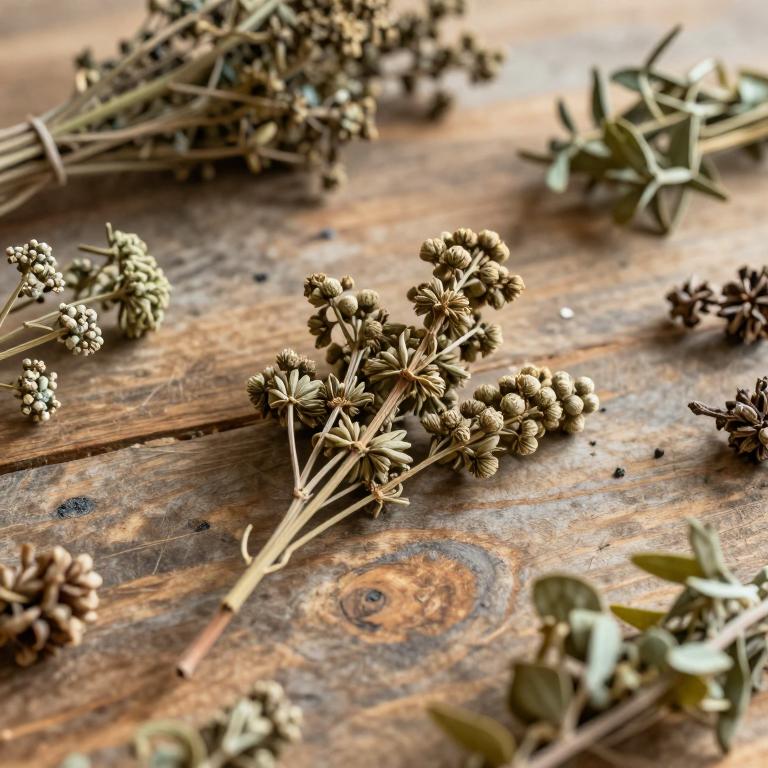
Names and Synonyms
Scientific Names
Accepted name
Heliotropium digynumSynonyms
- Heliotropium callosum
- Heliotropium eriocarpum
- Lithospermum digynum
Sources: Wikidata, Catalogue of Life
Taxonomical Classification
This plant, Heliotropium digynum, belongs to the kingdom Plantae and the phylum Streptophyta. Within the class Equisetopsida and subclass Magnoliidae, it is categorized under the order Boraginales and the family Boraginaceae. Finally, it is classified under the genus Heliotropium.
| Rank | Classification |
|---|---|
| Kingdom | Plantae |
| Phylum | Streptophyta |
| Class | Equisetopsida |
| Subclass | Magnoliidae |
| Order | Boraginales |
| Family | Boraginaceae |
| Genus | Heliotropium |
Sources: The World Checklist of Vascular Plants (WCVP)
Distribution
This plant exhibits a specific geographical distribution spanning parts of Northern Africa and Western Asia. Within the African continent, it can be found growing in Algeria, Egypt, and Tunisia. Moving toward the Middle East, its range extends into the Western Asian region. Specifically, the species is documented to inhabit the territories of both Afghanistan and Iraq. Together, these locations define the natural habitat for Heliotropium digynum.
| Region | Area |
|---|---|
| Northern Africa | Algeria |
| Northern Africa | Egypt |
| Northern Africa | Tunisia |
| Western Asia | Afghanistan |
| Western Asia | Iraq |
| Western Asia | Lebanon-Syria |
| Western Asia | Palestine |
| Western Asia | Sinai |
| Arabian Peninsula | Gulf States |
| Arabian Peninsula | Oman |
Sources: The World Checklist of Vascular Plants (WCVP)
Botanical Identification
Life history
The life history of Heliotropium digynum is characterized by its status as a perennial species, allowing the plant to persist through multiple growing seasons. As a long-lived herb, its life cycle involves an establishment phase followed by a period of vegetative growth where it develops its characteristic structure. Throughout its life, it undergoes periodic reproductive cycles, transitioning from vegetative development to flowering and seed production. This perennial nature enables the plant to maintain a stable presence within its ecological niche, often relying on established root systems to survive unfavorable conditions before re-emerging to complete its seasonal biological processes.
- Lifecycle :
- perennial
Morphology
The morphology of Heliotropium digynum is characterized by a growth form that primarily functions as a subshrub or herb, exhibiting a non-woody structure throughout its development. It is an independent organism, functioning without any parasitic relationship to its host plants. In terms of its ecological habitat and habit, the plant displays a versatile distribution ranging from terrestrial to semiaquatic and aquatic environments. While it possesses a self-supporting growth habit rather than being an obligatory or facultative climber, its physical structure remains herbaceous and lacks significant woodiness.
- Aquatic :
- terrestrial
- Climber :
- self-supporting
- Growth form :
- herb
- Growth form :
- subshrub
- Parasite :
- independent
- Woodiness :
- non-woody
Sources: Global Inventory of Floras and Traits (GIFT)
Chemicals
Heliotropium digynum has 9 reported phytochemicals identified across 0 scientific publications and several other databases. The most consistently reported chemicals include cysteine, glycine, histidine, linolenic acid, oleic acid.
| Chemical | Supporting sources | Consensus |
|---|---|---|
| cysteine | 1 supporting sources | ★☆☆☆☆ |
| glycine | 1 supporting sources | ★☆☆☆☆ |
| histidine | 1 supporting sources | ★☆☆☆☆ |
| linolenic acid | 1 supporting sources | ★☆☆☆☆ |
| oleic acid | 1 supporting sources | ★☆☆☆☆ |
| proline | 1 supporting sources | ★☆☆☆☆ |
| serine | 1 supporting sources | ★☆☆☆☆ |
| threonine | 1 supporting sources | ★☆☆☆☆ |
| tyrosine | 1 supporting sources | ★☆☆☆☆ |
cysteine
- Molecules (Basel, Switzerland)
glycine
- Molecules (Basel, Switzerland)
histidine
- Molecules (Basel, Switzerland)
linolenic acid
- Molecules (Basel, Switzerland)
oleic acid
- Molecules (Basel, Switzerland)
proline
- Molecules (Basel, Switzerland)
serine
- Molecules (Basel, Switzerland)
threonine
- Molecules (Basel, Switzerland)
tyrosine
- Molecules (Basel, Switzerland)