Heliotropium crispum
Heliotropium crispum · Accepted scientific name
Scientific literature: Very Sparse (13 studies) · ★☆☆☆☆
Heliotropium crispum, scientifically known as Heliotropium crispum, is a distinctive medicinal herb valued in traditional healing practices. Characterized by its unique foliage and delicate blooms, this plant offers various bioactive compounds. It is frequently studied for its potential therapeutic properties, particularly in treating skin ailments and inflammatory conditions.
- Family
- Boraginaceae
- Native range
- Africa
- Parts used
- Not available
- Common names
- Not available
- Scientific synonyms
- Heliotropium Undulatum Var. Kralikii · Heliotropium Bacciferum Subsp. Erosum · 16 more
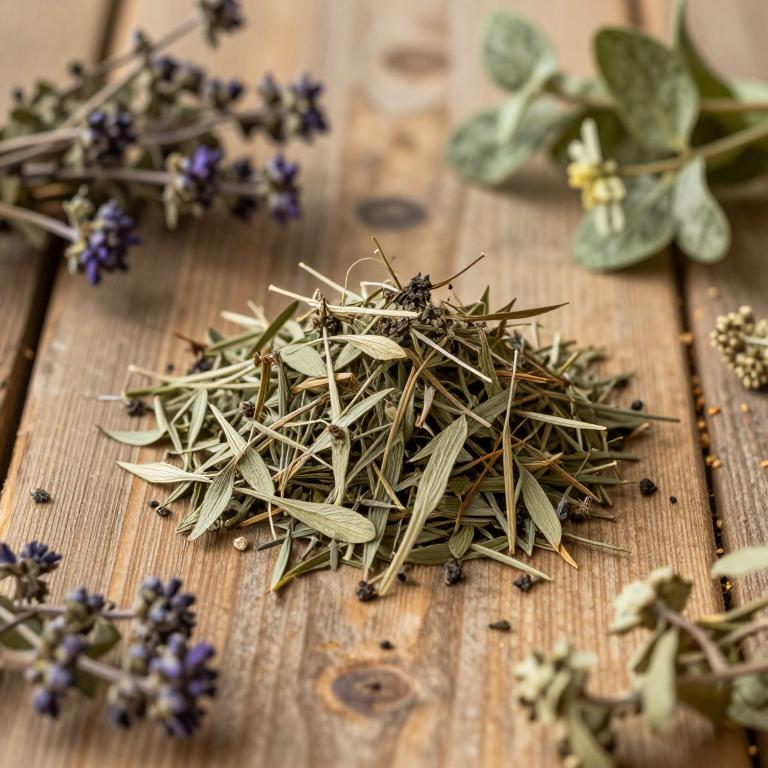
Names and Synonyms
Scientific Names
Accepted name
Heliotropium crispumSynonyms
- Heliotropium undulatum var. kralikii
- Heliotropium bacciferum subsp. erosum
- Heliotropium undulatum subsp. erosum
- Heliotropium bacciferum var. erosum
- Bourjotia erosum
- Heliophytum erosum
- Heliophytum erosum var. prostratum
- Heliotropium undulatum var. monodianum
- Heliotropium plebeium
- Heliotropium kralikii
- Heliotropium undulatum f. stenophyllum
- Bourjotia kralikii
- Heliotropium suffruticescens
- Heliotropium erosum
- Heliotropium undulatum var. suffruticescens
- Heliotropium erosum var. prostratum
- Heliotropium undulatum var. crispum
- Heliotropium undulatum var. maroccanum
Sources: Wikidata
Taxonomical Classification
This plant belongs to the kingdom Plantae and the phylum Streptophyta, falling under the class Equisetopsida and subclass Magnoliidae. Within the order Boraginales, it is classified under the family Boraginaceae. It is further identified by its genus, Heliotropium, specifically as the species Heliotropium crispum.
| Rank | Classification |
|---|---|
| Kingdom | Plantae |
| Phylum | Streptophyta |
| Class | Equisetopsida |
| Subclass | Magnoliidae |
| Order | Boraginales |
| Family | Boraginaceae |
| Genus | Heliotropium |
Sources: The World Checklist of Vascular Plants (WCVP)
Distribution
This plant is primarily distributed throughout the North African region. Its presence is specifically documented across several Mediterranean countries including Algeria and Egypt. Furthermore, it can be found growing within the territories of Libya and Morocco. The species also extends its range into the nation of Tunisia. Consequently, its geographical footprint is concentrated within these specific northern African territories.
| Region | Area |
|---|---|
| Northern Africa | Algeria |
| Northern Africa | Egypt |
| Northern Africa | Libya |
| Northern Africa | Morocco |
| Northern Africa | Tunisia |
| Northern Africa | Western Sahara |
| Macaronesia | Canary Is. |
| Macaronesia | Madeira |
| West Tropical Africa | Burkina |
| West Tropical Africa | Mali |
Sources: The World Checklist of Vascular Plants (WCVP)
Botanical Identification
Life history
The life history of Heliotropium crispum is characterized by its status as a perennial plant, allowing it to persist through multiple growing seasons. In terms of its growth habit and structural strategy, it is classified as a chamaephyte, meaning its perennating buds are located close to the ground level, typically just above the soil surface. This life form enables the species to withstand various environmental pressures while maintaining its ability to regenerate and spread within its ecological niche.
- Life form :
- chamaephyte
- Lifecycle :
- perennial
Morphology
The morphology of Heliotropium crispum is characterized by its growth form as a non-woody herb. It functions as a self-supporting plant and is categorized as an independent organism, meaning it does not act as a parasite. As a terrestrial species, it grows directly from the soil rather than as an epiphyte. In terms of stature, the plant is relatively low-growing, with a minimum plant height of 0.2 m and reaching a maximum height of 0.4 m.
- Climber :
- self-supporting
- Epiphyte :
- terrestrial
- Growth form :
- herb
- Parasite :
- independent
- Plant height max:
- 0.4 m
- Plant height min:
- 0.2 m
- Woodiness :
- non-woody
Reproduction
The reproduction of Heliotropium crispum is characterized by a flowering period that is highly adaptable, typically beginning in February, though the specific timing can vary across different months of the year. The reproductive process culminates in the development of a fruit categorized as a nut, which serves as the primary vessel for seed dispersal. Furthermore, this fruit is indehiscent, meaning it does not automatically split open at maturity to release its seeds, relying instead on external factors for the eventual dispersal of the progeny.
- Dehiscence :
- indehiscent
- Flowering time :
- Feb
- Fruit type :
- nut
Sources: Global Inventory of Floras and Traits (GIFT)
Chemicals
Heliotropium crispum has 7 reported phytochemicals identified across 0 scientific publications and several other databases. The most consistently reported chemicals include BA, CA, CR, FE, MG.
| Chemical | Supporting sources | Consensus |
|---|---|---|
| BA | 1 supporting sources | ★☆☆☆☆ |
| CA | 1 supporting sources | ★☆☆☆☆ |
| CR | 1 supporting sources | ★☆☆☆☆ |
| FE | 1 supporting sources | ★☆☆☆☆ |
| MG | 1 supporting sources | ★☆☆☆☆ |
| SI | 1 supporting sources | ★☆☆☆☆ |
| Ti | 1 supporting sources | ★☆☆☆☆ |
BA
- Saudi journal of biological sciences
CA
- Saudi journal of biological sciences
CR
- Saudi journal of biological sciences
FE
- Saudi journal of biological sciences
MG
- Saudi journal of biological sciences
SI
- Saudi journal of biological sciences
Ti
- Saudi journal of biological sciences
Activities
Heliotropium crispum has 4 reported activities identified across 0 scientific publications and several other databases. The most consistently reported activities include Antihemolytic, Antimicrobial, Antioxidant, Cytotoxic.
| Activity | Supporting sources | Consensus |
|---|---|---|
| Antihemolytic | 1 supporting sources | ★☆☆☆☆ |
| Antimicrobial | 1 supporting sources | ★☆☆☆☆ |
| Antioxidant | 1 supporting sources | ★☆☆☆☆ |
| Cytotoxic | 1 supporting sources | ★☆☆☆☆ |
Antihemolytic
- Saudi journal of biological sciences
Antimicrobial
- Saudi journal of biological sciences
Antioxidant
- Saudi journal of biological sciences
Cytotoxic
- Saudi journal of biological sciences
Conditions
Heliotropium crispum has 2 reported investigations on conditions identified across 0 scientific publications and several other databases. The most consistently reported conditions include kidney diseases, neurodegenerative diseases.
| Condition | Supporting sources | Consensus |
|---|---|---|
| Kidney diseases | 1 supporting sources | ★☆☆☆☆ |
| Neurodegenerative diseases | 1 supporting sources | ★☆☆☆☆ |
Kidney diseases
- Foods (Basel, Switzerland)
Neurodegenerative diseases
- Biomolecules