Turnsole
Heliotropium bacciferum · Accepted scientific name
Scientific literature: Sparse (54 studies) · ★★☆☆☆
Turnsole, scientifically known as Heliotropium bacciferum, is a versatile medicinal herb valued in traditional healing practices. Characterized by its unique flowering patterns, this plant offers significant therapeutic potential. It is frequently utilized for its antimicrobial and anti-inflammatory properties, serving as a vital natural resource for diverse holistic remedies.
- Family
- Boraginaceae
- Native range
- Africa
- Parts used
- Flower · Leaf
- Common names
- Not available
- Scientific synonyms
- Not available
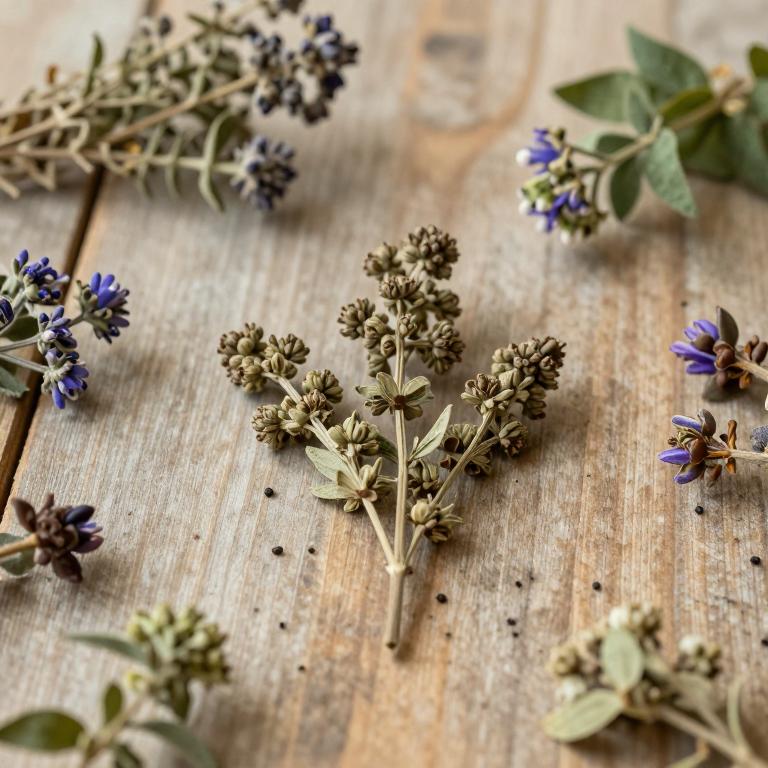
Names and Synonyms
Scientific Names
Accepted name
Heliotropium bacciferumSources: Wikidata
Taxonomical Classification
This plant belongs to the kingdom Plantae and the phylum Streptophyta, situated within the class Equisetopsida and subclass Magnoliidae. It is further classified under the order Boraginales and the family Boraginaceae. Finally, the medicinal species is identified by its genus, Heliotropium.
| Rank | Classification |
|---|---|
| Kingdom | Plantae |
| Phylum | Streptophyta |
| Class | Equisetopsida |
| Subclass | Magnoliidae |
| Order | Boraginales |
| Family | Boraginaceae |
| Genus | Heliotropium |
Sources: The World Checklist of Vascular Plants (WCVP)
Distribution
This plant exhibits a diverse geographical distribution spanning several regions across the African continent. In Northern Africa, its presence is documented within the territories of Egypt and Libya. Moving toward West Tropical Africa, the species can be found inhabiting the landscape of Burkina. The plant is also distributed across Mauritania, which is located within the West Tropical region. Finally, its range extends further into West Tropical Africa to include Nigeria.
| Region | Area |
|---|---|
| Northern Africa | Egypt |
| Northern Africa | Libya |
| West Tropical Africa | Burkina |
| West Tropical Africa | Mauritania |
| West Tropical Africa | Nigeria |
| West Tropical Africa | Niger |
| West Tropical Africa | Senegal |
| Northeast Tropical Africa | Chad |
| Northeast Tropical Africa | Djibouti |
| Northeast Tropical Africa | Eritrea |
Sources: The World Checklist of Vascular Plants (WCVP)
Botanical Identification
Ecology
The ecology of Heliotropium bacciferum is characterized by its presence within specific altitudinal gradients, typically thriving in environments situated between an elevation of 500 m AMSL and a maximum elevation of 1100 m AMSL. This elevational range dictates the specific climatic conditions, such as temperature fluctuations and moisture availability, to which the species has adapted. Within this mid-altitude belt, the plant occupies distinct ecological niches that support its growth patterns and reproductive cycles, relying on the environmental stability found between these two specific vertical limits.
- Elevational range max:
- 1100 m AMSL
- Elevational range min:
- 500 m AMSL
Life history
The life history of Heliotropium bacciferum is characterized by its status as a perennial plant, allowing it to persist through multiple growing seasons. Structurally, it is classified as a chamaephyte, a life form where the permanent shoots are located close to the soil surface, often protected by leaf litter or ground cover. This growth habit, consistent across its classification as both a chamaephyte and a specific type of chamaephyte, enables the species to endure various environmental conditions by maintaining its reproductive and vegetative structures at a low profile near the ground level.
- Life form :
- chamaephyte
- Lifecycle :
- perennial
Morphology
The morphology of Heliotropium bacciferum is characterized by its growth form as a woody subshrub that exhibits a self-supporting structure. Rather than being an obligatory or facultative climber, the plant maintains its own posture through its woody stems. It is an independent organism, functioning neither as a parasite nor as an epiphyte, as it maintains a strictly terrestrial existence. Although its ecological niche can vary across different habitats, its primary life habit is defined by its terrestrial nature rather than aquatic or semiaquatic adaptations.
- Aquatic :
- terrestrial
- Climber :
- self-supporting
- Epiphyte :
- terrestrial
- Growth form :
- shrub
- Growth form :
- subshrub
- Parasite :
- independent
- Woodiness :
- woody
Reproduction
The reproduction of Heliotropium bacciferum is characterized by a specific seasonal flowering window and the production of minute seeds. The flowering period typically begins in March and reaches its conclusion in April, although the timing can be variable across different cycles. The resulting seeds are exceptionally lightweight, with a mean seed mass of approximately 0.001603333 g. Within the population, seed size exhibits slight variations, ranging from a minimum mass of 0.00136 g to a maximum mass of 0.0019 g.
- Flowering time :
- Mar
- Flowering time :
- Apr
- Seed mass max:
- 0.0019 g
- Seed mass mean:
- 0.001603333 g
- Seed mass min:
- 0.00136 g
Sources: Global Inventory of Floras and Traits (GIFT)
Plant Parts
Heliotropium bacciferum has 4 reported plant parts identified across 4 scientific publications and several other databases that are studied for medicinal purposes. The most consistently reported plant part include flower, leaf, root, stem.
| Plant part | Supporting sources | Consensus |
|---|---|---|
| Flower | 1 supporting sources | ★☆☆☆☆ |
| Leaf | 1 supporting sources | ★☆☆☆☆ |
| Root | 1 supporting sources | ★☆☆☆☆ |
| Stem | 1 supporting sources | ★☆☆☆☆ |
Flower
- BioMed research international
Leaf
- TheScientificWorldJournal
Root
- TheScientificWorldJournal
Stem
- TheScientificWorldJournal
Chemicals
Heliotropium bacciferum has 25 reported phytochemicals identified across 4 scientific publications and several other databases. The most consistently reported chemicals include Linalool, Phenols, Agarospirol, Alcohols, Alkanes.
| Chemical | Supporting sources | Consensus |
|---|---|---|
| Linalool | 2 supporting sources | ★☆☆☆☆ |
| Phenols | 2 supporting sources | ★☆☆☆☆ |
| Agarospirol | 1 supporting sources | ★☆☆☆☆ |
| Alcohols | 1 supporting sources | ★☆☆☆☆ |
| Alkanes | 1 supporting sources | ★☆☆☆☆ |
| Alkenes | 1 supporting sources | ★☆☆☆☆ |
| Amines | 1 supporting sources | ★☆☆☆☆ |
| Eicosadienoic acid | 1 supporting sources | ★☆☆☆☆ |
| Elemol | 1 supporting sources | ★☆☆☆☆ |
| Esters | 1 supporting sources | ★☆☆☆☆ |
Linalool
- Analytical biochemistry
- Natural product research
Phenols
- TheScientificWorldJournal
- BioMed research international
Agarospirol
- Analytical biochemistry
Alcohols
- BioMed research international
Alkanes
- BioMed research international
Alkenes
- BioMed research international
Amines
- BioMed research international
Eicosadienoic acid
- TheScientificWorldJournal
Elemol
- Analytical biochemistry
Esters
- BioMed research international
Activities
Heliotropium bacciferum has 3 reported activities identified across 4 scientific publications and several other databases. The most consistently reported activities include Antimicrobial, Antioxidant, Antiproliferative.
| Activity | Supporting sources | Consensus |
|---|---|---|
| Antimicrobial | 1 supporting sources | ★☆☆☆☆ |
| Antioxidant | 1 supporting sources | ★☆☆☆☆ |
| Antiproliferative | 1 supporting sources | ★☆☆☆☆ |
Antimicrobial
- BioMed research international
Antioxidant
- BioMed research international
Antiproliferative
- Natural product research
Conditions
Heliotropium bacciferum has 3 reported investigations on conditions identified across 4 scientific publications and several other databases. The most consistently reported conditions include colon cancer, skin diseases, tonsillitis.
| Condition | Supporting sources | Consensus |
|---|---|---|
| Colon cancer | 1 supporting sources | ★☆☆☆☆ |
| Skin diseases | 1 supporting sources | ★☆☆☆☆ |
| Tonsillitis | 1 supporting sources | ★☆☆☆☆ |
Colon cancer
- Natural product research
Skin diseases
- Natural product research
Tonsillitis
- Natural product research
Preparations
Heliotropium bacciferum has 9 reported preparations identified across 4 scientific publications and several other databases. The most consistently reported preparations include aqueous leaf extract, chloroform extract, essential oil, extracts, leaves extracts.
| Preparation | Supporting sources | Consensus |
|---|---|---|
| Aqueous leaf extract | 1 supporting sources | ★☆☆☆☆ |
| Chloroform extract | 1 supporting sources | ★☆☆☆☆ |
| Essential oil | 1 supporting sources | ★☆☆☆☆ |
| Extracts | 1 supporting sources | ★☆☆☆☆ |
| Leaves extracts | 1 supporting sources | ★☆☆☆☆ |
| Methanol one | 1 supporting sources | ★☆☆☆☆ |
| Roots extracts | 1 supporting sources | ★☆☆☆☆ |
| Stem extracts | 1 supporting sources | ★☆☆☆☆ |
| Various extracts | 1 supporting sources | ★☆☆☆☆ |
Aqueous leaf extract
- Plants (Basel, Switzerland)
Chloroform extract
- Natural product research
Essential oil
- Analytical biochemistry
Extracts
- BioMed research international
Leaves extracts
- TheScientificWorldJournal
Methanol one
- Natural product research
Roots extracts
- TheScientificWorldJournal
Stem extracts
- TheScientificWorldJournal
Various extracts
- TheScientificWorldJournal