Helicteres hirsuta
Helicteres hirsuta · Accepted scientific name
Scientific literature: Very Sparse (37 studies) · ★☆☆☆☆
Helicteres hirsuta, scientifically known as Helicteres hirsuta, is a versatile medicinal shrub widely utilized in traditional Ayurvedic medicine. Renowned for its potent pharmacological properties, this plant is frequently employed to treat various ailments, including skin disorders, inflammatory conditions, and digestive issues, offering significant therapeutic potential in natural healing.
- Family
- Malvaceae
- Native range
- Asia-Temperate
- Parts used
- Leaf · Stem
- Common names
- Not available
- Scientific synonyms
- Oudemansia Spicata · Orthothecium Hirsutum · 21 more
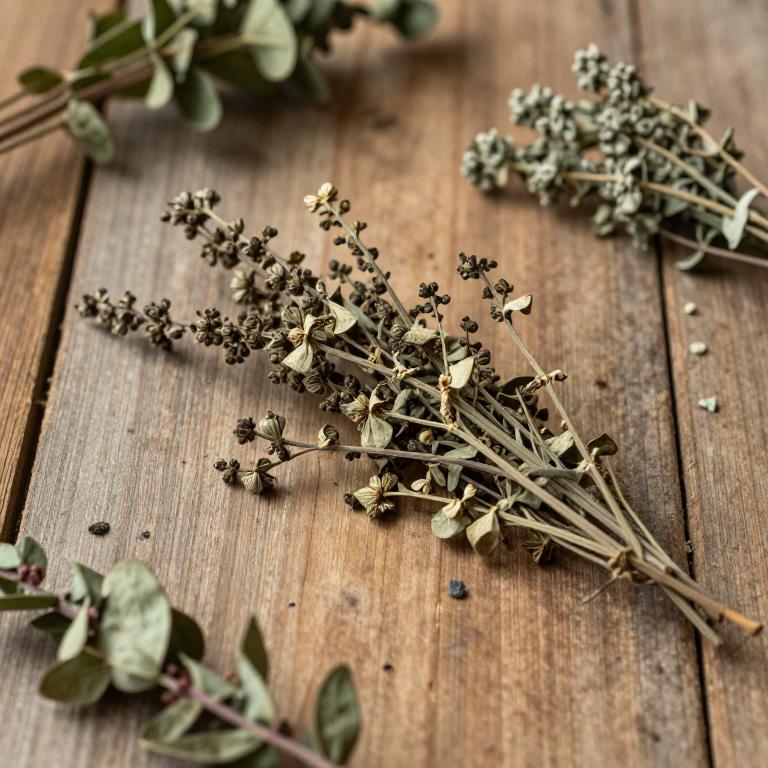
Names and Synonyms
Scientific Names
Accepted name
Helicteres hirsutaSynonyms
- Oudemansia spicata
- Orthothecium hirsutum
- Methorium spicatum
- Camaion hirsuta
- Dombeya biserrata
- Oudemansia hirsuta f. glabrior
- Helicteres hirsuta var. lanigera
- Helicteres hispida
- Oudemansia hirsuta
- Helicteres oblonga
- Helicteres hirsuta var. oblonga
- Helicteres vinosa
- Helicteres hirsuta var. spicata
- Helicteres spicata
- Isora grewiifolia
- Helicteres arborescens
- Helicteres hirsuta var. sublobata
- Mimusops talosan
- Helicteres hirsuta var. vestita
- Helicteres hirsuta var. vestita
- Helicteres spicata var. hainanensis
- Helicteres spicata var. lanigera
- Oudemansia hirsuta var. glabrior
Sources: Wikidata, Catalogue of Life
Taxonomical Classification
This plant, Helicteres hirsuta, belongs to the kingdom Plantae and is classified under the phylum Streptophyta and class Equisetopsida. Within the subclass Magnoliidae, it is ordered as Malvales and placed in the family Malvaceae. Finally, it is categorized under the genus Helicteres.
| Rank | Classification |
|---|---|
| Kingdom | Plantae |
| Phylum | Streptophyta |
| Class | Equisetopsida |
| Subclass | Magnoliidae |
| Order | Malvales |
| Family | Malvaceae |
| Genus | Helicteres |
Sources: The World Checklist of Vascular Plants (WCVP)
Distribution
This plant exhibits a diverse geographical distribution across parts of Asia. In China, it can be found specifically in Hainan as well as throughout the China Southeast region. Its presence extends into the Indian Subcontinent, where it is documented in Assam. Additionally, the species is known to grow within the borders of Bangladesh. Finally, its range reaches the mountainous terrain of the East Himalaya.
| Region | Area |
|---|---|
| China | Hainan |
| China | China Southeast |
| Indian Subcontinent | Assam |
| Indian Subcontinent | Bangladesh |
| Indian Subcontinent | East Himalaya |
| Indian Subcontinent | Nepal |
| Indo-China | Cambodia |
| Indo-China | Laos |
| Indo-China | Myanmar |
| Indo-China | Thailand |
Sources: The World Checklist of Vascular Plants (WCVP)
Botanical Identification
Life history
The life history of Helicteres hirsuta is characterized by a perennial lifecycle, allowing the plant to persist through multiple growing seasons. In terms of its structural growth habits and ecological positioning, it exhibits characteristics of both phanerophytes and nanophanerophytes, depending on the specific environmental conditions and the development of its woody structures. As a phanerophyte, it typically maintains its buds well above the ground level on woody stems, while its nanophanerophyte traits reflect its capacity to maintain growth through relatively short woody stems, ensuring its long-term survival and stability within its medicinal habitat.
- Life form :
- nanophanerophyte
- Life form :
- phanerophyte
- Lifecycle :
- perennial
Morphology
The morphology of Helicteres hirsuta is characterized by a woody growth form, primarily manifesting as a self-supporting shrub. This terrestrial plant, which is neither aquatic nor an epiphyte, functions as an independent organism rather than a parasite. In terms of stature, it exhibits a plant height ranging from a minimum of 1 meter to a maximum of 5 meters. Although it possesses certain structural characteristics, it is categorized as a self-supporting growth form rather than a liana or a vine.
- Aquatic :
- terrestrial
- Climber :
- self-supporting
- Epiphyte :
- terrestrial
- Growth form :
- shrub
- Parasite :
- independent
- Plant height max:
- 5 m
- Plant height min:
- 1 m
- Woodiness :
- woody
Sources: Global Inventory of Floras and Traits (GIFT)
Plant Parts
Helicteres hirsuta has 2 reported plant parts identified across 2 scientific publications and several other databases that are studied for medicinal purposes. The most consistently reported plant part include leaf, stem.
| Plant part | Supporting sources | Consensus |
|---|---|---|
| Leaf | 1 supporting sources | ★☆☆☆☆ |
| Stem | 1 supporting sources | ★☆☆☆☆ |
Leaf
- RSC advances
Stem
- Phytotherapy research : PTR
Chemicals
Helicteres hirsuta has 19 reported phytochemicals identified across 2 scientific publications and several other databases. The most consistently reported chemicals include (+/-)-Medioresinol, (+/-)-PINORESINOL, (+/-)-Syringaresinol, 3,4-Dihydroxybenzoic acid methyl ester, 3-O-trans-Caffeoylbetulinic acid.
| Chemical | Supporting sources | Consensus |
|---|---|---|
| (+/-)-Medioresinol | 1 supporting sources | ★☆☆☆☆ |
| (+/-)-PINORESINOL | 1 supporting sources | ★☆☆☆☆ |
| (+/-)-Syringaresinol | 1 supporting sources | ★☆☆☆☆ |
| 3,4-Dihydroxybenzoic acid methyl ester | 1 supporting sources | ★☆☆☆☆ |
| 3-O-trans-Caffeoylbetulinic acid | 1 supporting sources | ★☆☆☆☆ |
| 4-HYDROXYBENZOIC ACID | 1 supporting sources | ★☆☆☆☆ |
| 4-Hydroxy-3,5-dimethoxybenzoic acid | 1 supporting sources | ★☆☆☆☆ |
| 5,8-dihydroxy-7,4'-dimethoxyflavone | 1 supporting sources | ★☆☆☆☆ |
| Betulinic acid methyl ester | 1 supporting sources | ★☆☆☆☆ |
| CATECHIN | 1 supporting sources | ★☆☆☆☆ |
(+/-)-Medioresinol
- Phytotherapy research : PTR
(+/-)-PINORESINOL
- Phytotherapy research : PTR
(+/-)-Syringaresinol
- Phytotherapy research : PTR
3,4-Dihydroxybenzoic acid methyl ester
- Natural product research
3-O-trans-Caffeoylbetulinic acid
- Natural product research
4-HYDROXYBENZOIC ACID
- Natural product research
4-Hydroxy-3,5-dimethoxybenzoic acid
- Natural product research
5,8-dihydroxy-7,4'-dimethoxyflavone
- Natural product research
Betulinic acid methyl ester
- Natural product research
CATECHIN
- Chemistry & biodiversity
Activities
Helicteres hirsuta has 5 reported activities identified across 2 scientific publications and several other databases. The most consistently reported activities include Antioxidant, Antibacterial, Anticancer, Cytotoxic, Hepatoprotective.
| Activity | Supporting sources | Consensus |
|---|---|---|
| Antioxidant | 2 supporting sources | ★☆☆☆☆ |
| Antibacterial | 1 supporting sources | ★☆☆☆☆ |
| Anticancer | 1 supporting sources | ★☆☆☆☆ |
| Cytotoxic | 1 supporting sources | ★☆☆☆☆ |
| Hepatoprotective | 1 supporting sources | ★☆☆☆☆ |
Antioxidant
- Heliyon
- Chemistry & biodiversity
Antibacterial
- Molecular biology reports
Anticancer
- Molecular biology reports
Cytotoxic
- Phytotherapy research : PTR
Hepatoprotective
- Chemistry & biodiversity
Conditions
Helicteres hirsuta has 7 reported investigations on conditions identified across 2 scientific publications and several other databases. The most consistently reported conditions include cancer, malaria, E. coli, Oxidative stress, diabetes mellitus.
| Condition | Supporting sources | Consensus |
|---|---|---|
| Cancer | 3 supporting sources | ★★☆☆☆ |
| Malaria | 2 supporting sources | ★☆☆☆☆ |
| E. coli | 1 supporting sources | ★☆☆☆☆ |
| Oxidative stress | 1 supporting sources | ★☆☆☆☆ |
| Diabetes mellitus | 1 supporting sources | ★☆☆☆☆ |
| Hyperglycemia | 1 supporting sources | ★☆☆☆☆ |
| Liver cancer | 1 supporting sources | ★☆☆☆☆ |
Cancer
- Phytotherapy research : PTR
- RSC advances
- Natural product research
Malaria
- Heliyon
- Molecular biology reports
E. coli
- Molecular biology reports
Oxidative stress
- Chemistry & biodiversity
Diabetes mellitus
- Heliyon
Hyperglycemia
- Heliyon
Liver cancer
- Heliyon
Preparations
Helicteres hirsuta has 3 reported preparations identified across 2 scientific publications and several other databases. The most consistently reported preparations include H. hirsuta extracts, extract, n-hexane sub-fraction.
| Preparation | Supporting sources | Consensus |
|---|---|---|
| H. hirsuta extracts | 1 supporting sources | ★☆☆☆☆ |
| Extract | 1 supporting sources | ★☆☆☆☆ |
| N-hexane sub-fraction | 1 supporting sources | ★☆☆☆☆ |
H. hirsuta extracts
- Heliyon
Extract
- Natural product research
N-hexane sub-fraction
- RSC advances