Cape Gold
Helichrysum splendidum · Accepted scientific name
Scientific literature: Very Sparse (6 studies) · ★☆☆☆☆
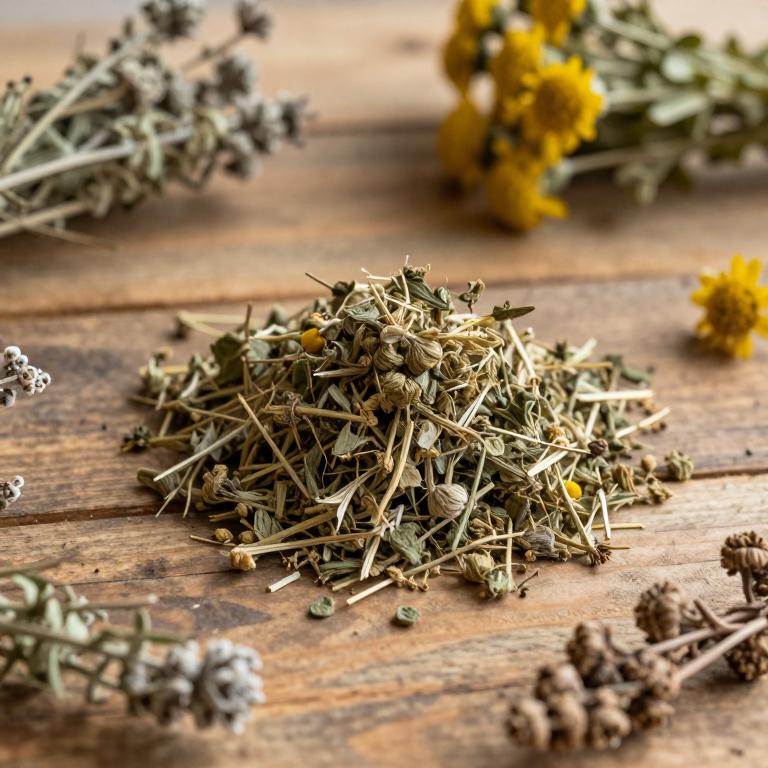
Cape Gold, scientifically known as Helicrysum splendidum, is a breathtaking perennial herb native to South Africa's fynbos biome. Renowned for its vibrant, sun-kissed yellow blooms, this resilient plant is highly valued in traditional medicine for its soothing properties and potential antioxidant benefits, making it a true botanical treasure.
- Family
- Asteraceae
- Native range
- Africa
- Parts used
- Not available
- Common names
- Cape Gold · Cape Gold Everlasting
- Scientific synonyms
- Gnaphalium Xanthinum · Gnaphalium Abyssinicum · 5 more
Names and Synonyms
Common Names
- Cape Gold
- Cape Gold Everlasting
Scientific Names
Accepted name
Helichrysum splendidumSynonyms
- Gnaphalium xanthinum
- Gnaphalium abyssinicum
- Helichrysum hendersoniae
- Gnaphalium splendidum
- Helichrysum abyssinicum
- Helichrysum acrobates
- Helichrysum xanthinum
Regional and Traditional Names
German:
- Helichrysum spledidum
- Südafrikanische Strohblume
French:
- immortelle
Sources: Wikidata, Catalogue of Life
Taxonomical Classification
This plant belongs to the kingdom Plantae and the phylum Streptophyta, falling under the class Equisetopsida and subclass Magnoliidae. Within the order Asterales, it is classified under the family Asteraceae and the genus Helichrysum.
| Rank | Classification |
|---|---|
| Kingdom | Plantae |
| Phylum | Streptophyta |
| Class | Equisetopsida |
| Subclass | Magnoliidae |
| Order | Asterales |
| Family | Asteraceae |
| Genus | Helichrysum |
Sources: The World Checklist of Vascular Plants (WCVP)
Distribution
This plant exhibits a diverse geographical distribution across several key regions of the African continent. In Northeast Tropical Africa, it can be found inhabiting the landscapes of Ethiopia as well as Sudan and South Sudan. Moving into East Tropical Africa, the species is also documented within the borders of Tanzania. Its presence extends further south into the South Tropical Africa region, where it grows in Angola. Finally, the distribution concludes with its occurrence in the country of Malawi.
| Region | Area |
|---|---|
| Northeast Tropical Africa | Ethiopia |
| Northeast Tropical Africa | Sudan-South Sudan |
| East Tropical Africa | Tanzania |
| South Tropical Africa | Angola |
| South Tropical Africa | Malawi |
| South Tropical Africa | Mozambique |
| South Tropical Africa | Zambia |
| South Tropical Africa | Zimbabwe |
| Southern Africa | Cape Provinces |
| Southern Africa | Lesotho |
Sources: The World Checklist of Vascular Plants (WCVP)
Botanical Identification
Ecology
The ecology of Helichrysum splendidum is defined by its presence within high-altitude montane environments, where it occupies a specific vertical niche within its habitat. This species is strategically distributed across a significant altitudinal gradient, thriving in ecosystems that range from lower montane zones to high-altitude reaches. Specifically, its ecological distribution spans an elevational range starting from a minimum of 1045 m AMSL and extending up to a maximum of 2745 m AMSL. This wide altitudinal breadth suggests an adaptability to varying atmospheric pressures, temperature fluctuations, and varying levels of solar radiation typical of these mountainous landscapes.
- Elevational range max:
- 2745 m AMSL
- Elevational range min:
- 1045 m AMSL
Life history
The life history of Helichrysum splendidum is characterized by its status as a perennial species, meaning it maintains its existence over multiple growing seasons rather than completing its cycle within a single year. As a long-lived plant, it establishes a stable presence in its natural habitat, allowing it to undergo successive cycles of vegetative growth and reproductive development. This perennial nature enables the plant to accumulate resources over time, facilitating resilience against seasonal fluctuations and contributing to its long-term survival within its ecological niche.
- Lifecycle :
- perennial
Morphology
Morphologically, Helichrysum splendidum is characterized as a non-woody herb with a growth form categorized as both a herb and a forb. This species is a self-supporting plant that does not exhibit climbing behavior and functions as an independent organism, lacking parasitic tendencies. It is a terrestrial species, not classified as aquatic or an epiphyte. In terms of its physical dimensions, the plant maintains a relatively modest stature, with a minimum height of 0.15 m and reaching a maximum height of 1.54 m.
- Aquatic :
- terrestrial
- Climber :
- self-supporting
- Epiphyte :
- terrestrial
- Growth form :
- herb
- Parasite :
- independent
- Plant height max:
- 1.54 m
- Plant height min:
- 0.15 m
- Woodiness :
- non-woody
Reproduction
The reproduction of Helichrysum splendidum is characterized by the production of specialized seeds that facilitate its dispersal and establishment within its habitat. Detailed morphological analysis of its reproductive output reveals a highly consistent seed mass, indicating a standardized investment in progeny per seed. The seed mass exhibits no variability across recorded samples, with a mean value of 3e-05 g. This uniformity is reflected in the extreme precision of its physical parameters, as both the maximum and minimum recorded seed mass values are identical at 3e-05 g. Such a specific and minute seed size suggests a reproductive strategy optimized for efficient distribution and colonization.
- Seed mass mean:
- 3e-05 g
Sources: Global Inventory of Floras and Traits (GIFT)
Chemicals
Helichrysum splendidum has 5 reported phytochemicals identified across 0 scientific publications and several other databases. The most consistently reported chemicals include Silybin, Tiliroside, Triterpenoid, dihydroquercetin, luteolin.
| Chemical | Supporting sources | Consensus |
|---|---|---|
| Silybin | 1 supporting sources | ★☆☆☆☆ |
| Tiliroside | 1 supporting sources | ★☆☆☆☆ |
| Triterpenoid | 1 supporting sources | ★☆☆☆☆ |
| dihydroquercetin | 1 supporting sources | ★☆☆☆☆ |
| luteolin | 1 supporting sources | ★☆☆☆☆ |
Silybin
- Metabolites
Tiliroside
- Metabolites
Triterpenoid
- Molecular omics
dihydroquercetin
- Metabolites
luteolin
- Metabolites
Conditions
Helichrysum splendidum has 1 reported investigations on conditions identified across 0 scientific publications and several other databases. The most consistently reported conditions include cancer.
| Condition | Supporting sources | Consensus |
|---|---|---|
| Cancer | 1 supporting sources | ★☆☆☆☆ |
Cancer
- Metabolites
Preparations
Helichrysum splendidum has 1 reported preparations identified across 0 scientific publications and several other databases. The most consistently reported preparations include methanol-extracted.
| Preparation | Supporting sources | Consensus |
|---|---|---|
| Methanol-extracted | 1 supporting sources | ★☆☆☆☆ |
Methanol-extracted
- Metabolites