Poplar Everlasting
Helichrysum populifolium · Accepted scientific name
Scientific literature: Very Sparse (1 studies) · ★☆☆☆☆
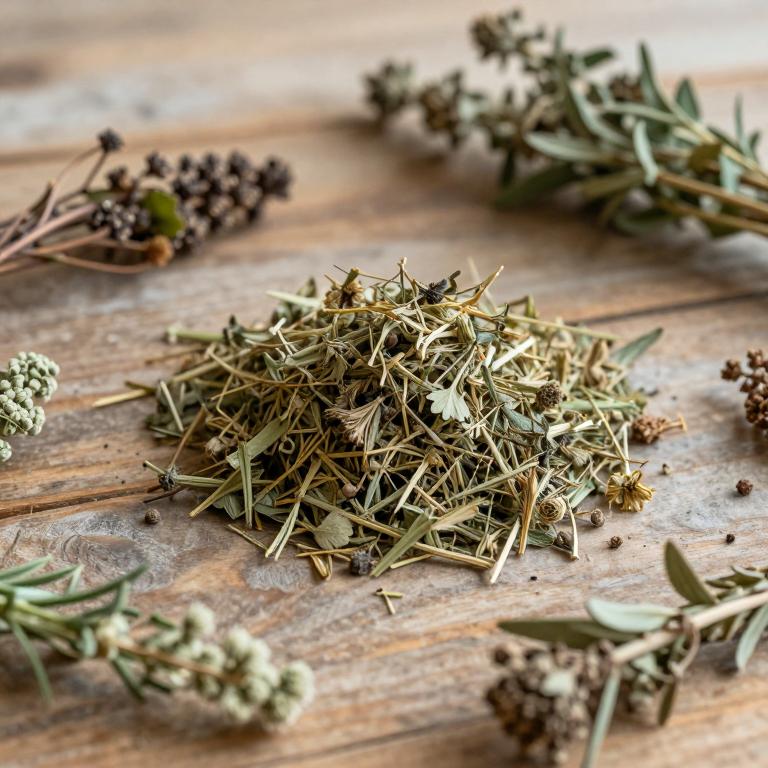
Poplar Everlasting, scientifically known as Helicrysum populifolium, is a resilient perennial herb celebrated for its therapeutic potential. Renowned for its aromatic, golden blooms, this plant contains bioactive compounds used in traditional medicine to reduce inflammation, soothe skin irritations, and support respiratory health, making it a vital botanical resource.
- Family
- Asteraceae
- Native range
- Africa
- Parts used
- Not available
- Common names
- Poplar Everlasting
- Scientific synonyms
- Gnaphalium Populifolium
Names and Synonyms
Common Names
- Poplar Everlasting
Scientific Names
Accepted name
Helichrysum populifoliumSynonyms
- Gnaphalium populifolium
Sources: Wikidata, Catalogue of Life
Taxonomical Classification
This plant belongs to the kingdom Plantae and is classified under the phylum Streptophyta and class Equisetopsida. Within the subclass Magnoliidae, it falls under the order Asterales and is a member of the Asteraceae family. Specifically, it is identified by its genus, Helichrysum.
| Rank | Classification |
|---|---|
| Kingdom | Plantae |
| Phylum | Streptophyta |
| Class | Equisetopsida |
| Subclass | Magnoliidae |
| Order | Asterales |
| Family | Asteraceae |
| Genus | Helichrysum |
Sources: The World Checklist of Vascular Plants (WCVP)
Distribution
This plant exhibits a specific distribution pattern primarily concentrated within the southern regions of the African continent. It is found extensively throughout the Cape Provinces of Southern Africa. Additionally, its natural habitat extends further north into the KwaZulu-Natal province. These two distinct regions define the core geographical range where the species thrives. Consequently, its presence is closely tied to the diverse ecosystems of these specific Southern African territories.
| Region | Area |
|---|---|
| Southern Africa | Cape Provinces |
| Southern Africa | KwaZulu-Natal |
Sources: The World Checklist of Vascular Plants (WCVP)
Botanical Identification
Ecology
The ecology of Helichrysum populifolium is characterized by its adaptability to a broad vertical gradient within its native landscape, occupying diverse altitudinal zones. This species thrives across a significant elevational range, establishing itself in habitats starting from as low as 10 m AMSL and extending up to a maximum altitude of 800 m AMSL. This distribution suggests a tolerance for varied environmental conditions, ranging from lowland tropical or subtropical settings to slightly higher, more temperate foothills. Such an elevational span indicates that the plant can navigate fluctuations in temperature, humidity, and atmospheric pressure, allowing it to persist in a variety of ecological niches within its geographical domain.
- Elevational range max:
- 800 m AMSL
- Elevational range min:
- 10 m AMSL
Life history
The life history of Helichrysum populifolium is characterized by its status as a perennial plant, allowing it to persist through multiple growing seasons. As a perennial species, it avoids the complete senescence associated with annuals and the two-year developmental cycle of biennials, instead establishing a long-term presence in its natural habitat. This life cycle enables the plant to invest energy into robust root systems and structural longevity, facilitating repeated reproductive efforts over several years. Throughout its lifespan, the plant undergoes seasonal cycles of vegetative growth and flowering, adapting its physiological processes to ensure survival and continued propagation within its ecosystem.
- Lifecycle :
- perennial
Morphology
The morphology of Helichrysum populifolium is characterized by a woody growth form, specifically categorized as a shrub. This plant is a self-supporting species that does not function as a climber, and it maintains an independent existence as it is not a parasite. In terms of its habitat and ecological positioning, it is a terrestrial species rather than an aquatic or epiphytic one. The plant exhibits a significant vertical presence, with a height that ranges from a minimum of 0.89 meters to a maximum of 2 meters.
- Aquatic :
- terrestrial
- Climber :
- self-supporting
- Epiphyte :
- terrestrial
- Growth form :
- shrub
- Parasite :
- independent
- Plant height max:
- 2 m
- Plant height min:
- 0.89 m
- Woodiness :
- woody
Sources: Global Inventory of Floras and Traits (GIFT)
Chemicals
Helichrysum populifolium has 1 reported phytochemicals identified across 0 scientific publications and several other databases. The most consistently reported chemicals include 4,5-Dicaffeoylquinic acid.
| Chemical | Supporting sources | Consensus |
|---|---|---|
| 4,5-Dicaffeoylquinic acid | 1 supporting sources | ★☆☆☆☆ |
4,5-Dicaffeoylquinic acid
- Evidence-based complementary and alternative medicine : eCAM