Helichrysum plicatum
Helichrysum plicatum · Accepted scientific name
Scientific literature: Very Sparse (18 studies) · ★☆☆☆☆
, scientifically known as Helicrysum plicatum, is a remarkable medicinal shrub prized for its therapeutic properties. Native to various regions, this plant is often utilized in traditional medicine to treat skin inflammations and promote healing. Its unique bioactive compounds offer significant antioxidant benefits, making it a valuable botanical resource.
- Family
- Asteraceae
- Native range
- Europe
- Parts used
- Flower
- Common names
- Not available
- Scientific synonyms
- Not available
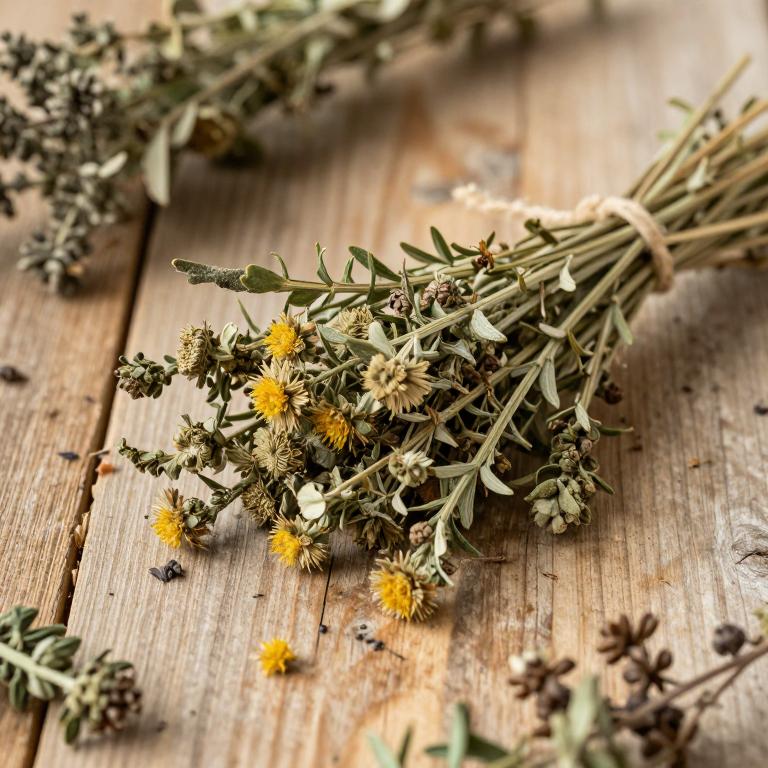
Names and Synonyms
Scientific Names
Accepted name
Helichrysum plicatumSources: Wikidata
Taxonomical Classification
This plant belongs to the kingdom Plantae and the phylum Streptophyta, falling under the class Equisetopsida and subclass Magnoliidae. Within the order Asterales, it is classified under the family Asteraceae. Finally, it is identified by the genus Helichrysum, specifically as the species Helichrysum plicatum.
| Rank | Classification |
|---|---|
| Kingdom | Plantae |
| Phylum | Streptophyta |
| Class | Equisetopsida |
| Subclass | Magnoliidae |
| Order | Asterales |
| Family | Asteraceae |
| Genus | Helichrysum |
Sources: The World Checklist of Vascular Plants (WCVP)
Distribution
This plant is widely distributed across several specific regions within Southeastern Europe. It can be found growing in the territories of Albania, Bulgaria, and Greece. Furthermore, its presence extends throughout the Northwestern Balkan Peninsula. The species also reaches into the Caucasus region, specifically within the Transcaucasus area. These diverse locations highlight the plant's broad geographical range across these mountainous and coastal landscapes.
| Region | Area |
|---|---|
| Southeastern Europe | Albania |
| Southeastern Europe | Bulgaria |
| Southeastern Europe | Greece |
| Southeastern Europe | NW. Balkan Pen. |
| Caucasus | Transcaucasus |
| Western Asia | Iran |
| Western Asia | Iraq |
| Western Asia | Lebanon-Syria |
| Western Asia | Türkiye |
Sources: The World Checklist of Vascular Plants (WCVP)
Botanical Identification
Ecology
The ecology of Helichrysum plicatum is characterized by its ability to thrive across diverse and often rugged terrains, ranging from forest edges and mountains to open steppes and stony places. This plant is specifically adapted to montane environments, occupying an elevational range that spans from a minimum of 1300 m AMSL to a maximum of 2600 m AMSL. Its presence in such varied habitats, including rocky substrates and transitional zones between forests and grasslands, suggests a high degree of resilience to different soil compositions and varying levels of solar exposure typical of high-altitude ecosystems.
- Elevational range max:
- 2600 m AMSL
- Elevational range min:
- 1300 m AMSL
- Habitat :
- forest edges, mountains, steppe, stony places
Life history
The life history of Helichrysum plicatum is characterized by its status as a perennial species, allowing it to persist through multiple growing seasons rather than completing its cycle in a single year. In terms of its structural growth and survival strategy, the plant adopts a chamaephyte life form, meaning its perennating buds are located close to or just above the soil surface, which typically aids in resilience against environmental stressors. This combination of a long-lived lifecycle and a low-growing, bud-protected stature defines its ecological presence and developmental continuity within its natural habitat.
- Life form :
- chamaephyte
- Lifecycle :
- perennial
Morphology
The morphology of Helichrysum plicatum is characterized by a growth form classified as a subshrub or herb, exhibiting a non-woody structure throughout its development. This species typically reaches a plant height ranging from a minimum of 0.1 m to a maximum of 0.55 m. Regarding its ecological habitat and moisture preference, the plant is identified as terrestrial, though it can exist within the spectrum of aquatic and semiaquatic environments.
- Aquatic :
- terrestrial
- Growth form :
- herb
- Growth form :
- subshrub
- Plant height max:
- 0.55 m
- Plant height min:
- 0.1 m
- Woodiness :
- non-woody
Reproduction
The reproduction of Helichrysum plicatum is characterized by a specific seasonal flowering period and the production of highly uniform, minute seeds. The plant enters its flowering phase in June and continues through to August, though the exact timing can remain variable depending on environmental conditions. During this reproductive cycle, the plant produces seeds with extremely consistent physical properties; the seed mass is remarkably stable, with a mean, maximum, and minimum value all recorded at 0.00035 g. This lack of variance in seed mass suggests a highly standardized seed development process within the species.
- Flowering time :
- Jun
- Flowering time :
- Aug
- Seed mass mean:
- 0.00035 g
Sources: Global Inventory of Floras and Traits (GIFT)
Plant Parts
Helichrysum plicatum has 1 reported plant parts identified across 4 scientific publications and several other databases that are studied for medicinal purposes. The most consistently reported plant part include flower.
| Plant part | Supporting sources | Consensus |
|---|---|---|
| Flower | 4 supporting sources | ★★☆☆☆ |
Flower
- Journal of ethnobiology and ethnomedicine
- Molecules (Basel, Switzerland)
- Pharmaceutics
- Natural product communications
Chemicals
Helichrysum plicatum has 6 reported phytochemicals identified across 4 scientific publications and several other databases. The most consistently reported chemicals include Neryl acetate, apigenin, kaempferol, naringenin, polyphenols.
| Chemical | Supporting sources | Consensus |
|---|---|---|
| Neryl acetate | 1 supporting sources | ★☆☆☆☆ |
| apigenin | 1 supporting sources | ★☆☆☆☆ |
| kaempferol | 1 supporting sources | ★☆☆☆☆ |
| naringenin | 1 supporting sources | ★☆☆☆☆ |
| polyphenols | 1 supporting sources | ★☆☆☆☆ |
| quercetin | 1 supporting sources | ★☆☆☆☆ |
Neryl acetate
- Foods (Basel, Switzerland)
apigenin
- Natural product communications
kaempferol
- Natural product communications
naringenin
- Natural product communications
polyphenols
- Pharmaceutics
quercetin
- Natural product communications
Activities
Helichrysum plicatum has 2 reported activities identified across 4 scientific publications and several other databases. The most consistently reported activities include Antibacterial, Antimicrobial.
| Activity | Supporting sources | Consensus |
|---|---|---|
| Antibacterial | 1 supporting sources | ★☆☆☆☆ |
| Antimicrobial | 1 supporting sources | ★☆☆☆☆ |
Antibacterial
- Foods (Basel, Switzerland)
Antimicrobial
- Foods (Basel, Switzerland)
Conditions
Helichrysum plicatum has 2 reported investigations on conditions identified across 4 scientific publications and several other databases. The most consistently reported conditions include Escherichia coli, Listeria monocytogenes.
| Condition | Supporting sources | Consensus |
|---|---|---|
| Escherichia coli | 1 supporting sources | ★☆☆☆☆ |
| Listeria monocytogenes | 1 supporting sources | ★☆☆☆☆ |
Escherichia coli
- Foods (Basel, Switzerland)
Listeria monocytogenes
- Foods (Basel, Switzerland)
Preparations
Helichrysum plicatum has 4 reported preparations identified across 4 scientific publications and several other databases. The most consistently reported preparations include Everlasting Flower Extract, essential oils, ethanol extract, extract obtained with 100% ethyl acetate.
| Preparation | Supporting sources | Consensus |
|---|---|---|
| Everlasting flower extract | 1 supporting sources | ★☆☆☆☆ |
| Essential oils | 1 supporting sources | ★☆☆☆☆ |
| Ethanol extract | 1 supporting sources | ★☆☆☆☆ |
| Extract obtained with 100% ethyl acetate | 1 supporting sources | ★☆☆☆☆ |
Everlasting flower extract
- Pharmaceutics
Essential oils
- Foods (Basel, Switzerland)
Ethanol extract
- Molecules (Basel, Switzerland)
Extract obtained with 100% ethyl acetate
- Natural product communications