Silver-bush Everlasting-flower
Helichrysum petiolare · Accepted scientific name
Scientific literature: Very Sparse (12 studies) · ★☆☆☆☆
Silver-bush Everlasting-flower, scientifically known as Helichrysum petiolare, is a resilient perennial celebrated for its striking silvery foliage and vibrant blooms. Renowned in traditional medicine, this aromatic plant offers potent antioxidant and anti-inflammatory properties, making it a valuable natural resource for promoting skin health and overall wellness.
- Family
- Asteraceae
- Native range
- Europe
- Parts used
- Not available
- Common names
- Silver-Bush Everlasting-Flower · Silver-Bush Everlastingflower · 5 more
- Scientific synonyms
- Not available
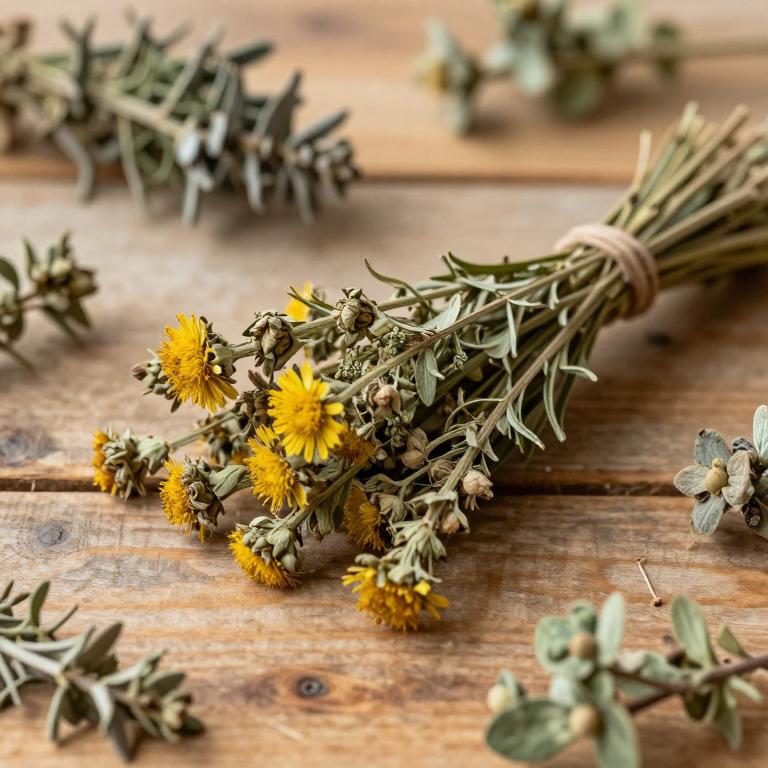
Names and Synonyms
Common Names
- Silver-bush Everlasting-flower
- Silver-bush Everlastingflower
- licorice-plant
- trailing dusty-miller
- Licorice Everlasting
- Silver Bush Everlasting
- Silver Everlasting
Scientific Names
Accepted name
Helichrysum petiolareRegional and Traditional Names
Spanish:
- Inmortal
German:
- Lakritz-Strohblume
- Lakritz-Strohblume
French:
- Immortelle laineuse
Sources: Wikidata, Catalogue of Life
Taxonomical Classification
This plant belongs to the kingdom Plantae and the phylum Streptophyta, falling under the class Equisetopsida and subclass Magnoliidae. Within the order Asterales, it is classified under the family Asteraceae and the genus Helichrysum.
| Rank | Classification |
|---|---|
| Kingdom | Plantae |
| Phylum | Streptophyta |
| Class | Equisetopsida |
| Subclass | Magnoliidae |
| Order | Asterales |
| Family | Asteraceae |
| Genus | Helichrysum |
Sources: The World Checklist of Vascular Plants (WCVP)
Distribution
This plant exhibits a diverse geographical distribution across several regions of Europe. In Northern Europe, its presence can be documented in both Great Britain and Ireland. Moving toward Middle Europe, the species is also found within the borders of Austria. Its range extends into Southwestern Europe, specifically inhabiting the island of Corse. Finally, the distribution continues further west into the country of Portugal.
| Region | Area |
|---|---|
| Northern Europe | Great Britain |
| Northern Europe | Ireland |
| Middle Europe | Austria |
| Southwestern Europe | Corse |
| Southwestern Europe | Portugal |
| Southwestern Europe | Spain |
| Eastern Europe | Krym |
| Eastern Europe | Ukraine |
| Macaronesia | Canary Is. |
| Macaronesia | Madeira |
Sources: The World Checklist of Vascular Plants (WCVP)
Botanical Identification
Ecology
The ecology of Helichrysum petiolare is characterized by its ability to thrive across a broad altitudinal gradient, ranging from sea level at 5 m AMSL to elevations as high as 1890 m AMSL. It is primarily found inhabiting lowland environments, where it adapts to specific moisture and temperature regimes associated with these lower topographical zones. This wide elevational range suggests a significant ecological plasticity, allowing the species to occupy diverse niches within its native landscape, from coastal or near-coastal lowland areas to much higher montane reaches.
- Elevational range max:
- 1890 m AMSL
- Elevational range min:
- 5 m AMSL
- Habitat :
- Lowland
Life history
The life history of Helichrysum petiolare is characterized by its status as a perennial plant, allowing it to persist through multiple growing seasons rather than completing its cycle in a single year. In terms of its growth habit and structural positioning, it is classified as a chamaephyte, meaning its buds and growing points are located close to the soil surface, often protected by a layer of leaf litter or remaining just above the ground level. This life form, consistent across both its morphological classification as a chamaephyte and its specific ecological niche, enables the plant to maintain a low-growing, hardy presence that is well-adapted to its environmental conditions.
- Life form :
- chamaephyte
- Lifecycle :
- perennial
Morphology
The morphology of Helichrysum petiolare is characterized by a woody growth form, manifesting primarily as a shrub or subshrub. This plant is a terrestrial species, functioning as an independent organism rather than acting as a parasite or an epiphyte. In terms of stature, it exhibits significant variability in plant height, ranging from a minimum of 0.2 m to a maximum of 4.5 m. The shoot orientation is described as ascending, and while it maintains a self-supporting structure, it can also exhibit facultative climbing tendencies.
- Aquatic :
- terrestrial
- Climber :
- facultative
- Epiphyte :
- terrestrial
- Growth form :
- shrub
- Parasite :
- independent
- Plant height max:
- 4.5 m
- Plant height min:
- 0.2 m
- Shoot orientation :
- ascending
- Woodiness :
- woody
Physiology
The physiology of Helichrysum petiolare is characterized by specific morphological dimensions and nutrient metabolic processes. The plant's leaf architecture exhibits a distinct ovate form, with leaf lengths typically ranging from a minimum of 1.5 cm to a maximum of 2.5 cm. Regarding its metabolic relationship with soil nutrients, the plant does not function as a nitrogen fixer, meaning it lacks the symbiotic capabilities to convert atmospheric nitrogen into usable forms for its growth.
- Leaf form :
- ovate
- Leaf length max:
- 2.5 cm
- Leaf length min:
- 1.5 cm
- Nitrogen fixer :
- no
Reproduction
The reproduction of Helichrysum petiolare involves a combination of sexual and asexual processes. The plant produces inflorescences characterized as a corymbose panicled structure, featuring small, vibrant yellow flowers that typically range in width from 0.3 cm to 0.5 cm. The flowering period is seasonally specific, generally starting in July and concluding in August. Pollination is driven by biotic mechanisms, specifically through an insect pollination syndrome. Following successful fertilization, the plant develops fruit in the form of an achene, which is an indehiscent type, meaning it does not spontaneously split open at maturity to release its seeds. Furthermore, asexual reproduction is present in this species, providing an additional method for propagation and survival.
- Dehiscence :
- indehiscent
- Flower colour :
- yellow
- Flower width max:
- 0.5 cm
- Flower width min:
- 0.3 cm
- Flowering time :
- Jul
- Flowering time :
- Aug
- Fruit type :
- achene
- Inflorescence :
- corymbose_panicle
- Pollination syndrome :
- insect
- Pollination syndrome :
- biotic
- Reproduction asexual :
- present
Sources: Global Inventory of Floras and Traits (GIFT)
Chemicals
Helichrysum petiolare has 1 reported phytochemicals identified across 0 scientific publications and several other databases. The most consistently reported chemicals include Triterpenoid.
| Chemical | Supporting sources | Consensus |
|---|---|---|
| Triterpenoid | 1 supporting sources | ★☆☆☆☆ |
Triterpenoid
- Molecular omics
Activities
Helichrysum petiolare has 2 reported activities identified across 0 scientific publications and several other databases. The most consistently reported activities include Antibacterial, Antioxidant.
| Activity | Supporting sources | Consensus |
|---|---|---|
| Antibacterial | 1 supporting sources | ★☆☆☆☆ |
| Antioxidant | 1 supporting sources | ★☆☆☆☆ |
Antibacterial
- Plants (Basel, Switzerland)
Antioxidant
- Plants (Basel, Switzerland)
Conditions
Helichrysum petiolare has 8 reported investigations on conditions identified across 0 scientific publications and several other databases. The most consistently reported conditions include asthma, back pain, chest pain, cough, diabetes mellitus.
| Condition | Supporting sources | Consensus |
|---|---|---|
| Asthma | 1 supporting sources | ★☆☆☆☆ |
| Back pain | 1 supporting sources | ★☆☆☆☆ |
| Chest pain | 1 supporting sources | ★☆☆☆☆ |
| Cough | 1 supporting sources | ★☆☆☆☆ |
| Diabetes mellitus | 1 supporting sources | ★☆☆☆☆ |
| Menstrual pain | 1 supporting sources | ★☆☆☆☆ |
| Type 2 diabetes | 1 supporting sources | ★☆☆☆☆ |
| Wounds | 1 supporting sources | ★☆☆☆☆ |
Asthma
- Plants (Basel, Switzerland)
Back pain
- Plants (Basel, Switzerland)
Chest pain
- Plants (Basel, Switzerland)
Cough
- Plants (Basel, Switzerland)
Diabetes mellitus
- F1000Research
Menstrual pain
- Plants (Basel, Switzerland)
Type 2 diabetes
- F1000Research
Wounds
- Plants (Basel, Switzerland)
Preparations
Helichrysum petiolare has 1 reported preparations identified across 0 scientific publications and several other databases. The most consistently reported preparations include essential oils.
| Preparation | Supporting sources | Consensus |
|---|---|---|
| Essential oils | 1 supporting sources | ★☆☆☆☆ |
Essential oils
- Plants (Basel, Switzerland)