Helianthemum cinereum
Helianthemum cinereum · Accepted scientific name
Scientific literature: Very Sparse (1 studies) · ★☆☆☆☆
Helianthemum cinereum, commonly known as rock rose, is a versatile plant recognized for its significant medicinal potential. Scientific investigations have specifically focused on the bioactive properties found within its leaves. Researchers have utilized various preparations, most notably 80% MeOH extracts and water extracts, to study its chemical constituents. These studies have primarily highlighted the plant's potent antimicrobial activities against diverse pathogens. Understanding these therapeutic capabilities offers valuable insights into the plant's role in natural pharmacology.
- Synonyms
- Cistus Cinereus · Rhodax Cinereus · 1 more
- Common names
- Not available
- Family
- Cistaceae
- Distribution
- Southern America
- Plant Parts
- Leaf
Classification
Common Names
Helianthemum cinereum is a fascinating plant known by several distinct regional names. In certain linguistic contexts, it is commonly referred to as Eliantemo cinereo. It also carries the specific common name devätorník popolavý in other areas. These varied designations highlight the diverse ways different cultures identify this particular species. Understanding these relationships helps botanists and enthusiasts connect with the plant across various geographic boundaries.
Sources: Catalogue of Life (COL)
Synonyms
Helianthemum cinereum is a botanical species that has been classified under several different names throughout its taxonomic history. Due to various shifting scientific perspectives, it is formally recognized by the synonym Cistus cinereus. Researchers have also documented the plant under the designation Helianthemum rhodax var. cinereum. Furthermore, the name Rhodax cinereus serves as another valid synonym for this specific organism. Understanding these multiple nomenclatures is essential for accurately identifying the plant in diverse botanical records.
Sources: The World Checklist of Vascular Plants (WCVP)
Taxonomy
Helianthemum cinereum is a distinctive member of the kingdom Plantae that plays a unique role in its ecosystem. As a representative of the genus Helianthemum, this species is scientifically categorized within the family Cistaceae. It belongs to the biological order Malvales, showcasing its evolutionary connection to various other flowering plants. Furthermore, its classification under the class Equisetopsida provides essential insight into its structural development. Understanding these botanical relationships helps researchers better appreciate the complex lineage of this specific plant.
| Rank | Classification |
|---|---|
| Kingdom | Plantae |
| Phylum | Streptophyta |
| Class | Equisetopsida |
| Subclass | Magnoliidae |
| Order | Malvales |
| Family | Cistaceae |
| Genus | Helianthemum |
Sources: The World Checklist of Vascular Plants (WCVP)
Distribution
Geographic Regions
Helianthemum cinereum exhibits a diverse geographical range that spans across multiple continents. In Africa, this species is widely distributed throughout Northern Africa, specifically within the territories of Algeria and Morocco. Its presence extends into Europe, where it can be found throughout the southeastern regions, including Italy and Sicilia. Furthermore, the plant is well-established in Southwestern Europe, particularly across Spain. This broad distribution highlights the plant's ability to thrive in varied Mediterranean climates.
Sources: The World Checklist of Vascular Plants (WCVP)
Identification
Morphology
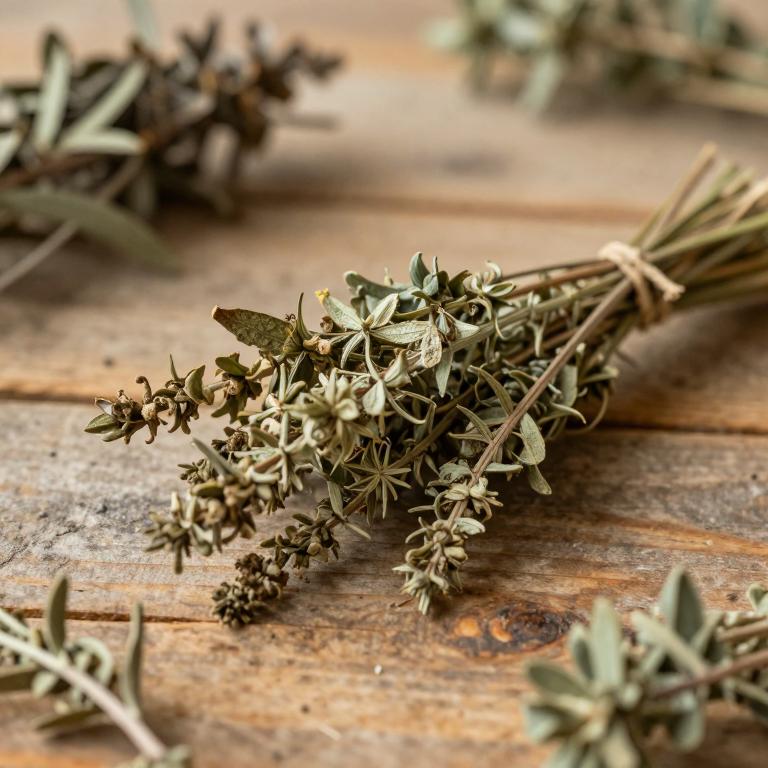
Helianthemum cinereum is characterized by its distinct shrub-like growth form.
Sources: Global Inventory of Floras and Traits (GIFT)
Biological Activities
Helianthemum cinereum is recognized as one of the most potent species within its genus regarding biological activity. Research involving various taxa from the Helianthemum genus has demonstrated that this specific plant possesses significant antimicrobial properties. These capabilities are closely linked to the plant's high total phenolic content and its strong radical scavenging abilities. Specifically, extracts from this species consistently exhibit robust performance against both Gram-positive and Gram-negative bacteria. Such findings highlight the potential medicinal value of its unique polyphenolic profile in combating microbial threats.
Compounds
Conditions
Helianthemum cinereum exhibits significant antimicrobial activities when evaluated through methanolic extracts. This specific taxon consistently demonstrates strong antibacterial properties against both Gram-positive and Gram-negative bacteria. The plant's effectiveness in these activities is closely linked to its high total phenolic content. Furthermore, a strong correlation exists between its radical scavenging capabilities and its overall antimicrobial performance. These medicinal attributes are characteristic of the species' specific polyphenolic profile.
Preparations
Helianthemum cinereum is prepared as both 80% MeOH extracts and water extracts to facilitate phytochemical analysis. These specific extraction methods are used to evaluate the plant's secondary metabolites and biological activities. The 80% MeOH extracts of this species are particularly important for assessing antibacterial properties against various bacteria. Additionally, the water extracts are utilized to measure the plant's radical scavenging activity and antioxidant capabilities. Through these two preparation methods, the medicinal potential of Helianthemum cinereum is effectively investigated.
Parts used
Helianthemum cinereum serves as a significant subject of study regarding the phytochemical properties of its leaves. Researchers analyzed the leaf extracts of various taxa within the Helianthemum genus to determine their secondary metabolite compositions. Among these studies, the leaves of Helianthemum cinereum were found to possess high total phenolic content and potent biological activities. Specifically, this plant demonstrated some of the strongest radical scavenging and antimicrobial capabilities compared to other studied species. These findings suggest that the leaf extracts of Helianthemum cinereum are deeply connected to its traditional medicinal applications.