Helenium elegans
Helenium elegans · Accepted scientific name
Scientific literature: Very Sparse (9 studies) · ★☆☆☆☆
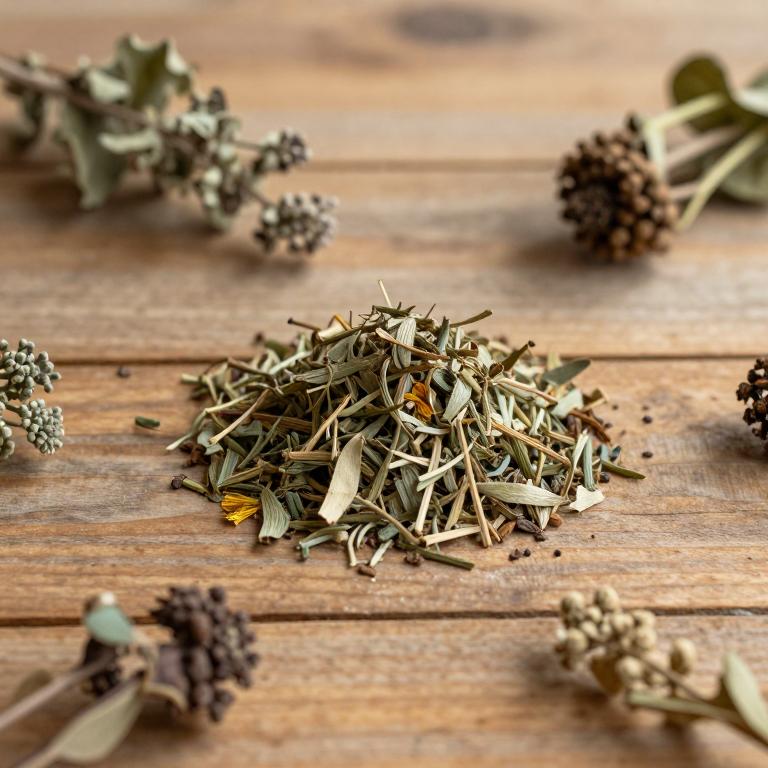
, scientifically known as Helenium elegans, is a striking medicinal plant prized for its vibrant blooms and therapeutic potential. Often found in tropical landscapes, this species is valued in traditional herbal practices for its unique bioactive compounds, offering promising properties for holistic healing and supporting overall wellness in natural medicine.
- Family
- Asteraceae
- Native range
- Northern America
- Parts used
- Not available
- Common names
- Not available
- Scientific synonyms
- Heleniastrum Elegans
Names and Synonyms
Scientific Names
Accepted name
Helenium elegansSynonyms
- Heleniastrum elegans
Sources: Wikidata, Catalogue of Life
Taxonomical Classification
This plant belongs to the kingdom Plantae within the phylum Streptophyta and the class Equisetopsida. It is further classified under the subclass Magnoliidae and the order Asterales. Finally, it is a member of the family Asteraceae within the genus Helenium.
| Rank | Classification |
|---|---|
| Kingdom | Plantae |
| Phylum | Streptophyta |
| Class | Equisetopsida |
| Subclass | Magnoliidae |
| Order | Asterales |
| Family | Asteraceae |
| Genus | Helenium |
Sources: The World Checklist of Vascular Plants (WCVP)
Distribution
This plant exhibits a specific distribution across several regions of the United States. In the North-Central part of the country, its presence is noted in Oklahoma. Moving toward the South-Central region, the species can also be found throughout Texas. Additionally, its range extends into the Southeastern United States, specifically within Arkansas. Together, these locations define the primary geographical footprint of Helenium elegans.
| Region | Area |
|---|---|
| North-Central U.S.A. | Oklahoma |
| South-Central U.S.A. | Texas |
| Southeastern U.S.A. | Arkansas |
Sources: The World Checklist of Vascular Plants (WCVP)
Botanical Identification
Life history
The life history of Helenium elegans is characterized by a variable lifecycle, which can manifest as an annual, biennial, or perennial depending on the specific environmental conditions and local ecological pressures it encounters. Throughout its existence, the plant undergoes a complex progression from seed germination to reproductive maturity, navigating seasonal shifts to ensure survival. As a variable species, its developmental timeline allows it to adapt its longevity to the availability of resources such as moisture and nutrient-rich soil. In favorable habitats, it may establish itself as a perennial, returning each season to complete its reproductive cycle, whereas in more transient or harsh environments, it may function as an annual or biennial, prioritizing rapid seed production before the conclusion of its lifespan.
- Lifecycle :
- annual
Morphology
The morphology of Helenium elegans is characterized by its growth form as a non-woody herb and specifically a forb. It functions as a self-supporting plant, lacking the climbing mechanisms of a liana or vine, and maintains an independent lifestyle as a non-parasitic organism. In terms of its ecological habitat and positioning, the species is terrestrial rather than aquatic or epiphytic, occupying stable ground environments.
- Aquatic :
- terrestrial
- Climber :
- self-supporting
- Epiphyte :
- terrestrial
- Growth form :
- herb
- Growth form :
- forb
- Parasite :
- independent
- Woodiness :
- non-woody
Reproduction
The reproduction of Helenium elegans is characterized by the production of specialized seeds that exhibit a highly consistent physical profile. The reproductive success of the species relies on these seeds, which maintain a uniform weight across all observed specimens. Specifically, the seed mass is remarkably precise, with a mean value of 4e-05 g. This consistency is reflected in the lack of variance within the population, as both the maximum and minimum recorded seed mass values are identical at 4e-05 g. Such uniformity in seed mass suggests a highly stabilized evolutionary strategy for dispersal and germination within its natural habitat.
- Seed mass mean:
- 4e-05 g
Sources: Global Inventory of Floras and Traits (GIFT)
Chemicals
Helenium elegans has 6 reported phytochemicals identified across 0 scientific publications and several other databases. The most consistently reported chemicals include Isohelenol, Microhelenin A, Microhelenin B, Microhelenin C, Microlenin acetate.
| Chemical | Supporting sources | Consensus |
|---|---|---|
| Isohelenol | 1 supporting sources | ★☆☆☆☆ |
| Microhelenin A | 1 supporting sources | ★☆☆☆☆ |
| Microhelenin B | 1 supporting sources | ★☆☆☆☆ |
| Microhelenin C | 1 supporting sources | ★☆☆☆☆ |
| Microlenin acetate | 1 supporting sources | ★☆☆☆☆ |
| Plenolin | 1 supporting sources | ★☆☆☆☆ |
Isohelenol
- Journal of natural products
Microhelenin A
- Journal of pharmaceutical sciences
Microhelenin B
- Journal of pharmaceutical sciences
Microhelenin C
- Journal of pharmaceutical sciences
Microlenin acetate
- Journal of pharmaceutical sciences
Plenolin
- Journal of pharmaceutical sciences
Activities
Helenium elegans has 2 reported activities identified across 0 scientific publications and several other databases. The most consistently reported activities include Antileukemic, Antitumor.
| Activity | Supporting sources | Consensus |
|---|---|---|
| Antileukemic | 2 supporting sources | ★☆☆☆☆ |
| Antitumor | 1 supporting sources | ★☆☆☆☆ |
Antileukemic
- Journal of pharmaceutical sciences
- Journal of natural products
Antitumor
- Journal of pharmaceutical sciences