sneezeweed
Helenium autumnale · Accepted scientific name
Scientific literature: Very Sparse (1 studies) · ★☆☆☆☆
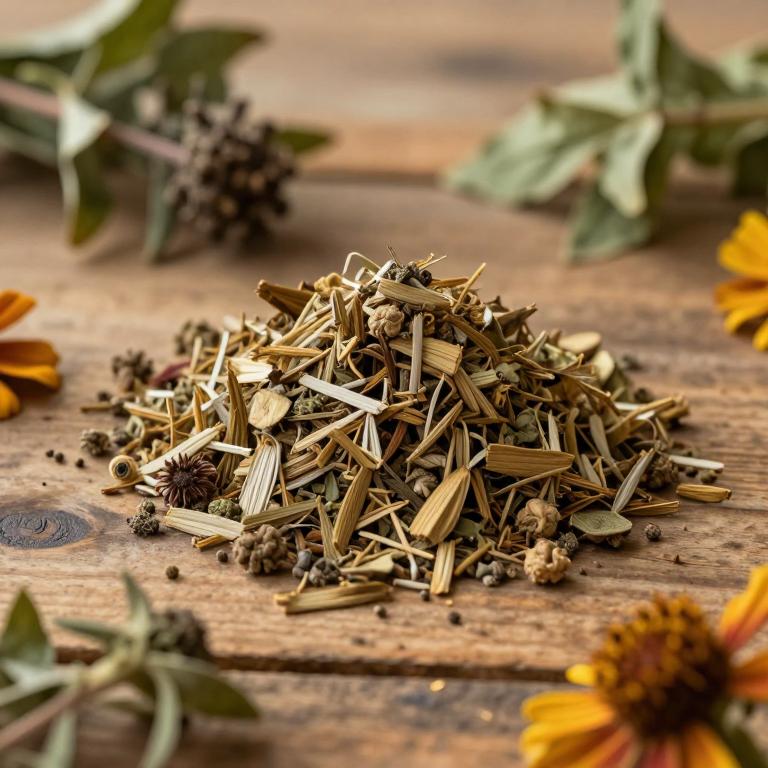
Sneezeweed, scientifically known as Helenium autumnale, is a resilient perennial native to North American wetlands. Characterized by its vibrant, daisy-like golden blooms, this plant thrives in moist soils. Historically valued for its medicinal properties, it is often utilized in traditional remedies to address respiratory ailments and various seasonal allergies.
Names and Synonyms
Common Names
- fall sneezeweed
- mountain sneezeweed
- sneezeweed
- swamp sunflower
- common sneezeweed
- autumn sneezeweed
Scientific Names
Accepted name
Helenium autumnaleSynonyms
- Helenium decurrens
- Helenium autumnale var. pubescens
- Heleniastrum autumnale
- Helenium autumnale var. pumilum
- Heleniastrum montanum
- Helenium altissimum
- Helenium autumnale var. tubuliflorum
- Helenium autumnale var. canaliculatum
- Helenium autumnale var. fylesii
- Helenium autumnale var. grandiflorum
- Helenium autumnale var. grandiflorum
- Helenium autumnale var. montanum
- Helenium autumnale var. parviflorum
- Helenium canaliculatum
- Helenium commutatum
- Helenium grandiflorum
- Helenium latifolium
- Helenium longifolium
- Helenium macranthum
- Helenium montanum
- Helenium parviflorum
- Helenium pubescens
- Helenium pumilum
- Helenium tubuliflorum
- Helenium autumnale var. longifolium
- Helenium autumnale rubrum
- Helenium autumnale var. subintegerrimum
Regional and Traditional Names
German:
- Gewöhnliche Sonnenbraut
- gewöhnliche Sonnenbraut
French:
- hélénie automnale
- hélénie d'automne
- hélénie des montagnes
Sources: Wikidata, Catalogue of Life
Taxonomical Classification
This plant belongs to the kingdom Plantae and is classified within the phylum Streptophyta and class Equisetopsida. It is further categorized under the subclass Magnoliidae and order Asterales, falling into the family Asteraceae. Finally, its specific taxonomic identification is within the genus Helenium.
| Rank | Classification |
|---|---|
| Kingdom | Plantae |
| Phylum | Streptophyta |
| Class | Equisetopsida |
| Subclass | Magnoliidae |
| Order | Asterales |
| Family | Asteraceae |
| Genus | Helenium |
Sources: The World Checklist of Vascular Plants (WCVP)
Distribution
This plant exhibits a broad geographical distribution across several diverse regions of Eurasia. In Middle Europe, its presence is specifically noted within the borders of Germany. Moving toward Eastern Europe, it can be found throughout the Baltic States as well as in South European Russia. The species also extends into Central Asia, where it inhabits the landscapes of Tajikistan. Finally, its range is confirmed to include the territory of Uzbekistan.
| Region | Area |
|---|---|
| Middle Europe | Germany |
| Eastern Europe | Baltic States |
| Eastern Europe | South European Russia |
| Central Asia | Tadzhikistan |
| Central Asia | Uzbekistan |
| Subarctic America | Northwest Territories |
| Western Canada | Alberta |
| Western Canada | British Columbia |
| Western Canada | Manitoba |
| Western Canada | Saskatchewan |
Sources: The World Checklist of Vascular Plants (WCVP)
Botanical Identification
Ecology
The ecology of Helenium autumnale is characterized by its ability to thrive in disturbed and transitional environments, frequently colonizing open areas such as roadsides. These habitats provide the necessary light availability and soil disturbance that favor its establishment. As a species adapted to these specific ecological niches, it often occupies sunny, exposed locations where competition from dense forest vegetation is minimal, allowing it to stabilize in the peripheral zones of more stable ecosystems.
- Habitat :
- roadsides
Life history
The life history of Helenium autumnale is characterized by its status as a perennial plant, allowing it to persist through multiple growing seasons. As a hemicryptophyte, its perenn Perennial survival strategy involves keeping its overwintering buds protected at or just below the soil surface, typically covered by leaf litter or soil. This specific life form, categorized under both hemicryptophyte classifications, enables the plant to endure seasonal environmental shifts by shielding its regenerative tissues during dormant periods, ensuring its continued presence within its ecological niche.
- Life form :
- hemicryptophyte
- Lifecycle :
- perennial
Morphology
The morphology of Helenium autumnale is characterized by its growth form as a woody herb and forb, which maintains a self-supporting structure rather than acting as a climber or liana. This plant is strictly terrestrial, functioning as an independent organism that does not exhibit parasitic or epiphytic behaviors. In terms of stature, it is a self-supporting species that typically reaches a mean height of 1.5 m, with its vertical development ranging from a minimum of 0.5 m to a maximum height of 1.5 m.
- Aquatic :
- terrestrial
- Climber :
- self-supporting
- Epiphyte :
- terrestrial
- Growth form :
- herb
- Growth form :
- forb
- Parasite :
- independent
- Plant height mean:
- 1.5 m
- Plant height min:
- 0.5 m
- Woodiness :
- woody
Physiology
The physiology of Helenium autumnale is characterized by a standard C3 photosynthetic pathway, a metabolic strategy common among many temperate herbaceous perennials. Under this pathway, carbon fixation occurs exclusively through the Calvin cycle, where the enzyme RuBisCO facilitates the initial carboxylation of ribulose-1,5-bisphosphate to produce three-carbon molecules. This physiological process dictates the plant's water-use efficiency and environmental adaptations, as it relies on the simultaneous opening of stomata for gas exchange and the uptake of moisture, making the plant particularly sensitive to periods of high transpiration and water scarcity. Consequently, its metabolic rate and biomass production are closely tied to ambient temperature and light availability, optimizing resource allocation during the late summer and autumnal growing seasons.
- Photosynthetic pathway :
- C3
Reproduction
The reproduction of Helenium autumnale is characterized by a specific seasonal flowering window and the production of very lightweight seeds. The flowering period typically commences in August and continues through until October, though the timing can be variable depending on environmental conditions. Following pollination, the plant produces seeds with a highly diminutive mass; the mean seed mass is recorded at approximately 0.00041735 g. Individual seed weights fluctuate within a narrow range, with a minimum mass of 0.00033 g and a maximum mass reaching up to 0.001 g.
- Flowering time :
- Aug
- Flowering time :
- Oct
- Seed mass max:
- 0.001 g
- Seed mass mean:
- 0.00041735 g
- Seed mass min:
- 0.00033 g
Sources: Global Inventory of Floras and Traits (GIFT)
Chemicals
Helenium autumnale has 1 reported phytochemicals identified across 0 scientific publications and several other databases. The most consistently reported chemicals include 210Po.
| Chemical | Supporting sources | Consensus |
|---|---|---|
| 210Po | 1 supporting sources | ★☆☆☆☆ |
210Po
- Journal of environmental radioactivity