sinicuichi
Heimia salicifolia · Accepted scientific name
Scientific literature: Sparse (96 studies) · ★★☆☆☆
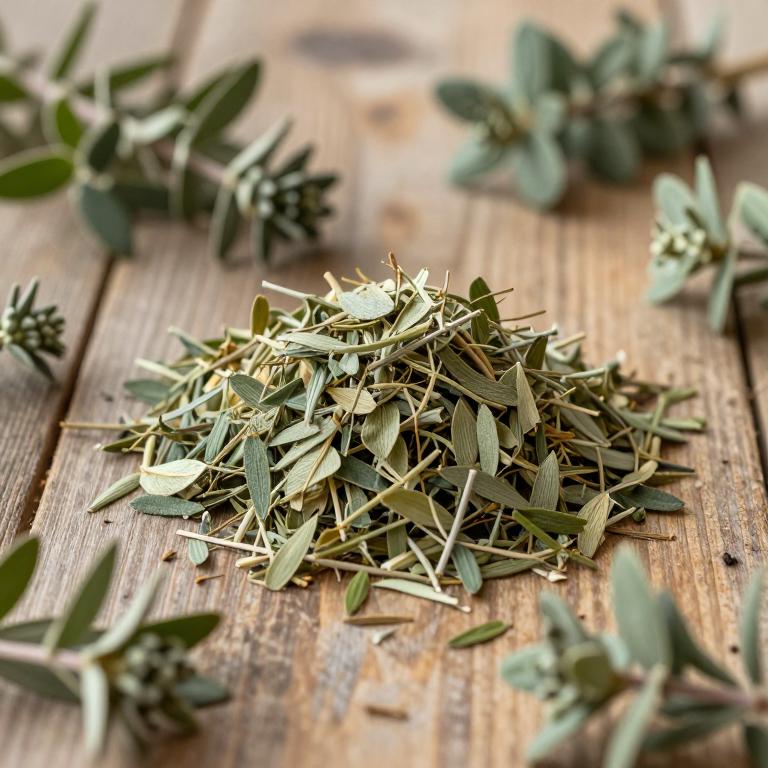
Sinicuichi, scientifically known as Heimia salicifolia, is a versatile medicinal shrub native to the Americas. Commonly called Sinicuichi, this plant is renowned in traditional folk medicine for its psychoactive properties and its ability to alleviate tension, support relaxation, and treat various physical ailments through its unique chemical compounds.
Names and Synonyms
Common Names
- sinicuichi
- willow-leaf heimia
- sun opener
Scientific Names
Accepted name
Heimia salicifoliaSynonyms
- Nesaea syphilitica
- Decodon salicifolius
- Heimia grandiflora
- Heimia salicifolia var. grandiflora
- Heimia syphilitica
- Chrysolyga salicifolia
- Lythrum flavum
- Nesaea salicifolia
- Ludwigia bertonii
- Heimia linariifolia
Regional and Traditional Names
Spanish:
- Heimia
- sinicuichi
- quiebra arado
- yerba de la vida
- escoba de arroyo
German:
- Sinicuichi
French:
- Heimia
- Sinicuichi
Sources: Wikidata, Catalogue of Life
Taxonomical Classification
This plant belongs to the kingdom Plantae and is classified within the phylum Streptophyta and the class Equisetopsida. Within the subclass Magnoliidae, it is situated in the order Myrtales and falls under the family Lythraceae. Ultimately, its taxonomic identity is defined by its classification under the genus Heimia.
| Rank | Classification |
|---|---|
| Kingdom | Plantae |
| Phylum | Streptophyta |
| Class | Equisetopsida |
| Subclass | Magnoliidae |
| Order | Myrtales |
| Family | Lythraceae |
| Genus | Heimia |
Sources: The World Checklist of Vascular Plants (WCVP)
Distribution
This plant exhibits a wide and fragmented geographical distribution across several different continents. Within the Macaronesian islands, it can be found specifically in the Azores. Its range extends to Australia, where it is located in the state of Queensland. In North America, the species is present in the South-Central United States, particularly in Texas. Finally, it inhabits various parts of Mexico, including both the central and northeastern regions of the country.
| Region | Area |
|---|---|
| Macaronesia | Azores |
| Australia | Queensland |
| South-Central U.S.A. | Texas |
| Mexico | Mexico Central |
| Mexico | Mexico Northeast |
| Mexico | Mexico Gulf |
| Mexico | Mexico Northwest |
| Mexico | Mexico Southwest |
| Mexico | Mexico Southeast |
| Caribbean | Jamaica |
Sources: The World Checklist of Vascular Plants (WCVP)
Botanical Identification
Ecology
The ecology of Heimia salicifolia is characterized by its ability to inhabit a wide variety of altitudinal gradients, spanning an elevational range from 0 m AMSL to a maximum of 2600 m AMSL. Within these diverse topographical settings, the species is notably found in habitats such as Campo Limpo, where it adapts to the specific light and soil conditions of these open, grassy environments.
- Elevational range max:
- 2600 m AMSL
- Elevational range min:
- 0 m AMSL
- Habitat :
- Campo Limpo
Life history
The life history of Heimia salicifolia is characterized by its existence as a perennial plant, allowing it to persist through multiple growing seasons. As a phanerophyte, its reproductive buds are elevated above the ground level, typically supported by a woody or semi-woody structure. The plant exhibits a deciduous nature, shedding its foliage periodically as part of its seasonal cycle. In terms of its structural classification, it is identified as a phanerophyte, a growth form that enables it to maintain its vitality and structural integrity across its lifespan.
- Deciduousness :
- deciduous
- Life form :
- phanerophyte
- Lifecycle :
- perennial
Morphology
The morphology of Heimia salicifolia is characterized by a woody growth form, primarily developing as a shrub. It exhibits a self-supporting structure, functioning as neither a climber nor a vine, and reaches an average plant height of approximately 2 meters. The species is strictly terrestrial in its ecological habit, functioning as an independent organism that does not exhibit parasitic or epiphytic behavior.
- Aquatic :
- terrestrial
- Climber :
- self-supporting
- Epiphyte :
- terrestrial
- Growth form :
- shrub
- Parasite :
- independent
- Plant height mean:
- 2 m
- Woodiness :
- woody
Physiology
The physiology of Heimia salicifolia is characterized by specialized metabolic processes geared toward survival in diverse ecological niches, though it does not possess the biological mechanisms required for atmospheric nitrogen sequestration. Specifically, regarding its nutrient acquisition strategies, the plant is not a nitrogen fixer, meaning it lacks the symbiotic relationship with diazotrophic bacteria, such as Rhizobium, typically found in the root nodules of certain legumes. Instead, it relies on the uptake of dissolved nitrates and ammonium ions from the soil through its root system to support protein synthesis and vegetative growth. Its physiological functions are further defined by its unique secondary metabolism, which involves the biosynthesis of complex alkaloids that serve as chemical defense mechanisms, and a photosynthetic framework optimized to manage varying light intensities and moisture availability.
- Nitrogen fixer :
- no
Reproduction
The reproduction of Heimia salicifolia is characterized by the production of minute seeds that play a crucial role in its dispersal and establishment within its natural habitat. The reproductive output is marked by extreme uniformity in seed size, with a recorded seed mass mean of 1e-04 g. This consistency is reflected in the seed's physical parameters, as both the maximum and minimum seed mass values are also measured at 1e-04 g. Such standardized, lightweight seeds suggest a reproductive strategy optimized for efficient distribution, likely aided by environmental factors such as wind or water, ensuring the species can colonize suitable substrates effectively.
- Seed mass mean:
- 1e-04 g
Sources: Global Inventory of Floras and Traits (GIFT)
Chemicals
Heimia salicifolia has 12 reported phytochemicals identified across 0 scientific publications and several other databases. The most consistently reported chemicals include Lyfoline, Vertine, Cryogenine, Lythrine, Nesodine.
| Chemical | Supporting sources | Consensus |
|---|---|---|
| Lyfoline | 3 supporting sources | ★★☆☆☆ |
| Vertine | 3 supporting sources | ★★☆☆☆ |
| Cryogenine | 2 supporting sources | ★☆☆☆☆ |
| Lythrine | 2 supporting sources | ★☆☆☆☆ |
| Nesodine | 2 supporting sources | ★☆☆☆☆ |
| Decinine | 1 supporting sources | ★☆☆☆☆ |
| FAT | 1 supporting sources | ★☆☆☆☆ |
| Heimidine | 1 supporting sources | ★☆☆☆☆ |
| Lythridine | 1 supporting sources | ★☆☆☆☆ |
| Saponins | 1 supporting sources | ★☆☆☆☆ |
Lyfoline
- Dr. Duke
- Journal of natural products
- Journal of ethnopharmacology
Vertine
- Dr. Duke
- Journal of natural products
- Journal of ethnopharmacology
Cryogenine
- Dr. Duke
- Journal of ethnopharmacology
Lythrine
- Dr. Duke
- Journal of ethnopharmacology
Nesodine
- Dr. Duke
- Journal of ethnopharmacology
Decinine
- Journal of ethnopharmacology
FAT
- Dr. Duke
Heimidine
- Dr. Duke
Lythridine
- Dr. Duke
Saponins
- Dr. Duke
Activities
Heimia salicifolia has 64 reported activities identified across 0 scientific publications and several other databases. The most consistently reported activities include ACE-Inhibitor, Abortifacient, Aldose-Reductase-Inhibitor, AntiGTF, AntiHIV.
| Activity | Supporting sources | Consensus |
|---|---|---|
| ACE-Inhibitor | 1 supporting sources | ★☆☆☆☆ |
| Abortifacient | 1 supporting sources | ★☆☆☆☆ |
| Aldose-Reductase-Inhibitor | 1 supporting sources | ★☆☆☆☆ |
| AntiGTF | 1 supporting sources | ★☆☆☆☆ |
| AntiHIV | 1 supporting sources | ★☆☆☆☆ |
| Antiaflatoxin | 1 supporting sources | ★☆☆☆☆ |
| Antianaphylactic | 1 supporting sources | ★☆☆☆☆ |
| Antibacterial | 1 supporting sources | ★☆☆☆☆ |
| Anticancer (Cervix) | 1 supporting sources | ★☆☆☆☆ |
| Anticancer (Colon) | 1 supporting sources | ★☆☆☆☆ |
ACE-Inhibitor
- Dr. Duke
Abortifacient
- Dr. Duke
Aldose-Reductase-Inhibitor
- Dr. Duke
AntiGTF
- Dr. Duke
AntiHIV
- Dr. Duke
Antiaflatoxin
- Dr. Duke
Antianaphylactic
- Dr. Duke
Antibacterial
- Dr. Duke
Anticancer (Cervix)
- Dr. Duke
Anticancer (Colon)
- Dr. Duke
Conditions
Heimia salicifolia has 6 reported investigations on conditions identified across 0 scientific publications and several other databases. The most consistently reported conditions include Salmonella typhi, antipyretic, antispasmodic, diuretic, laxative.
| Condition | Supporting sources | Consensus |
|---|---|---|
| Salmonella typhi | 1 supporting sources | ★☆☆☆☆ |
| Antipyretic | 1 supporting sources | ★☆☆☆☆ |
| Antispasmodic | 1 supporting sources | ★☆☆☆☆ |
| Diuretic | 1 supporting sources | ★☆☆☆☆ |
| Laxative | 1 supporting sources | ★☆☆☆☆ |
| Wound healing | 1 supporting sources | ★☆☆☆☆ |
Salmonella typhi
- Journal of ethnopharmacology
Antipyretic
- Journal of ethnopharmacology
Antispasmodic
- Journal of ethnopharmacology
Diuretic
- Journal of ethnopharmacology
Laxative
- Journal of ethnopharmacology
Wound healing
- Journal of ethnopharmacology
Preparations
Heimia salicifolia has 1 reported preparations identified across 0 scientific publications and several other databases. The most consistently reported preparations include post partum baths.
| Preparation | Supporting sources | Consensus |
|---|---|---|
| Post partum baths | 1 supporting sources | ★☆☆☆☆ |
Post partum baths
- Journal of ethnopharmacology