Hedyotis pruinosa
Hedyotis pruinosa · Accepted scientific name
Scientific literature: Very Sparse (14 studies) · ★☆☆☆☆
Hedyoatis pruinosa, scientifically known as Hedyoatis pruinosa, is a remarkable medicinal plant valued for its potent therapeutic properties. Renowned in traditional medicine, this species offers significant bioactive compounds used to treat various ailments. Understanding its botanical characteristics and pharmacological potential is essential for exploring its role in natural healing.
- Family
- Rubiaceae
- Native range
- Asia-Tropical
- Parts used
- Leaf · Flower
- Common names
- Not available
- Scientific synonyms
- Oldenlandia Pruinosa · Oldenlandia Pruinosa Var. Massiei · 2 more
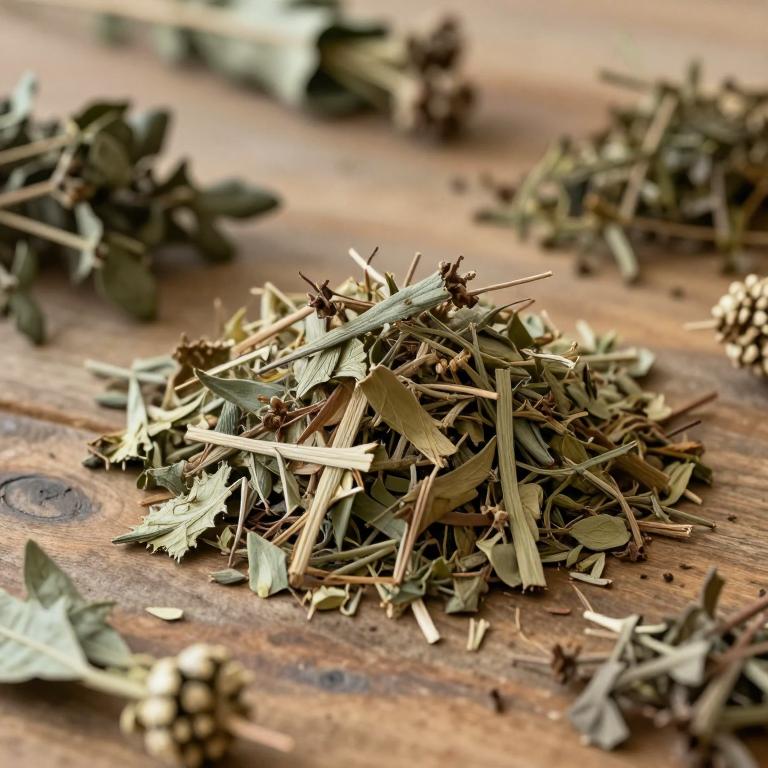
Names and Synonyms
Scientific Names
Accepted name
Hedyotis pruinosaSynonyms
- Oldenlandia pruinosa
- Oldenlandia pruinosa var. massiei
- Hedyotis lentiginosa
- Hedyotis corymbiformis
Sources: Wikidata
Taxonomical Classification
This plant belongs to the kingdom Plantae and is classified within the phylum Streptophyta and class Equisetopsida. As a member of the subclass Magnoliidae and the order Gentianaales, it falls under the family Rubiaceae. Finally, it is taxonomically identified under the genus Hedyotis.
| Rank | Classification |
|---|---|
| Kingdom | Plantae |
| Phylum | Streptophyta |
| Class | Equisetopsida |
| Subclass | Magnoliidae |
| Order | Gentianales |
| Family | Rubiaceae |
| Genus | Hedyotis |
Sources: The World Checklist of Vascular Plants (WCVP)
Distribution
This plant exhibits a widespread distribution across several key regions in Asia. Within the Indian Subcontinent, it can be found growing in both India and Sri Lanka. Its presence extends further into the Indo-China region, where it is native to Cambodia. Additionally, the species is established in the territories of Laos and Thailand. Consequently, its geographical range encompasses diverse ecological zones across these specific nations.
| Region | Area |
|---|---|
| Indian Subcontinent | India |
| Indian Subcontinent | Sri Lanka |
| Indo-China | Cambodia |
| Indo-China | Laos |
| Indo-China | Thailand |
| Indo-China | Vietnam |
Sources: The World Checklist of Vascular Plants (WCVP)
Botanical Identification
Life history
The life history of Hedychium pruinosum is characterized by its classification as a chamaephyte, a growth form where the perennial buds are located close to the soil surface, often just above or at the ground level, protected by minimal residual vegetation. This life strategy allows the plant to endure varying environmental pressures by maintaining its regenerative structures near the substrate, facilitating survival through seasonal transitions. As a perennial herb, its life cycle involves the development of robust rhizomatous structures that serve as underground storage organs, enabling the plant to persist through dormant periods and re-emerge during favorable growing seasons. The reproductive phase is marked by the emergence of lush, leafy shoots that eventually bear inflorescences, while the plant's survival is heavily dependent on the stability of its microhabitat, utilizing its chamaephyte habit to balance structural height with protection from external stressors.
- Life form :
- chamaephyte
Morphology
The morphology of Hedychium pruinosum is characterized by its specialized growth habit and structural orientation within its ecosystem. It functions as a self-supporting climber, utilizing its structural integrity to ascend and navigate its environment. Despite its climbing nature, the plant is an independent organism, functioning as a non-parasitic species that does not rely on a host for nutrients. Furthermore, it maintains a terrestrial existence, growing in soil rather than functioning as an epiphyte.
- Climber :
- self-supporting
- Epiphyte :
- terrestrial
- Parasite :
- independent
Sources: Global Inventory of Floras and Traits (GIFT)
Plant Parts
Hedyotis pruinosa has 5 reported plant parts identified across 6 scientific publications and several other databases that are studied for medicinal purposes. The most consistently reported plant part include leaf, flower, fruit, root, stem.
| Plant part | Supporting sources | Consensus |
|---|---|---|
| Leaf | 2 supporting sources | ★☆☆☆☆ |
| Flower | 1 supporting sources | ★☆☆☆☆ |
| Fruit | 1 supporting sources | ★☆☆☆☆ |
| Root | 1 supporting sources | ★☆☆☆☆ |
| Stem | 1 supporting sources | ★☆☆☆☆ |
Leaf
- Pakistan journal of pharmaceutical sciences
- Scientific data
Flower
- Scientific data
Fruit
- Scientific data
Root
- Scientific data
Stem
- Scientific data
Chemicals
Hedyotis pruinosa has 5 reported phytochemicals identified across 6 scientific publications and several other databases. The most consistently reported chemicals include Cardiac Glycosides, Flavonoids, SAPONIN, Ursolic acid, ascorbic acid.
| Chemical | Supporting sources | Consensus |
|---|---|---|
| Cardiac Glycosides | 1 supporting sources | ★☆☆☆☆ |
| Flavonoids | 1 supporting sources | ★☆☆☆☆ |
| SAPONIN | 1 supporting sources | ★☆☆☆☆ |
| Ursolic acid | 1 supporting sources | ★☆☆☆☆ |
| ascorbic acid | 1 supporting sources | ★☆☆☆☆ |
Cardiac Glycosides
- Nigerian quarterly journal of hospital medicine
Flavonoids
- Nigerian quarterly journal of hospital medicine
SAPONIN
- Nigerian quarterly journal of hospital medicine
Ursolic acid
- Journal of integrative plant biology
ascorbic acid
- Pakistan journal of pharmaceutical sciences
Activities
Hedyotis pruinosa has 2 reported activities identified across 6 scientific publications and several other databases. The most consistently reported activities include Antimicrobial, Antioxidant.
| Activity | Supporting sources | Consensus |
|---|---|---|
| Antimicrobial | 1 supporting sources | ★☆☆☆☆ |
| Antioxidant | 1 supporting sources | ★☆☆☆☆ |
Antimicrobial
- Naunyn-Schmiedeberg's archives of pharmacology
Antioxidant
- Naunyn-Schmiedeberg's archives of pharmacology
Preparations
Hedyotis pruinosa has 4 reported preparations identified across 6 scientific publications and several other databases. The most consistently reported preparations include O. corymbosa extracts, dried leaves, extracts, fresh leaves.
| Preparation | Supporting sources | Consensus |
|---|---|---|
| O. corymbosa extracts | 1 supporting sources | ★☆☆☆☆ |
| Dried leaves | 1 supporting sources | ★☆☆☆☆ |
| Extracts | 1 supporting sources | ★☆☆☆☆ |
| Fresh leaves | 1 supporting sources | ★☆☆☆☆ |
O. corymbosa extracts
- Journal of integrative plant biology
Dried leaves
- Pakistan journal of pharmaceutical sciences
Extracts
- Journal of ethnopharmacology
Fresh leaves
- Pakistan journal of pharmaceutical sciences