Hedyosmum racemosum
Hedyosmum racemosum · Accepted scientific name
Scientific literature: Very Sparse (9 studies) · ★☆☆☆☆
, scientifically known as Hedyosmum racemosum, is a versatile medicinal shrub native to various tropical regions. Renowned for its bioactive compounds, this plant is traditionally utilized in folk medicine to treat inflammatory conditions and skin ailments. Its unique phytochemical profile offers significant potential for modern pharmacological research and natural therapies.
- Family
- Chloranthaceae
- Native range
- Southern America
- Parts used
- Leaf
- Common names
- Not available
- Scientific synonyms
- Tafalla Glabrata · Hedyosmum Huilense · 6 more
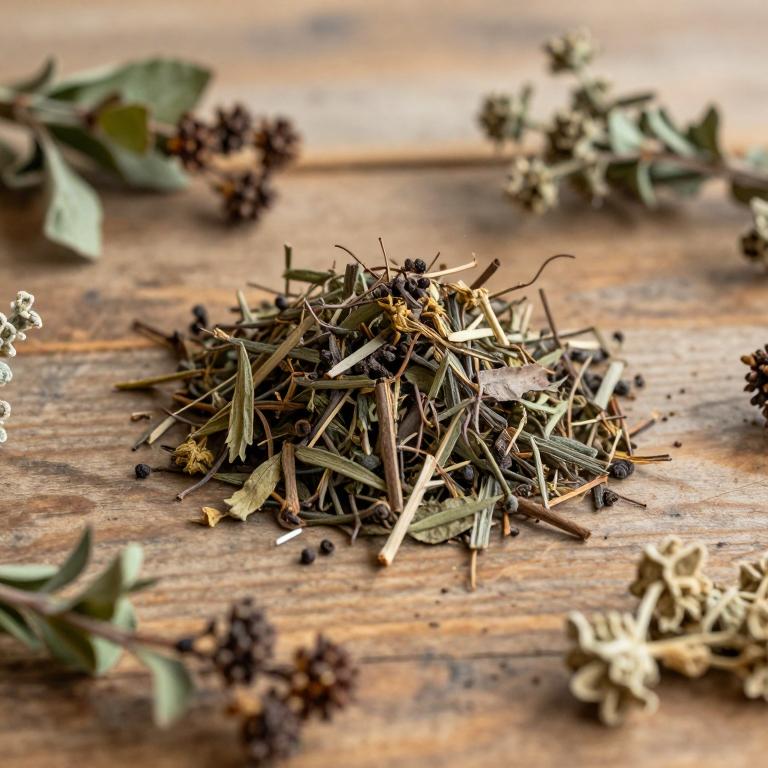
Names and Synonyms
Scientific Names
Accepted name
Hedyosmum racemosumSynonyms
- Tafalla glabrata
- Hedyosmum huilense
- Hedyosmum integrum
- Hedyosmum llanorum
- Tafalla integra
- Tafalla racemosa
- Tafalla glauca
- Hedyosmum bolivianum
Sources: Wikidata, Catalogue of Life
Taxonomical Classification
This plant belongs to the kingdom Plantae and is classified under the phylum Streptophyta and the class Equisetopsida. Within the subclass Magnoliidae, it falls under the order Chloranthales and the family Chloranthaceae. Its taxonomic identity is finalized within the genus Hedyosmum.
| Rank | Classification |
|---|---|
| Kingdom | Plantae |
| Phylum | Streptophyta |
| Class | Equisetopsida |
| Subclass | Magnoliidae |
| Order | Chloranthales |
| Family | Chloranthaceae |
| Genus | Hedyosmum |
Sources: The World Checklist of Vascular Plants (WCVP)
Distribution
This plant exhibits a broad geographical distribution across several regions of the Americas. In Central America, its presence is noted specifically within the Central American Pacific Islands. Moving into Northern South America, it can be found growing in Venezuela. The species also extends into Western South America, covering territories in Colombia and Ecuador. Furthermore, its range reaches deeper into the Western South American continent within Bolivia.
| Region | Area |
|---|---|
| Central America | Central American Pacific Is. |
| Northern South America | Venezuela |
| Western South America | Bolivia |
| Western South America | Colombia |
| Western South America | Ecuador |
| Western South America | Peru |
| Brazil | Brazil North |
Sources: The World Checklist of Vascular Plants (WCVP)
Botanical Identification
Ecology
The ecology of Hedysarum racemosum is characterized by its presence within the Floresta Ombrófila (also known as Floresta Pluvial), where it thrives in these humid, high-precipitation forest environments. This species exhibits a significant vertical distribution across various altitudinal gradients, occupying a broad elevational range that begins at a minimum of 250 m AMSL and extends up to a maximum of 3350 m AMSL. This wide distribution allows the plant to inhabit diverse ecological niches ranging from lowland tropical rainforests to high-altitude montane ecosystems.
- Elevational range max:
- 3350 m AMSL
- Elevational range min:
- 250 m AMSL
- Habitat :
- Floresta Ombrófila (= Floresta Pluvial)
Morphology
The morphology of Hedyosmum racemosum is characterized by a woody growth form, primarily manifesting as a tree. It is a self-supporting plant that lacks climbing tendencies, functioning as an independent organism rather than a parasite or an obligate climber. The species is terrestrial in its ecological habit, existing neither as an epiphyte nor as an aquatic or semiaquatic plant. In terms of stature, it exhibits significant vertical development, with a plant height ranging from a minimum of 4 meters to a maximum of 15 meters.
- Aquatic :
- terrestrial
- Climber :
- self-supporting
- Epiphyte :
- terrestrial
- Growth form :
- tree
- Parasite :
- independent
- Plant height max:
- 15 m
- Plant height min:
- 4 m
- Woodiness :
- woody
Sources: Global Inventory of Floras and Traits (GIFT)
Plant Parts
Hedyosmum racemosum has 1 reported plant parts identified across 1 scientific publications and several other databases that are studied for medicinal purposes. The most consistently reported plant part include leaf.
| Plant part | Supporting sources | Consensus |
|---|---|---|
| Leaf | 1 supporting sources | ★☆☆☆☆ |
Leaf
- Molecules (Basel, Switzerland)
Chemicals
Hedyosmum racemosum has 3 reported phytochemicals identified across 1 scientific publications and several other databases. The most consistently reported chemicals include Germacrene D, Methyl chavicol, Methyl eugenol.
| Chemical | Supporting sources | Consensus |
|---|---|---|
| Germacrene D | 1 supporting sources | ★☆☆☆☆ |
| Methyl chavicol | 1 supporting sources | ★☆☆☆☆ |
| Methyl eugenol | 1 supporting sources | ★☆☆☆☆ |
Germacrene D
- Molecules (Basel, Switzerland)
Methyl chavicol
- Molecules (Basel, Switzerland)
Methyl eugenol
- Molecules (Basel, Switzerland)
Conditions
Hedyosmum racemosum has 5 reported investigations on conditions identified across 1 scientific publications and several other databases. The most consistently reported conditions include asthma, bronchitis, cold, cough, rheumatism.
| Condition | Supporting sources | Consensus |
|---|---|---|
| Asthma | 1 supporting sources | ★☆☆☆☆ |
| Bronchitis | 1 supporting sources | ★☆☆☆☆ |
| Cold | 1 supporting sources | ★☆☆☆☆ |
| Cough | 1 supporting sources | ★☆☆☆☆ |
| Rheumatism | 1 supporting sources | ★☆☆☆☆ |
Asthma
- Molecules (Basel, Switzerland)
Bronchitis
- Molecules (Basel, Switzerland)
Cold
- Molecules (Basel, Switzerland)
Cough
- Molecules (Basel, Switzerland)
Rheumatism
- Molecules (Basel, Switzerland)
Preparations
Hedyosmum racemosum has 1 reported preparations identified across 1 scientific publications and several other databases. The most consistently reported preparations include essential oil.
| Preparation | Supporting sources | Consensus |
|---|---|---|
| Essential oil | 1 supporting sources | ★☆☆☆☆ |
Essential oil
- Molecules (Basel, Switzerland)