Himalayan ivy
Hedera nepalensis · Accepted scientific name
Scientific literature: Very Sparse (17 studies) · ★☆☆☆☆
Himalayan ivy, scientifically known as Hedera nepellenis, is a versatile evergreen climber native to the high altitudes of the Himalayas. Renowned in traditional medicine, this plant is valued for its diverse therapeutic properties, particularly in treating respiratory ailments, skin conditions, and inflammation through its potent bioactive compounds.
- Family
- Araliaceae
- Native range
- Asia-Temperate
- Parts used
- Leaf
- Common names
- Himalayan Ivy
- Scientific synonyms
- Hedera Helix Var. Himalaica · Hedera Cinerea · 3 more
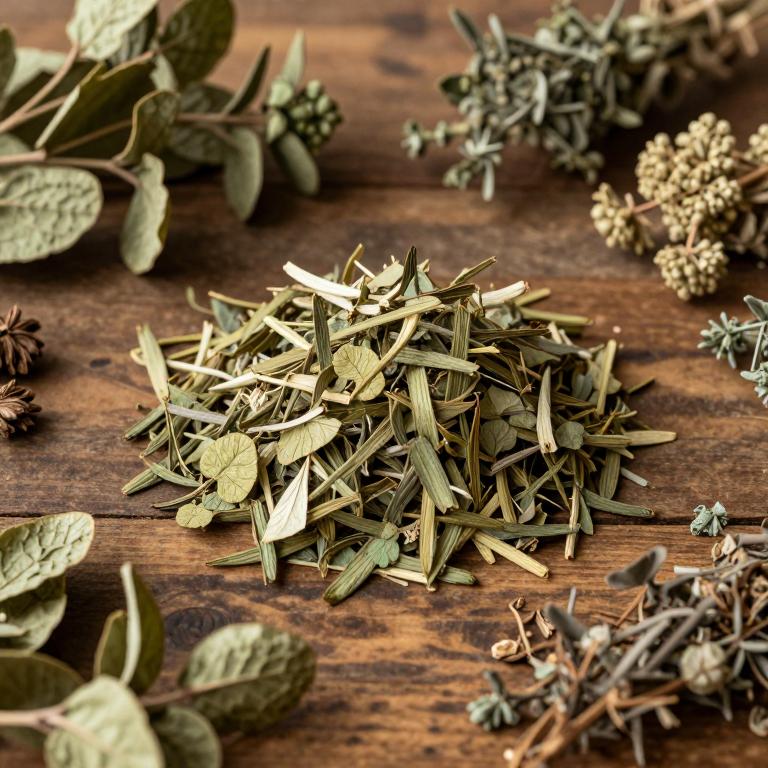
Names and Synonyms
Common Names
- Himalayan ivy
Scientific Names
Accepted name
Hedera nepalensisSynonyms
- Hedera helix var. himalaica
- Hedera cinerea
- Cissus wallichiana
- Hedera himalaica
- Hedera helix var. cinerea
Regional and Traditional Names
German:
- Himalaya-Efeu
French:
- lierre de l'Himalaya
Sources: Wikidata, Catalogue of Life
Taxonomical Classification
This plant belongs to the kingdom Plantae within the phylum Streptophyta and the class Equisetopsida. It is further classified under the subclass Magnoliidae and the order Apiales. Within the family Araliaceae, it is identified by the genus Hedera, specifically as the species Hedera nepalaensis.
| Rank | Classification |
|---|---|
| Kingdom | Plantae |
| Phylum | Streptophyta |
| Class | Equisetopsida |
| Subclass | Magnoliidae |
| Order | Apiales |
| Family | Araliaceae |
| Genus | Hedera |
Sources: The World Checklist of Vascular Plants (WCVP)
Distribution
This plant exhibits a broad distribution across several distinct regions in South and Central Asia. Within Western Asia, its presence is documented in the country of Afghanistan. Moving into the Indian Subcontinent, it can be found growing in the state of Assam. The species also thrives throughout the East Himalaya and across the nation of Nepal. Finally, its geographical range extends further into the Indian Subcontinent to include Pakistan.
| Region | Area |
|---|---|
| Western Asia | Afghanistan |
| Indian Subcontinent | Assam |
| Indian Subcontinent | East Himalaya |
| Indian Subcontinent | Nepal |
| Indian Subcontinent | Pakistan |
| Indian Subcontinent | West Himalaya |
| Indo-China | Myanmar |
| Indo-China | Thailand |
Sources: The World Checklist of Vascular Plants (WCVP)
Botanical Identification
Ecology
The ecology of Hedera nepallensis is characterized by its specific altitudinal distribution within montane ecosystems, where it thrives across a significant vertical gradient. This species occupies a broad elevational range, beginning at a minimum altitude of 1400 m AMSL and extending up to a maximum of 3500 m AMSL. With an elevational range mean of 3500 m AMSL, the plant is predominantly adapted to higher-altitude environments, suggesting a strong ecological preference for the cooler, more specialized climatic conditions found in upper montane or subalpine zones. This distribution pattern influences its interaction with local microclimates, moisture availability, and the specific forest structures found within these diverse altitudinal belts.
- Elevational range max:
- 3500 m AMSL
- Elevational range min:
- 1400 m AMSL
Life history
The life history of Hedera nepalensis is characterized by its status as a perennial plant, allowing it to persist through multiple growing seasons and establish a stable presence within its ecological niche. Throughout its lifespan, the plant maintains an evergreen habit, ensuring that its foliage remains functional and visually present regardless of the seasonal shifts. This combination of a long-lived lifecycle and continuous leaf retention enables the species to effectively navigate its environment and maintain photosynthetic activity over extended periods.
- Deciduousness :
- evergreen
- Lifecycle :
- perennial
Morphology
The morphology of Hedera nepaliensis is characterized by its growth form as a woody shrub that exhibits climbing tendencies. It functions as an obligatory climber, utilizing a self-supporting mechanism to ascend through its environment, acting as a liana or vine. Despite its climbing habit, it is categorized under an "other" growth form classification while maintaining the structural characteristics of a shrub. The plant is an independent organism, meaning it is not a parasite, and it is primarily a terrestrial species rather than an epiphyte. Its structural integrity is defined by its woody nature, providing the necessary support for its climbing lifestyle.
- Climber :
- self-supporting
- Climber :
- obligatory
- Epiphyte :
- terrestrial
- Growth form :
- other
- Growth form :
- shrub
- Parasite :
- independent
- Woodiness :
- woody
Physiology
The physiology of Hedera nepallensis is characterized by a C3 photosynthetic pathway, a common metabolic strategy that allows the plant to fix carbon dioxide through the Calvin cycle under typical environmental conditions. The morphological dimensions of its foliage reflect a significant range in size, which plays a crucial role in its light interception and gas exchange capabilities. The leaves exhibit a variable length, with minimum measurements starting at 5 cm, a mean length of approximately 8.5 cm, and a maximum extent reaching up to 12 cm. Complementing this longitudinal variation, the leaf width fluctuates between a minimum of 3 cm and a maximum of 10 cm, providing a diverse surface area profile that supports its physiological requirements for energy production and transpiration.
- Leaf length max:
- 12 cm
- Leaf length mean:
- 8.5 cm
- Leaf length min:
- 5 cm
- Leaf width max:
- 10 cm
- Leaf width min:
- 3 cm
- Photosynthetic pathway :
- C3
Reproduction
The reproduction of Hedera nepaltensis is characterized by a seasonal flowering period that typically commences in April and extends through August, though the specific timing can be variable across different months. Following successful pollination, the plant produces fruits that exhibit specific dimensional characteristics. These fruits generally maintain a mean length and width of approximately 1 cm, with a size range spanning from a minimum of 0.7 cm in both length and width to a maximum of 1.3 cm in both dimensions.
- Flowering time :
- Apr
- Flowering time :
- Aug
- Fruit length max:
- 1.3 cm
- Fruit length mean:
- 1 cm
- Fruit length min:
- 0.7 cm
- Fruit width max:
- 1.3 cm
- Fruit width mean:
- 1 cm
- Fruit width min:
- 0.7 cm
Sources: Global Inventory of Floras and Traits (GIFT)
Plant Parts
Hedera nepalensis has 1 reported plant parts identified across 2 scientific publications and several other databases that are studied for medicinal purposes. The most consistently reported plant part include leaf.
| Plant part | Supporting sources | Consensus |
|---|---|---|
| Leaf | 2 supporting sources | ★☆☆☆☆ |
Leaf
- Andrologia
- Phytotherapy research : PTR
Chemicals
Hedera nepalensis has 6 reported phytochemicals identified across 2 scientific publications and several other databases. The most consistently reported chemicals include CHLOROGENIC ACID, Compound 20, Compound 28, Lupeol, RUTIN.
| Chemical | Supporting sources | Consensus |
|---|---|---|
| CHLOROGENIC ACID | 1 supporting sources | ★☆☆☆☆ |
| Compound 20 | 1 supporting sources | ★☆☆☆☆ |
| Compound 28 | 1 supporting sources | ★☆☆☆☆ |
| Lupeol | 1 supporting sources | ★☆☆☆☆ |
| RUTIN | 1 supporting sources | ★☆☆☆☆ |
| compound 8 | 1 supporting sources | ★☆☆☆☆ |
CHLOROGENIC ACID
- Food chemistry
Compound 20
- Natural product research
Compound 28
- Natural product research
Lupeol
- Phytotherapy research : PTR
RUTIN
- Food chemistry
compound 8
- Natural product research
Activities
Hedera nepalensis has 5 reported activities identified across 2 scientific publications and several other databases. The most consistently reported activities include Antiandrogenic, Anticoagulant, Antidepressant, Antinociceptive, Antispermatogenic.
| Activity | Supporting sources | Consensus |
|---|---|---|
| Antiandrogenic | 1 supporting sources | ★☆☆☆☆ |
| Anticoagulant | 1 supporting sources | ★☆☆☆☆ |
| Antidepressant | 1 supporting sources | ★☆☆☆☆ |
| Antinociceptive | 1 supporting sources | ★☆☆☆☆ |
| Antispermatogenic | 1 supporting sources | ★☆☆☆☆ |
Antiandrogenic
- Andrologia
Anticoagulant
- Evidence-based complementary and alternative medicine : eCAM
Antidepressant
- Evidence-based complementary and alternative medicine : eCAM
Antinociceptive
- Evidence-based complementary and alternative medicine : eCAM
Antispermatogenic
- Andrologia
Conditions
Hedera nepalensis has 4 reported investigations on conditions identified across 2 scientific publications and several other databases. The most consistently reported conditions include antidepressant, cancer, edema, pain.
| Condition | Supporting sources | Consensus |
|---|---|---|
| Antidepressant | 1 supporting sources | ★☆☆☆☆ |
| Cancer | 1 supporting sources | ★☆☆☆☆ |
| Edema | 1 supporting sources | ★☆☆☆☆ |
| Pain | 1 supporting sources | ★☆☆☆☆ |
Antidepressant
- Evidence-based complementary and alternative medicine : eCAM
Cancer
- Current drug targets
Edema
- Evidence-based complementary and alternative medicine : eCAM
Pain
- Evidence-based complementary and alternative medicine : eCAM
Preparations
Hedera nepalensis has 3 reported preparations identified across 2 scientific publications and several other databases. The most consistently reported preparations include crude extracts, methanol extracts, methanolic leaf extract.
| Preparation | Supporting sources | Consensus |
|---|---|---|
| Crude extracts | 1 supporting sources | ★☆☆☆☆ |
| Methanol extracts | 1 supporting sources | ★☆☆☆☆ |
| Methanolic leaf extract | 1 supporting sources | ★☆☆☆☆ |
Crude extracts
- Evidence-based complementary and alternative medicine : eCAM
Methanol extracts
- Food chemistry
Methanolic leaf extract
- Andrologia