Devil Claws
Harpagophytum · Accepted scientific name
Scientific literature: Very Sparse (24 studies) · ★☆☆☆☆
Devil'aws, scientifically known as Harpagophytum, is a medicinal plant native to Southern Africa. Renowned for its potent anti-inflammatory properties, it is primarily used to alleviate joint pain and arthritis symptoms. This remarkable herb contains harpagoside, a bioactive compound that makes it a cornerstone of traditional and modern herbal medicine.
- Family
- Pedaliaceae
- Native range
- Africa
- Parts used
- Leaf · Root
- Common names
- Devil Claws
- Scientific synonyms
- Uncaria
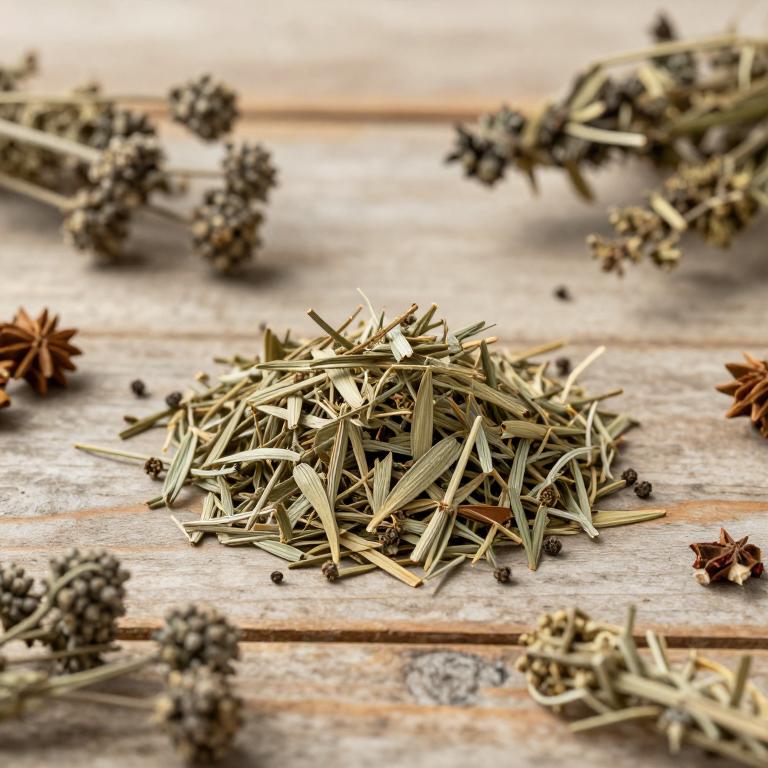
Names and Synonyms
Common Names
- Devil Claws
Scientific Names
Accepted name
HarpagophytumSynonyms
- Uncaria
Regional and Traditional Names
Spanish:
- Garra del diablo y parientes
German:
- Afrikanische Teufelskralle
- Afrikanische Teufelskrallen
Sources: Wikidata, Catalogue of Life
Taxonomical Classification
This plant belongs to the kingdom Plantae and is classified under the phylum Streptophyta and the class Equisetopsida. Within the subclass Magnoliidae, it falls under the order Lamiales and is a member of the family Pedaliaceae. It is specifically identified by the genus Harpagophytum.
| Rank | Classification |
|---|---|
| Kingdom | Plantae |
| Phylum | Streptophyta |
| Class | Equisetopsida |
| Subclass | Magnoliidae |
| Order | Lamiales |
| Family | Pedaliaceae |
| Genus | Harpagophytum |
Sources: The World Checklist of Vascular Plants (WCVP)
Distribution
This plant is primarily distributed across various regions of Southern and South Tropical Africa. Specifically, it can be found growing in the landscapes of Angola and Mozambique. Its presence extends further into the territories of Zambia and Zimbabwe. Additionally, this medicinal species is located within the borders of Botswana. These diverse locations highlight its specific ecological niche within the southern portion of the continent.
| Region | Area |
|---|---|
| South Tropical Africa | Angola |
| South Tropical Africa | Mozambique |
| South Tropical Africa | Zambia |
| South Tropical Africa | Zimbabwe |
| Southern Africa | Botswana |
| Southern Africa | Cape Provinces |
| Southern Africa | Caprivi Strip |
| Southern Africa | Lesotho |
| Southern Africa | Namibia |
| Southern Africa | KwaZulu-Natal |
Sources: The World Checklist of Vascular Plants (WCVP)
Plant Parts
Harpagophytum has 2 reported plant parts identified across 2 scientific publications and several other databases that are studied for medicinal purposes. The most consistently reported plant part include leaf, root.
| Plant part | Supporting sources | Consensus |
|---|---|---|
| Leaf | 1 supporting sources | ★☆☆☆☆ |
| Root | 1 supporting sources | ★☆☆☆☆ |
Leaf
- Journal of ethnopharmacology
Root
- Annals of agricultural and environmental medicine : AAEM
Chemicals
Harpagophytum has 10 reported phytochemicals identified across 2 scientific publications and several other databases. The most consistently reported chemicals include Triterpenes, Coumarins, Flavonoids, Harpagide, Isorhynchophylline.
| Chemical | Supporting sources | Consensus |
|---|---|---|
| Triterpenes | 2 supporting sources | ★☆☆☆☆ |
| Coumarins | 1 supporting sources | ★☆☆☆☆ |
| Flavonoids | 1 supporting sources | ★☆☆☆☆ |
| Harpagide | 1 supporting sources | ★☆☆☆☆ |
| Isorhynchophylline | 1 supporting sources | ★☆☆☆☆ |
| Lignans | 1 supporting sources | ★☆☆☆☆ |
| Rhynchophylline | 1 supporting sources | ★☆☆☆☆ |
| Terpenes | 1 supporting sources | ★☆☆☆☆ |
| Verbascoside | 1 supporting sources | ★☆☆☆☆ |
| isoverbascoside | 1 supporting sources | ★☆☆☆☆ |
Triterpenes
- Phytochemistry
- Zhongguo Zhong yao za zhi = Zhongguo zhongyao zazhi = China journal of Chinese materia medica
Coumarins
- Phytochemistry
Flavonoids
- Phytochemistry
Harpagide
- The journal of physical chemistry. A
Isorhynchophylline
- Molecules (Basel, Switzerland)
Lignans
- Zhongguo Zhong yao za zhi = Zhongguo zhongyao zazhi = China journal of Chinese materia medica
Rhynchophylline
- Molecules (Basel, Switzerland)
Terpenes
- Phytochemistry
Verbascoside
- Oxidative medicine and cellular longevity
isoverbascoside
- Oxidative medicine and cellular longevity
Activities
Harpagophytum has 6 reported activities identified across 2 scientific publications and several other databases. The most consistently reported activities include Antibacterial, Antiinflammatory, Antioxidant, Antiviral, Depressant.
| Activity | Supporting sources | Consensus |
|---|---|---|
| Antibacterial | 1 supporting sources | ★☆☆☆☆ |
| Antiinflammatory | 1 supporting sources | ★☆☆☆☆ |
| Antioxidant | 1 supporting sources | ★☆☆☆☆ |
| Antiviral | 1 supporting sources | ★☆☆☆☆ |
| Depressant | 1 supporting sources | ★☆☆☆☆ |
| Hypotensive | 1 supporting sources | ★☆☆☆☆ |
Antibacterial
- Phytochemistry
Antiinflammatory
- The journal of physical chemistry. A
Antioxidant
- Phytochemistry
Antiviral
- Phytochemistry
Depressant
- Journal of ethnopharmacology
Hypotensive
- Phytochemistry
Preparations
Harpagophytum has 8 reported preparations identified across 2 scientific publications and several other databases. The most consistently reported preparations include Harpagophytum preparations, Uncaria Hook, capsule extract, dry powdered extracts, essential oil.
| Preparation | Supporting sources | Consensus |
|---|---|---|
| Harpagophytum preparations | 1 supporting sources | ★☆☆☆☆ |
| Uncaria hook | 1 supporting sources | ★☆☆☆☆ |
| Capsule extract | 1 supporting sources | ★☆☆☆☆ |
| Dry powdered extracts | 1 supporting sources | ★☆☆☆☆ |
| Essential oil | 1 supporting sources | ★☆☆☆☆ |
| Extract from the root | 1 supporting sources | ★☆☆☆☆ |
| Herbal supplement | 1 supporting sources | ★☆☆☆☆ |
| Traditional chinese medicine | 1 supporting sources | ★☆☆☆☆ |
Harpagophytum preparations
- Phytotherapy research : PTR
Uncaria hook
- Plant biotechnology (Tokyo, Japan)
Capsule extract
- BMC genomics
Dry powdered extracts
- Journal of ethnopharmacology
Essential oil
- Journal of oleo science
Extract from the root
- Annals of agricultural and environmental medicine : AAEM
Herbal supplement
- Annals of agricultural and environmental medicine : AAEM
Traditional chinese medicine
- Pharmaceutical biology