Hardenbergia violacea
Hardenbergia violacea · Accepted scientific name
Scientific literature: Sparse (74 studies) · ★★☆☆☆
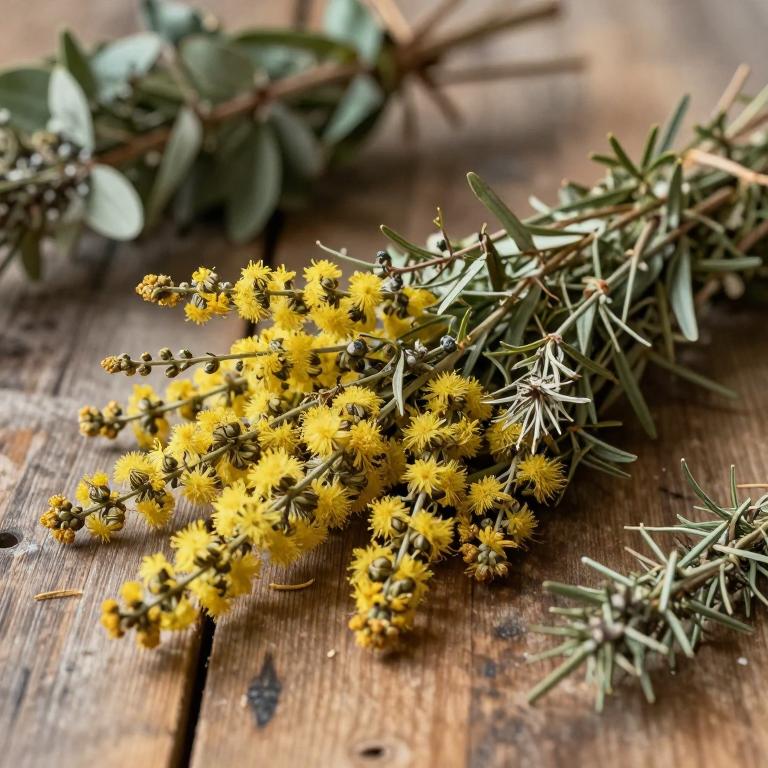
Hardenbergia violacea, is an iconic Australian climbing wattle renowned for its striking purple blooms. Beyond its ornamental beauty, this resilient woody climber holds traditional significance. Often utilized in herbal contexts, it offers unique phytochemical properties, making it a fascinating subject for those exploring native flora and natural medicine.
- Family
- Not available
- Native range
- Australasia
- Parts used
- Not available
- Common names
- Not available
- Scientific synonyms
- Not available
Names and Synonyms
Scientific Names
Accepted name
Hardenbergia violaceaDistribution
This plant is native to the diverse landscapes found throughout various regions of Australia. Its geographical range extends across the eastern states, including New South Wales and Queensland. Additionally, the species can be located within the southern territories of South Australia and Victoria. The distribution also reaches the island state of Tasmania, showcasing its adaptability to different climates. Altogether, these locations highlight the widespread presence of Hardenbergia violacea across the Australian continent.
| Region | Area |
|---|---|
| Australia | New South Wales |
| Australia | Queensland |
| Australia | South Australia |
| Australia | Tasmania |
| Australia | Victoria |
Sources: The World Checklist of Vascular Plants (WCVP)
Botanical Identification
Life history
The life history of Hardenbergia violacea is characterized by its nature as a perennial plant, allowing it to persist through multiple growing seasons and establish a stable presence within its ecosystem. Throughout its existence, it maintains an evergreen habit, ensuring that its foliage remains functional and present year-round rather than shedding seasonally. This combination of a long-lived life cycle and continuous foliage retention enables the species to effectively colonize various habitats and sustain its biological processes across different environmental conditions.
- Deciduousness :
- evergreen
- Lifecycle :
- perennial
Morphology
The morphology of Hardenbergia violacea is characterized by a woody structure that functions as an obligatory climber, often exhibiting a growth form that can transition between a shrub and a herbaceous habit depending on environmental conditions. This terrestrial species typically reaches a mean plant height of approximately 2 meters. It grows as an independent organism, neither acting as a parasite nor an epiphyte, and maintains a strictly terrestrial existence.
- Aquatic :
- terrestrial
- Climber :
- obligatory
- Epiphyte :
- terrestrial
- Growth form :
- shrub
- Growth form :
- herb
- Parasite :
- independent
- Plant height mean:
- 2 m
- Woodiness :
- woody
Physiology
The physiology of Hardenbergia violacea is characterized by a C3 photosynthetic pathway, which dictates its carbon fixation processes and metabolic efficiency. The plant's vegetative structure features leaves that exhibit significant morphological variation, with lengths ranging from a minimum of 3 cm to a maximum of 10 cm, and widths spanning from 1 cm to 5 cm. Furthermore, the species demonstrates a specialized symbiotic capability as a nitrogen fixer, allowing it to convert atmospheric nitrogen into a bioavailable form to support its growth and nutrient requirements.
- Leaf length max:
- 10 cm
- Leaf length min:
- 3 cm
- Leaf width max:
- 5 cm
- Leaf width min:
- 1 cm
- Nitrogen fixer :
- yes
- Photosynthetic pathway :
- C3
Reproduction
The reproduction of Hardenbergia violacea is characterized by a biotic pollination syndrome, specifically relying on insects to facilitate the transfer of pollen. The plant produces fruit in the form of a pod, which is a dehiscent structure, meaning it splits open at maturity to release its contents. The seeds produced are relatively small, with a mean seed mass of approximately 0.01512025 g, though individual seed weights vary between a minimum of 0.012371 g and a maximum of 0.022 g. Following maturation, the dispersal of the seeds follows a zoochorous syndrome, utilizing animals as the primary agents for moving the progeny to new locations.
- Dehiscence :
- dehiscent
- Dispersal syndrome :
- zoochorous
- Fruit type :
- pod
- Pollination syndrome :
- insect
- Pollination syndrome :
- biotic
- Seed mass max:
- 0.022 g
- Seed mass mean:
- 0.01512025 g
- Seed mass min:
- 0.012371 g
Sources: Global Inventory of Floras and Traits (GIFT)
Chemicals
Hardenbergia violacea has 2 reported phytochemicals identified across 0 scientific publications and several other databases. The most consistently reported chemicals include 2'-Hydroxygenistein, genistein.
| Chemical | Supporting sources | Consensus |
|---|---|---|
| 2'-Hydroxygenistein | 1 supporting sources | ★☆☆☆☆ |
| genistein | 1 supporting sources | ★☆☆☆☆ |
2'-Hydroxygenistein
- Dr. Duke
genistein
- Dr. Duke
Activities
Hardenbergia violacea has 72 reported activities identified across 0 scientific publications and several other databases. The most consistently reported activities include Abortifacient, Aldose-Reductase-Inhibitor, Alpha-Reductase-Inhibitor, Antiaggregant, Antiangiogenic.
| Activity | Supporting sources | Consensus |
|---|---|---|
| Abortifacient | 1 supporting sources | ★☆☆☆☆ |
| Aldose-Reductase-Inhibitor | 1 supporting sources | ★☆☆☆☆ |
| Alpha-Reductase-Inhibitor | 1 supporting sources | ★☆☆☆☆ |
| Antiaggregant | 1 supporting sources | ★☆☆☆☆ |
| Antiangiogenic | 1 supporting sources | ★☆☆☆☆ |
| Antiatherosclerotic | 1 supporting sources | ★☆☆☆☆ |
| Anticancer (Breast) | 1 supporting sources | ★☆☆☆☆ |
| Anticarcinomic (Breast) | 1 supporting sources | ★☆☆☆☆ |
| Anticlimacteric | 1 supporting sources | ★☆☆☆☆ |
| Antiendoccytotic | 1 supporting sources | ★☆☆☆☆ |
Abortifacient
- Dr. Duke
Aldose-Reductase-Inhibitor
- Dr. Duke
Alpha-Reductase-Inhibitor
- Dr. Duke
Antiaggregant
- Dr. Duke
Antiangiogenic
- Dr. Duke
Antiatherosclerotic
- Dr. Duke
Anticancer (Breast)
- Dr. Duke
Anticarcinomic (Breast)
- Dr. Duke
Anticlimacteric
- Dr. Duke
Antiendoccytotic
- Dr. Duke