Haplopappus foliosus
Haplopappus foliosus · Accepted scientific name
Scientific literature: Very Sparse (2 studies) · ★☆☆☆☆
Haplopappus foliosus, scientifically known as Haplopappus foliosus, is a resilient medicinal shrub native to specific arid regions. Renowned for its unique foliage, this plant is traditionally utilized in folk medicine for its potential therapeutic properties. Understanding its botanical characteristics is essential for exploring its role in natural healing practices.
- Family
- Asteraceae
- Native range
- Southern America
- Parts used
- Not available
- Common names
- Not available
- Scientific synonyms
- Not available
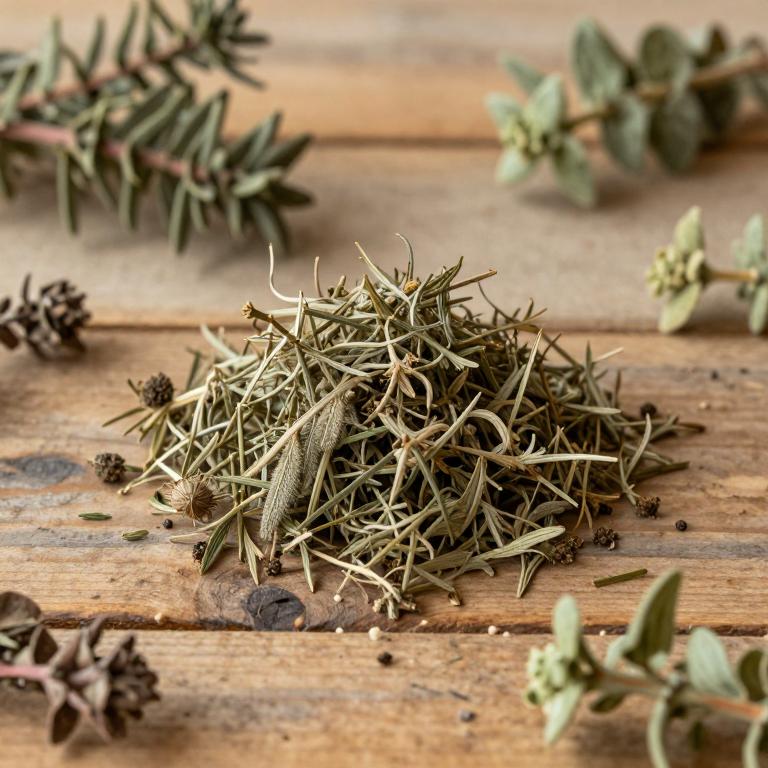
Names and Synonyms
Scientific Names
Accepted name
Haplopappus foliosusSources: Wikidata, Catalogue of Life
Taxonomical Classification
This plant belongs to the kingdom Plantae and the phylum Streptophyta, falling under the class Equisetopsida and subclass Magnoliidae. Within the order Asterales, it is classified under the family Asteraceae. Its specific taxonomic designation is within the genus Haplopappus.
| Rank | Classification |
|---|---|
| Kingdom | Plantae |
| Phylum | Streptophyta |
| Class | Equisetopsida |
| Subclass | Magnoliidae |
| Order | Asterales |
| Family | Asteraceae |
| Genus | Haplopappus |
Sources: The World Checklist of Vascular Plants (WCVP)
Distribution
This plant is native to a very specific region within the Southern South American continent. Its natural habitat is primarily concentrated in the central part of Chile. Because of this limited range, the species is considered endemic to this particular geographic area. You will not find it growing wild in other parts of the world outside of this zone. Therefore, the distribution of Haplopappus foliosus is strictly tied to the central Chilean landscape.
| Region | Area |
|---|---|
| Southern South America | Chile Central |
Sources: The World Checklist of Vascular Plants (WCVP)
Botanical Identification
Ecology
The ecology of Haplopappus foliosus is characterized by its distribution within low-lying coastal or lowland environments, occupying an elevational range that extends from sea level up to a maximum of 200 m AMSL. This restricted altitudinal belt suggests that the species is specifically adapted to maritime or lowland habitats, likely thriving in areas influenced by coastal climates where the elevation remains near 0 m AMSL at its lowest points. The ecological niche of this plant is defined by these low-altitude parameters, positioning it within specific topographical zones that dictate its environmental interactions and habitat preferences.
- Elevational range max:
- 200 m AMSL
- Elevational range min:
- 0 m AMSL
Life history
The life history of Haplopappus foliosus is characterized by its nature as a perennial species, allowing the plant to persist through multiple growing seasons rather than completing its cycle within a single year. As a perennial, it establishes a stable presence in its habitat, typically developing robust root systems that facilitate regrowth after dormant periods. This long-term survival strategy enables the plant to allocate resources toward sustained vegetative growth and repeated reproductive efforts over several years, contributing to its resilience within its ecological niche.
- Lifecycle :
- perennial
Morphology
The morphology of Haplopappus foliosus is characterized by a growth form classified as a shrub, exhibiting a woody structure that provides significant physical stability. This plant is a self-supporting organism, lacking any climbing or vine-like tendencies, and functions as an independent species rather than a parasite. In terms of its ecological positioning, it is a terrestrial plant, avoiding aquatic or epiphytic lifestyles.
- Aquatic :
- terrestrial
- Climber :
- self-supporting
- Epiphyte :
- terrestrial
- Growth form :
- shrub
- Parasite :
- independent
- Woodiness :
- woody
Reproduction
The reproduction of Haplopappus foliosus is characterized by the production of seeds that exhibit a highly consistent physical profile. Based on empirical data, the reproductive output of this species features a uniform seed mass, with the mean, maximum, and minimum values all recorded at exactly 0.00268 g. This lack of variance in seed mass suggests a highly standardized developmental process during seed maturation, ensuring that each individual seed produced maintains a precise weight of 0.00268 g. Such uniformity in seed size can play a critical role in the plant's dispersal mechanisms and its ability to establish itself within its specific ecological niche.
- Seed mass mean:
- 0.00268 g
Sources: Global Inventory of Floras and Traits (GIFT)
Activities
Haplopappus foliosus has 1 reported activities identified across 0 scientific publications and several other databases. The most consistently reported activities include Antibacterial.
| Activity | Supporting sources | Consensus |
|---|---|---|
| Antibacterial | 1 supporting sources | ★☆☆☆☆ |
Antibacterial
- Fitoterapia
Conditions
Haplopappus foliosus has 1 reported investigations on conditions identified across 0 scientific publications and several other databases. The most consistently reported conditions include antiseptic.
| Condition | Supporting sources | Consensus |
|---|---|---|
| Antiseptic | 1 supporting sources | ★☆☆☆☆ |
Antiseptic
- Fitoterapia