Haplopappus baylahuen
Haplopappus baylahuen · Accepted scientific name
Scientific literature: Very Sparse (4 studies) · ★☆☆☆☆
Haplopappus baylahuen, scientifically known as Haplopappus baylahuen, is a significant medicinal shrub native to South American landscapes. Renowned for its therapeutic properties, this plant is traditionally utilized in folk medicine to treat digestive ailments and inflammatory conditions, offering a natural approach to wellness through its potent bioactive compounds.
- Family
- Asteraceae
- Native range
- Southern America
- Parts used
- Not available
- Common names
- Not available
- Scientific synonyms
- Aster Baylahuen
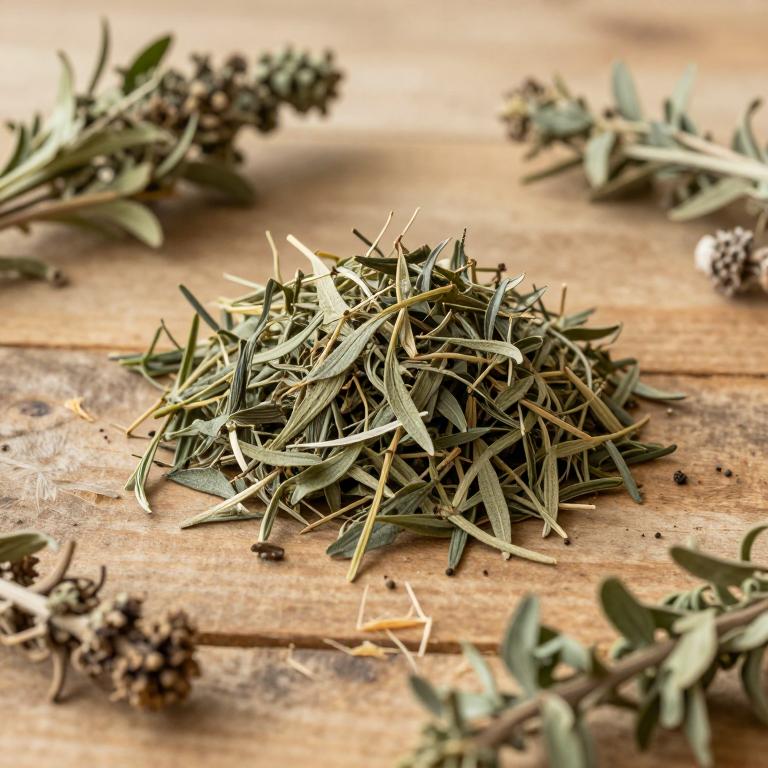
Names and Synonyms
Scientific Names
Accepted name
Haplopappus baylahuenSynonyms
- Aster baylahuen
Regional and Traditional Names
Spanish:
- baylahuen
- checheraja
- bailahuén
Sources: Wikidata, Catalogue of Life
Taxonomical Classification
This plant, Haplopappus baylahuen, belongs to the kingdom Plantae and the phylum Streptophyta. Within the class Equisetopsida and subclass Magnoliidae, it is classified under the order Asterales and the family Asteraceae. Ultimately, its taxonomic identity is defined by its placement within the genus Haplopappus.
| Rank | Classification |
|---|---|
| Kingdom | Plantae |
| Phylum | Streptophyta |
| Class | Equisetopsida |
| Subclass | Magnoliidae |
| Order | Asterales |
| Family | Asteraceae |
| Genus | Haplopappus |
Sources: The World Checklist of Vascular Plants (WCVP)
Distribution
This plant is primarily distributed across the southern regions of South America. Its range extends significantly into the northwestern parts of Argentina. Additionally, it can be found throughout the central regions of Chile. The species also inhabits the northern territories of Chile. Collectively, these locations define its specific geographical footprint within the continent.
| Region | Area |
|---|---|
| Southern South America | Argentina Northwest |
| Southern South America | Chile Central |
| Southern South America | Chile North |
Sources: The World Checklist of Vascular Plants (WCVP)
Botanical Identification
Ecology
The ecology of Haplopappus baylahuen is strictly defined by its high-altitude habitat, specifically thriving within a specialized montane niche. This species is found distributed across a narrow altitudinal belt, occupying an elevational range that begins at 2700 m AMSL and extends up to a maximum of 3500 m AMSL. By inhabiting these high-elevation environments, the plant is adapted to the unique environmental stressors characteristic of such altitudes, including intense solar radiation, significant diurnal temperature fluctuations, and potentially thinner atmospheric conditions. This specific vertical distribution suggests a specialized ecological requirement for the cool, high-mountain climates found within its documented range.
- Elevational range max:
- 3500 m AMSL
- Elevational range min:
- 2700 m AMSL
Life history
The life history of Haplopappus baylahuen is characterized by a perennial lifecycle, meaning the individual plants persist through multiple growing seasons rather than completing their reproductive cycle in a single year. As a perennial species, it establishes a stable presence within its ecological niche, allowing it to accumulate resources over time to support consistent growth and periodic flowering. This long-term survival strategy enables the plant to withstand seasonal fluctuations and contribute to the stability of its habitat across several years.
- Lifecycle :
- perennial
Morphology
The morphology of Haplopappus baylahuen is characterized by a growth form classified as a shrub, manifesting a woody structure that provides a sturdy, self-supporting framework. As an independent organism, it does not exhibit parasitic behavior, functioning as a terrestrial plant rather than an aquatic, semiaquatic, or epiphytic species. Its physical habit is defined by its self-supporting nature, lacking any climbing tendencies, and it maintains a stable presence within its terrestrial habitat.
- Aquatic :
- terrestrial
- Climber :
- self-supporting
- Epiphyte :
- terrestrial
- Growth form :
- shrub
- Parasite :
- independent
- Woodiness :
- woody
Sources: Global Inventory of Floras and Traits (GIFT)
Chemicals
Haplopappus baylahuen has 2 reported phytochemicals identified across 0 scientific publications and several other databases. The most consistently reported chemicals include Coumarins, Flavonoids.
| Chemical | Supporting sources | Consensus |
|---|---|---|
| Coumarins | 1 supporting sources | ★☆☆☆☆ |
| Flavonoids | 1 supporting sources | ★☆☆☆☆ |
Coumarins
- Journal of ethnopharmacology
Flavonoids
- Journal of ethnopharmacology
Preparations
Haplopappus baylahuen has 4 reported preparations identified across 0 scientific publications and several other databases. The most consistently reported preparations include infusions, methanolic extracts, resins, teas.
| Preparation | Supporting sources | Consensus |
|---|---|---|
| Infusions | 1 supporting sources | ★☆☆☆☆ |
| Methanolic extracts | 1 supporting sources | ★☆☆☆☆ |
| Resins | 1 supporting sources | ★☆☆☆☆ |
| Teas | 1 supporting sources | ★☆☆☆☆ |
Infusions
- Journal of ethnopharmacology
Methanolic extracts
- Journal of ethnopharmacology
Resins
- Journal of ethnopharmacology
Teas
- Phytotherapy research : PTR