notopterygium
Hansenia forbesii · Accepted scientific name
Scientific literature: Sparse (57 studies) · ★★☆☆☆
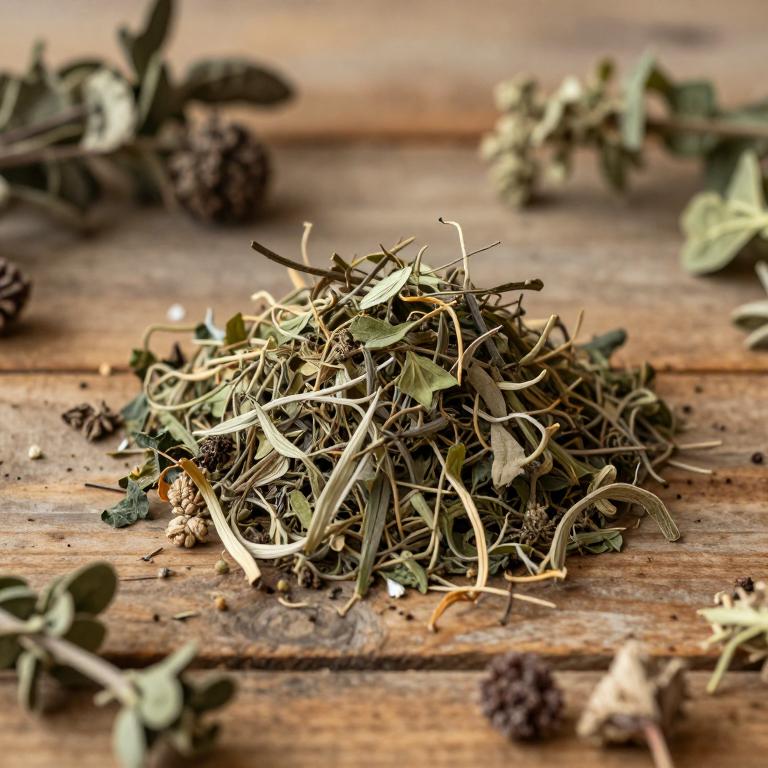
notopterygium, scientifically known as Hansenia forbesii, is a distinctive medicinal plant native to specific regional ecosystems. Renowned for its unique botanical properties, it is traditionally utilized in various folk remedies. Understanding its chemical composition and therapeutic potential offers valuable insights into its role in natural healing and pharmacology.
- Family
- Apiaceae
- Native range
- Asia-Temperate
- Parts used
- Rhizome
- Common names
- Notopterygium
- Scientific synonyms
- Drymoscias Franchetii · Drymoscias Forbesii · 4 more
Names and Synonyms
Common Names
- notopterygium
Scientific Names
Accepted name
Hansenia forbesiiSynonyms
- Drymoscias franchetii
- Drymoscias forbesii
- Angelica rubrivaginata
- Angelica tsinlingensis
- Notopterygium franchetii
- Notopterygium forbesii
Sources: Wikidata, Catalogue of Life
Taxonomical Classification
This plant, Hansenia forbesii, is a member of the kingdom Plantae and belongs to the phylum Streptophyta. Within the class Equisetopsida and subclass Magnoliidae, it is classified under the order Apiales. Finally, it is a member of the family Apiaceae and falls under the genus Hansenia.
| Rank | Classification |
|---|---|
| Kingdom | Plantae |
| Phylum | Streptophyta |
| Class | Equisetopsida |
| Subclass | Magnoliidae |
| Order | Apiales |
| Family | Apiaceae |
| Genus | Hansenia |
Sources: The World Checklist of Vascular Plants (WCVP)
Distribution
This plant exhibits a diverse geographical distribution across several specific regions within China. It can be found growing in the landscapes of China South-Central. Furthermore, its presence extends northward into the territory of Inner Mongolia. The species is also documented to inhabit the areas of China North-Central. Finally, its range includes the high-altitude regions of Qinghai.
| Region | Area |
|---|---|
| China | China South-Central |
| China | Inner Mongolia |
| China | China North-Central |
| China | Qinghai |
Sources: The World Checklist of Vascular Plants (WCVP)
Botanical Identification
Ecology
The ecology of Hansenia forbesii is characterized by its specific distribution within montane environments, where it occupies a distinct vertical niche. This species is primarily found at mid-to-high altitudes, maintaining a mean elevation of approximately 1750 m AMSL. Its adaptive range extends from a minimum altitude of 1200 m AMSL to a maximum elevation of 2300 m AMSL, indicating a capacity to thrive across varying thermal and atmospheric gradients within these mountainous ecosystems.
- Elevational range max:
- 2300 m AMSL
- Elevational range mean:
- 1750 m AMSL
- Elevational range min:
- 1200 m AMSL
Morphology
The morphology of Hansenia forbesii is characterized by its specific growth stature, with a plant height that typically reaches a mean of 0.95 m. The physical dimension of the specimen exhibits notable variability depending on environmental conditions, ranging from a minimum height of 0.6 m to a maximum height of 1.3 m.
- Plant height max:
- 1.3 m
- Plant height mean:
- 0.95 m
- Plant height min:
- 0.6 m
Reproduction
The reproduction of Hansenia forbesii is characterized by the development of small fruits that exhibit specific morphological variations in size. The dimensions of these fruits are measured by both length and width, showing a consistent range of development. On average, the fruits possess a length of 0.45 cm and a width of 0.35 cm. However, the size can vary significantly, with the smallest recorded fruits measuring 0.3 cm in both length and width. At the upper limit of their growth, the fruits can reach a maximum length of 0.6 cm and a maximum width of 0.4 cm, defining the structural parameters of the species' reproductive output.
- Fruit length max:
- 0.6 cm
- Fruit length mean:
- 0.45 cm
- Fruit length min:
- 0.3 cm
- Fruit width max:
- 0.4 cm
- Fruit width mean:
- 0.35 cm
- Fruit width min:
- 0.3 cm
Sources: Global Inventory of Floras and Traits (GIFT)
Plant Parts
Hansenia forbesii has 1 reported plant parts identified across 1 scientific publications and several other databases that are studied for medicinal purposes. The most consistently reported plant part include rhizome.
| Plant part | Supporting sources | Consensus |
|---|---|---|
| Rhizome | 1 supporting sources | ★☆☆☆☆ |
Rhizome
- Natural product research
Chemicals
Hansenia forbesii has 29 reported phytochemicals identified across 1 scientific publications and several other databases. The most consistently reported chemicals include Notopterol, Isoimperatorin, Nodakenin, 1R-alpha-Pinene, 4-Isopropyl-1-methyl-1,4-cyclohexadiene.
| Chemical | Supporting sources | Consensus |
|---|---|---|
| Notopterol | 4 supporting sources | ★★☆☆☆ |
| Isoimperatorin | 3 supporting sources | ★★☆☆☆ |
| Nodakenin | 3 supporting sources | ★★☆☆☆ |
| 1R-alpha-Pinene | 1 supporting sources | ★☆☆☆☆ |
| 4-Isopropyl-1-methyl-1,4-cyclohexadiene | 1 supporting sources | ★☆☆☆☆ |
| 6'-O-trans-feruloylnodakenin | 1 supporting sources | ★☆☆☆☆ |
| ABSCISIC ACID | 1 supporting sources | ★☆☆☆☆ |
| As | 1 supporting sources | ★☆☆☆☆ |
| BETA-PINENE | 1 supporting sources | ★☆☆☆☆ |
| BISABOLANGELONE | 1 supporting sources | ★☆☆☆☆ |
Notopterol
- Chemico-biological interactions
- Archives of pharmacal research
- Chemical & pharmaceutical bulletin
- Zhongguo Zhong yao za zhi = Zhongguo zhongyao zazhi = China journal of Chinese materia medica
Isoimperatorin
- Chemical research in toxicology
- Zhongguo Zhong yao za zhi = Zhongguo zhongyao zazhi = China journal of Chinese materia medica
- Archives of pharmacal research
Nodakenin
- Archives of pharmacal research
- Chemical & pharmaceutical bulletin
- Zhongguo Zhong yao za zhi = Zhongguo zhongyao zazhi = China journal of Chinese materia medica
1R-alpha-Pinene
- Molecules (Basel, Switzerland)
4-Isopropyl-1-methyl-1,4-cyclohexadiene
- Molecules (Basel, Switzerland)
6'-O-trans-feruloylnodakenin
- Chemical & pharmaceutical bulletin
ABSCISIC ACID
- International journal of molecular sciences
As
- Zhongguo Zhong yao za zhi = Zhongguo zhongyao zazhi = China journal of Chinese materia medica
BETA-PINENE
- Molecules (Basel, Switzerland)
BISABOLANGELONE
- Archives of pharmacal research
Activities
Hansenia forbesii has 7 reported activities identified across 1 scientific publications and several other databases. The most consistently reported activities include Analgesic, Antiarrhythmic, Antibacterial, Anticancer, Anticoagulant.
| Activity | Supporting sources | Consensus |
|---|---|---|
| Analgesic | 2 supporting sources | ★☆☆☆☆ |
| Antiarrhythmic | 1 supporting sources | ★☆☆☆☆ |
| Antibacterial | 1 supporting sources | ★☆☆☆☆ |
| Anticancer | 1 supporting sources | ★☆☆☆☆ |
| Anticoagulant | 1 supporting sources | ★☆☆☆☆ |
| Antioxidant | 1 supporting sources | ★☆☆☆☆ |
| Antipyretic | 1 supporting sources | ★☆☆☆☆ |
Analgesic
- Chemico-biological interactions
- Molecules (Basel, Switzerland)
Antiarrhythmic
- Molecules (Basel, Switzerland)
Antibacterial
- Molecules (Basel, Switzerland)
Anticancer
- Molecules (Basel, Switzerland)
Anticoagulant
- Molecules (Basel, Switzerland)
Antioxidant
- Molecules (Basel, Switzerland)
Antipyretic
- Molecules (Basel, Switzerland)
Preparations
Hansenia forbesii has 1 reported preparations identified across 1 scientific publications and several other databases. The most consistently reported preparations include ether extract of the underground part.
| Preparation | Supporting sources | Consensus |
|---|---|---|
| Ether extract of the underground part | 1 supporting sources | ★☆☆☆☆ |
Ether extract of the underground part
- Chemical & pharmaceutical bulletin