Saxaul
Haloxylon · Accepted scientific name
Scientific literature: Very Sparse (25 studies) · ★☆☆☆☆
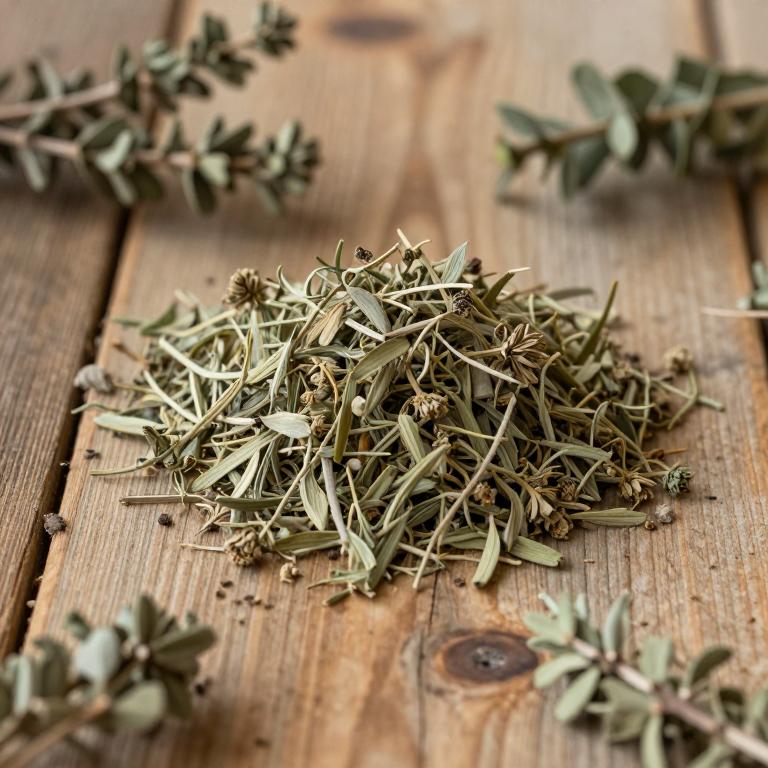
Saxaul, scientifically known as Haloxylon, is a resilient shrub renowned for its remarkable medicinal properties. Thriving in arid environments, this hardy plant offers significant therapeutic potential, particularly in traditional healing practices. Its unique chemical composition makes it a valuable subject for pharmacological research aimed at developing new natural remedies.
- Family
- Amaranthaceae
- Native range
- Europe
- Parts used
- Leaf · Root
- Common names
- Saxauls
- Scientific synonyms
- Not available
Names and Synonyms
Common Names
- Saxauls
Scientific Names
Accepted name
HaloxylonRegional and Traditional Names
German:
- Saxaule
- Saksaule
Sources: Wikidata, Catalogue of Life
Taxonomical Classification
This plant belongs to the kingdom Plantae and is classified under the phylum Streptophyta within the class Equisetopsida. It is further categorized into the subclass Magnoliidae and the order Caryophyllales. Finally, it is a member of the family Amaranthaceae and falls under the genus Haloxylon.
| Rank | Classification |
|---|---|
| Kingdom | Plantae |
| Phylum | Streptophyta |
| Class | Equisetopsida |
| Subclass | Magnoliidae |
| Order | Caryophyllales |
| Family | Amaranthaceae |
| Genus | Haloxylon |
Sources: The World Checklist of Vascular Plants (WCVP)
Distribution
This plant, known as Haloxylon, exhibits a specific distribution across the Mediterranean region. In Southwestern Europe, its presence is primarily recorded within the borders of Spain. The species also extends significantly into Northern Africa, where it can be found throughout Algeria. Furthermore, it is widely distributed across the North African territories of Libya and Morocco. Finally, its geographical range reaches further east into the Egyptian landscape.
| Region | Area |
|---|---|
| Southwestern Europe | Spain |
| Northern Africa | Algeria |
| Northern Africa | Egypt |
| Northern Africa | Libya |
| Northern Africa | Morocco |
| Northern Africa | Tunisia |
| Northern Africa | Western Sahara |
| West Tropical Africa | Mauritania |
| Central Asia | Kazakhstan |
| Central Asia | Kirgizstan |
Sources: The World Checklist of Vascular Plants (WCVP)
Plant Parts
Haloxylon has 3 reported plant parts identified across 3 scientific publications and several other databases that are studied for medicinal purposes. The most consistently reported plant part include leaf, root, seed.
| Plant part | Supporting sources | Consensus |
|---|---|---|
| Leaf | 1 supporting sources | ★☆☆☆☆ |
| Root | 1 supporting sources | ★☆☆☆☆ |
| Seed | 1 supporting sources | ★☆☆☆☆ |
Leaf
- Endocrine, metabolic & immune disorders drug targets
Root
- Endocrine, metabolic & immune disorders drug targets
Seed
- Endocrine, metabolic & immune disorders drug targets
Chemicals
Haloxylon has 6 reported phytochemicals identified across 3 scientific publications and several other databases. The most consistently reported chemicals include Flavonoids, Glycosides, Phenols, Saponins, Tannins.
| Chemical | Supporting sources | Consensus |
|---|---|---|
| Flavonoids | 1 supporting sources | ★☆☆☆☆ |
| Glycosides | 1 supporting sources | ★☆☆☆☆ |
| Phenols | 1 supporting sources | ★☆☆☆☆ |
| Saponins | 1 supporting sources | ★☆☆☆☆ |
| Tannins | 1 supporting sources | ★☆☆☆☆ |
| triterpenoids | 1 supporting sources | ★☆☆☆☆ |
Flavonoids
- Endocrine, metabolic & immune disorders drug targets
Glycosides
- Endocrine, metabolic & immune disorders drug targets
Phenols
- Endocrine, metabolic & immune disorders drug targets
Saponins
- Endocrine, metabolic & immune disorders drug targets
Tannins
- Endocrine, metabolic & immune disorders drug targets
triterpenoids
- Endocrine, metabolic & immune disorders drug targets
Activities
Haloxylon has 4 reported activities identified across 3 scientific publications and several other databases. The most consistently reported activities include Antibacterial, Antifungal, Antioxidant, Cytotoxic.
| Activity | Supporting sources | Consensus |
|---|---|---|
| Antibacterial | 1 supporting sources | ★☆☆☆☆ |
| Antifungal | 1 supporting sources | ★☆☆☆☆ |
| Antioxidant | 1 supporting sources | ★☆☆☆☆ |
| Cytotoxic | 1 supporting sources | ★☆☆☆☆ |
Antibacterial
- Endocrine, metabolic & immune disorders drug targets
Antifungal
- Endocrine, metabolic & immune disorders drug targets
Antioxidant
- Endocrine, metabolic & immune disorders drug targets
Cytotoxic
- Endocrine, metabolic & immune disorders drug targets
Conditions
Haloxylon has 8 reported investigations on conditions identified across 3 scientific publications and several other databases. The most consistently reported conditions include diarrhea, earache, eye disorders, hemorrhoids, hepatobiliary disorders.
| Condition | Supporting sources | Consensus |
|---|---|---|
| Diarrhea | 1 supporting sources | ★☆☆☆☆ |
| Earache | 1 supporting sources | ★☆☆☆☆ |
| Eye disorders | 1 supporting sources | ★☆☆☆☆ |
| Hemorrhoids | 1 supporting sources | ★☆☆☆☆ |
| Hepatobiliary disorders | 1 supporting sources | ★☆☆☆☆ |
| Skin diseases | 1 supporting sources | ★☆☆☆☆ |
| Snake bite | 1 supporting sources | ★☆☆☆☆ |
| Wounds | 1 supporting sources | ★☆☆☆☆ |
Diarrhea
- Endocrine, metabolic & immune disorders drug targets
Earache
- Endocrine, metabolic & immune disorders drug targets
Eye disorders
- Endocrine, metabolic & immune disorders drug targets
Hemorrhoids
- Endocrine, metabolic & immune disorders drug targets
Hepatobiliary disorders
- Endocrine, metabolic & immune disorders drug targets
Skin diseases
- Endocrine, metabolic & immune disorders drug targets
Snake bite
- Endocrine, metabolic & immune disorders drug targets
Wounds
- Endocrine, metabolic & immune disorders drug targets
Preparations
Haloxylon has 1 reported preparations identified across 3 scientific publications and several other databases. The most consistently reported preparations include crude extracts.
| Preparation | Supporting sources | Consensus |
|---|---|---|
| Crude extracts | 1 supporting sources | ★☆☆☆☆ |
Crude extracts
- Endocrine, metabolic & immune disorders drug targets