Hammada scoparia
Haloxylon scoparium · Accepted scientific name
Scientific literature: Very Sparse (11 studies) · ★☆☆☆☆
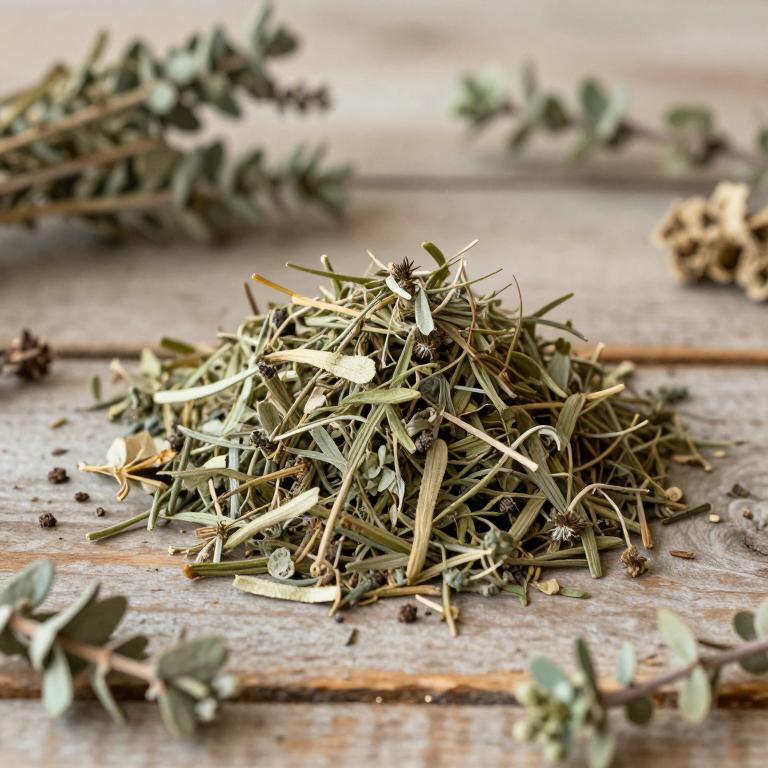
Hammada scoparia, scientifically known as Haloxylon scoparium, is a resilient desert shrub highly valued in traditional medicine. Renowned for its diverse pharmacological properties, it is frequently utilized to treat inflammatory conditions, gastrointestinal ailments, and skin disorders. This potent botanical offers significant therapeutic potential for modern pharmaceutical research and development.
- Family
- Amaranthaceae
- Native range
- Africa
- Parts used
- Leaf
- Common names
- Not available
- Scientific synonyms
- Arthrophytum Scoparium · Arthrophytum Scoparium · 4 more
Names and Synonyms
Scientific Names
Accepted name
Haloxylon scopariumSynonyms
- Arthrophytum scoparium
- Arthrophytum scoparium
- Haloxylon articulatum var. scoparium
- Haloxylon articulatum subsp. scoparium
- Hammada scoparia
- Hammada articulata subsp. scoparia
Regional and Traditional Names
German:
- Hammada scoparia
French:
- Hammada scoparia
Sources: Wikidata, Catalogue of Life
Taxonomical Classification
This plant belongs to the kingdom Plantae and is classified within the phylum Streptophyta and the class Equisetopsida. As a member of the subclass Magnoliidae and the order Caryophyllales, it is further categorized under the family Amaranthaecae. Its specific taxonomic placement is within the genus Haloxylon.
| Rank | Classification |
|---|---|
| Kingdom | Plantae |
| Phylum | Streptophyta |
| Class | Equisetopsida |
| Subclass | Magnoliidae |
| Order | Caryophyllales |
| Family | Amaranthaceae |
| Genus | Haloxylon |
Sources: The World Checklist of Vascular Plants (WCVP)
Distribution
This plant, Haloxylon scoparium, exhibits a specific geographical distribution across the North African region. It can be found growing within the diverse landscapes of Algeria. The species is also present in the territories of Egypt and Libya. Additionally, its range extends through the coastal and inland areas of Morocco. Finally, the plant completes its regional distribution within the borders of Tunisia.
| Region | Area |
|---|---|
| Northern Africa | Algeria |
| Northern Africa | Egypt |
| Northern Africa | Libya |
| Northern Africa | Morocco |
| Northern Africa | Tunisia |
| Northern Africa | Western Sahara |
| West Tropical Africa | Mauritania |
| Western Asia | Iraq |
| Western Asia | Lebanon-Syria |
| Western Asia | Palestine |
Sources: The World Checklist of Vascular Plants (WCVP)
Botanical Identification
Life history
The life history of Haloxylon scoparium is characterized by its status as a perennial species, allowing it to maintain its presence in arid environments over multiple growing seasons. As a long-lived woody shrub, it avoids the rapid turnover seen in annuals or the transitional phase of biennials, instead establishing a stable, persistent structure that can withstand prolonged periods of environmental stress. This perennial nature enables the plant to invest heavily in deep root systems and structural resilience, ensuring its survival through fluctuating seasonal cycles and contributing to the long-term stability of its native desert ecosystems.
- Lifecycle :
- perennial
Morphology
The morphology of Haloxylon scoparium is characterized by a versatile growth habit, manifesting primarily as a woody shrub or subshrub. It exhibits a self-supporting structure, functioning as an independent organism without reliance on a host as a parasite. In terms of its ecological positioning and habitat adaptation, the plant displays a broad range of environmental tolerances, spanning aquatic, semiaquatic, and terrestrial conditions. Its physical constitution is defined by its woody nature, providing the necessary structural integrity to maintain its growth form across various substrates.
- Aquatic :
- terrestrial
- Climber :
- self-supporting
- Growth form :
- shrub
- Growth form :
- subshrub
- Parasite :
- independent
- Woodiness :
- woody
Physiology
The physiology of Haloxylon scoparium is characterized by highly specialized adaptations to arid and semi-arid environments, most notably through its efficient photosynthetic pathway. The plant utilizes the C4 photosynthetic pathway, a mechanism that allows it to concentrate carbon dioxide around the enzyme Rubisco, thereby minimizing photorespiration and maximizing water-use efficiency. This C4 metabolism enables the plant to maintain high rates of carbon fixation even under intense solar radiation and high temperatures, which are typical of its natural habitats. Complementing this metabolic strategy, the plant exhibits succulent-like physiological traits, such as reduced leaf surface area and specialized water-storage tissues, which work in tandem with its C4 cycle to mitigate the effects of drought stress and optimize gas exchange under limited moisture conditions.
- Photosynthetic pathway :
- C4
Reproduction
The reproduction of Haloxylon scoparium is characterized by the production of minute seeds that play a critical role in its dispersal and colonization capabilities. The reproductive output is defined by a highly specific seed mass profile, where the average weight of a single seed is 0.00118 g. Within a population, there is slight natural variation in these dimensions, with seed masses ranging from a minimum of 0.00096 g to a maximum of 0.0014 g. This lightweight seed structure is an essential evolutionary trait, facilitating efficient distribution across its arid habitat.
- Seed mass max:
- 0.0014 g
- Seed mass mean:
- 0.00118 g
- Seed mass min:
- 0.00096 g
Sources: Global Inventory of Floras and Traits (GIFT)
Plant Parts
Haloxylon scoparium has 1 reported plant parts identified across 3 scientific publications and several other databases that are studied for medicinal purposes. The most consistently reported plant part include leaf.
| Plant part | Supporting sources | Consensus |
|---|---|---|
| Leaf | 3 supporting sources | ★★☆☆☆ |
Leaf
- Scientific reports
- Heliyon
- Memorias do Instituto Oswaldo Cruz
Chemicals
Haloxylon scoparium has 7 reported phytochemicals identified across 3 scientific publications and several other databases. The most consistently reported chemicals include Carnegine, Dihydroisocoumarin, Flavonoids, N-Methylisosalsoline, PSP.
| Chemical | Supporting sources | Consensus |
|---|---|---|
| Carnegine | 1 supporting sources | ★☆☆☆☆ |
| Dihydroisocoumarin | 1 supporting sources | ★☆☆☆☆ |
| Flavonoids | 1 supporting sources | ★☆☆☆☆ |
| N-Methylisosalsoline | 1 supporting sources | ★☆☆☆☆ |
| PSP | 1 supporting sources | ★☆☆☆☆ |
| Polysaccharide | 1 supporting sources | ★☆☆☆☆ |
| quercetin | 1 supporting sources | ★☆☆☆☆ |
Carnegine
- Memorias do Instituto Oswaldo Cruz
Dihydroisocoumarin
- Journal of natural products
Flavonoids
- Scientific reports
N-Methylisosalsoline
- Memorias do Instituto Oswaldo Cruz
PSP
- Heliyon
Polysaccharide
- Heliyon
quercetin
- Scientific reports
Conditions
Haloxylon scoparium has 1 reported investigations on conditions identified across 3 scientific publications and several other databases. The most consistently reported conditions include hepatocellular carcinoma.
| Condition | Supporting sources | Consensus |
|---|---|---|
| Hepatocellular carcinoma | 1 supporting sources | ★☆☆☆☆ |
Hepatocellular carcinoma
- Scientific reports
Preparations
Haloxylon scoparium has 4 reported preparations identified across 3 scientific publications and several other databases. The most consistently reported preparations include methanolic extract, dichloromethane extract, leaf extracts, methanol extract.
| Preparation | Supporting sources | Consensus |
|---|---|---|
| Methanolic extract | 2 supporting sources | ★☆☆☆☆ |
| Dichloromethane extract | 1 supporting sources | ★☆☆☆☆ |
| Leaf extracts | 1 supporting sources | ★☆☆☆☆ |
| Methanol extract | 1 supporting sources | ★☆☆☆☆ |
Methanolic extract
- Scientific reports
- Memorias do Instituto Oswaldo Cruz
Dichloromethane extract
- Journal of natural products
Leaf extracts
- Memorias do Instituto Oswaldo Cruz
Methanol extract
- Memorias do Instituto Oswaldo Cruz