Haloxylon salicornicum
Haloxylon salicornicum · Accepted scientific name
Scientific literature: Very Sparse (30 studies) · ★☆☆☆☆
, scientifically known as Haloxylon salicornicum, is a remarkable medicinal plant renowned for its unique therapeutic properties. Thriving in saline environments, this resilient species contains potent bioactive compounds used in traditional healing. It is increasingly studied for its antioxidant and anti-inflammatory potential, offering promising applications in modern pharmacology.
- Family
- Amaranthaceae
- Native range
- Africa
- Parts used
- Not available
- Common names
- Not available
- Scientific synonyms
- Hammada Salicornica · Haloxylon Articulatum · 8 more
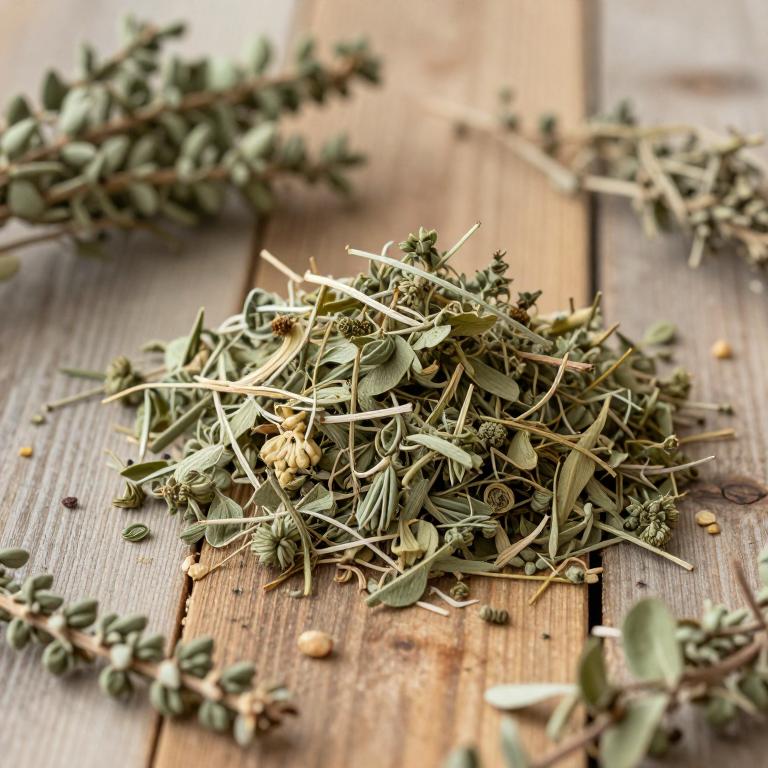
Names and Synonyms
Scientific Names
Accepted name
Haloxylon salicornicumSynonyms
- Hammada salicornica
- Haloxylon articulatum
- Hammada articulata
- Arthrophytum articulatum
- Hammada hispanica
- Caroxylon articulatum
- Haloxylon elegans
- Caroxylon salicornicum
- Haloxylon schweinfurthii
- Hammada elegans
Regional and Traditional Names
German:
- Hammada salicornica
- Caroxylon salicornicum
Sources: Wikidata, Catalogue of Life
Taxonomical Classification
This plant belongs to the kingdom Plantae and is classified under the phylum Streptophyta and class Equisetopsida. Within the subclass Magnoliidae, it is further organized into the order Caryophyllales and the family Amaranthaceae. Finally, its specific taxonomic identity is defined by the genus Haloxylon.
| Rank | Classification |
|---|---|
| Kingdom | Plantae |
| Phylum | Streptophyta |
| Class | Equisetopsida |
| Subclass | Magnoliidae |
| Order | Caryophyllales |
| Family | Amaranthaceae |
| Genus | Haloxylon |
Sources: The World Checklist of Vascular Plants (WCVP)
Distribution
This plant exhibits a widespread distribution across two major continental regions. In Northern Africa, its presence is documented within the territories of Algeria, Egypt, and Libya. The species also extends into Western Asia, where it can be found growing in Afghanistan. Furthermore, its range includes the vast landscapes of Iran. Together, these locations define the specific geographical boundaries of Haloxylon salicornicum.
| Region | Area |
|---|---|
| Northern Africa | Algeria |
| Northern Africa | Egypt |
| Northern Africa | Libya |
| Western Asia | Afghanistan |
| Western Asia | Iran |
| Western Asia | Iraq |
| Western Asia | Lebanon-Syria |
| Western Asia | Palestine |
| Western Asia | Sinai |
| Arabian Peninsula | Gulf States |
Sources: The World Checklist of Vascular Plants (WCVP)
Botanical Identification
Ecology
The ecology of Haloxylon salicornicum is defined by its specific altitudinal niche, as the species thrives within a distinct vertical distribution across its natural habitat. This medicinal plant is primarily found at elevations ranging from a minimum of 400 m AMSL to a maximum of 800 m AMSL. This relatively narrow elevational range suggests that the species is adapted to specific environmental conditions, such as particular temperature gradients, atmospheric pressures, and moisture levels, that are characteristic of these mid-to-low altitude zones. Such specialized distribution patterns often indicate a dependency on particular soil compositions or microclimates found within this specific topographic band.
- Elevational range max:
- 800 m AMSL
- Elevational range min:
- 400 m AMSL
Life history
The life history of Haloxylon salicornicum is characterized by its status as a perennial species, allowing it to maintain a long-term presence within its arid ecosystem. As a perennial, the plant avoids the complete senescence seen in annuals, instead investing energy into establishing robust, woody structures that can withstand prolonged periods of drought and environmental stress. This enduring lifecycle enables the plant to persist through fluctuating seasonal conditions, repeatedly undergoing vegetative growth and reproductive cycles over several years. By maintaining a permanent root system and structural integrity, it effectively manages resources to ensure survival and continued propagation within its specialized habitat.
- Lifecycle :
- perennial
Morphology
The morphology of Haloxylon salicornicum is characterized by its growth form as a woody subshrub that functions as a self-supporting, independent organism without parasitic tendencies. This plant exhibits a variable ecological habit, ranging from aquatic and semiaquatic to terrestrial environments. In terms of stature, it maintains a relatively low profile, with a plant height typically ranging from a minimum of 0.26 m to a maximum of 0.6 m. Its structural composition is distinctly woody, supporting its development as a compact, low-lying shrubby species.
- Aquatic :
- terrestrial
- Climber :
- self-supporting
- Growth form :
- shrub
- Growth form :
- subshrub
- Parasite :
- independent
- Plant height max:
- 0.6 m
- Plant height min:
- 0.26 m
- Woodiness :
- woody
Physiology
The physiology of Haloxylon salicornicum is characterized by a specialized metabolic framework designed to optimize carbon fixation under demanding environmental conditions, specifically utilizing a C4 photosynthetic pathway. Unlike plants employing the standard C3 pathway, this species utilizes a spatial separation of carbon fixation processes to minimize photorespiration and enhance water-use efficiency. By concentrating carbon dioxide around the enzyme RuBisCO through the initial carboxylation of phosphoenolpyruvate (PEP) in mesophyll cells, the plant maintains high photosynthetic rates even when stomatal conductance is limited. This C4 mechanism allows Haloxylon salicornicum to thrive in high-temperature or saline environments where maintaining a steep CO2 concentration gradient is essential for sustaining biomass production and metabolic vigor.
- Photosynthetic pathway :
- C4
Reproduction
The reproduction of Haloxylon salicornicun is characterized by a specific seasonal flowering cycle and a specialized method of seed distribution. The flowering period for this species begins in September and extends through October, representing a distinct window within its reproductive phenology. Following the pollination and maturation of seeds, the plant utilizes an anemochorous dispersal syndrome, meaning its seeds or reproductive units are primarily dispersed by the wind to colonize new habitats.
- Dispersal syndrome :
- anemochorous
- Flowering time :
- Sep
- Flowering time :
- Oct
Sources: Global Inventory of Floras and Traits (GIFT)
Chemicals
Haloxylon salicornicum has 16 reported phytochemicals identified across 0 scientific publications and several other databases. The most consistently reported chemicals include Flavonoids, 1,1-Diphenyl-2-picrylhydrazyl, CR, Condensed Tannins, Flavonoid.
| Chemical | Supporting sources | Consensus |
|---|---|---|
| Flavonoids | 2 supporting sources | ★☆☆☆☆ |
| 1,1-Diphenyl-2-picrylhydrazyl | 1 supporting sources | ★☆☆☆☆ |
| CR | 1 supporting sources | ★☆☆☆☆ |
| Condensed Tannins | 1 supporting sources | ★☆☆☆☆ |
| Flavonoid | 1 supporting sources | ★☆☆☆☆ |
| MN | 1 supporting sources | ★☆☆☆☆ |
| RUTIN | 1 supporting sources | ★☆☆☆☆ |
| SAPONIN | 1 supporting sources | ★☆☆☆☆ |
| dopamine | 1 supporting sources | ★☆☆☆☆ |
| kaempferol | 1 supporting sources | ★☆☆☆☆ |
Flavonoids
- Chemistry & biodiversity
- Life (Basel, Switzerland)
1,1-Diphenyl-2-picrylhydrazyl
- Journal of the Chinese Medical Association : JCMA
CR
- Journal of trace elements in medicine and biology : organ of the Society for Minerals and Trace Elements (GMS)
Condensed Tannins
- Journal of the Chinese Medical Association : JCMA
Flavonoid
- Journal of the Chinese Medical Association : JCMA
MN
- Journal of trace elements in medicine and biology : organ of the Society for Minerals and Trace Elements (GMS)
RUTIN
- Fitoterapia
SAPONIN
- Life (Basel, Switzerland)
dopamine
- EXCLI journal
kaempferol
- Fitoterapia
Activities
Haloxylon salicornicum has 7 reported activities identified across 0 scientific publications and several other databases. The most consistently reported activities include Antioxidant, Antimicrobial, Antibacterial, Anticancer, Antidiabetic.
| Activity | Supporting sources | Consensus |
|---|---|---|
| Antioxidant | 4 supporting sources | ★★☆☆☆ |
| Antimicrobial | 2 supporting sources | ★☆☆☆☆ |
| Antibacterial | 1 supporting sources | ★☆☆☆☆ |
| Anticancer | 1 supporting sources | ★☆☆☆☆ |
| Antidiabetic | 1 supporting sources | ★☆☆☆☆ |
| Antifungal | 1 supporting sources | ★☆☆☆☆ |
| Diuretic | 1 supporting sources | ★☆☆☆☆ |
Antioxidant
- Antibiotics (Basel, Switzerland)
- Cellular and molecular biology (Noisy-le-Grand, France)
- Chemistry & biodiversity
- EXCLI journal
Antimicrobial
- Antibiotics (Basel, Switzerland)
- Cellular and molecular biology (Noisy-le-Grand, France)
Antibacterial
- EXCLI journal
Anticancer
- Chemistry & biodiversity
Antidiabetic
- Journal of diabetes and metabolic disorders
Antifungal
- Cellular and molecular biology (Noisy-le-Grand, France)
Diuretic
- Fitoterapia
Preparations
Haloxylon salicornicum has 8 reported preparations identified across 0 scientific publications and several other databases. The most consistently reported preparations include 80% ethanol extract of its aerial parts, chloroform (CHCl3) extract, dried extract, ethanolic extracts, ethyl acetate (EtOAc) extract.
| Preparation | Supporting sources | Consensus |
|---|---|---|
| 80% ethanol extract of its aerial parts | 1 supporting sources | ★☆☆☆☆ |
| Chloroform (chcl3) extract | 1 supporting sources | ★☆☆☆☆ |
| Dried extract | 1 supporting sources | ★☆☆☆☆ |
| Ethanolic extracts | 1 supporting sources | ★☆☆☆☆ |
| Ethyl acetate (etoac) extract | 1 supporting sources | ★☆☆☆☆ |
| Extracts | 1 supporting sources | ★☆☆☆☆ |
| Hydroalcoholic extract | 1 supporting sources | ★☆☆☆☆ |
| N-butanol (n-buoh) extract | 1 supporting sources | ★☆☆☆☆ |
80% ethanol extract of its aerial parts
- Fitoterapia
Chloroform (chcl3) extract
- Fitoterapia
Dried extract
- Drugs under experimental and clinical research
Ethanolic extracts
- Cellular and molecular biology (Noisy-le-Grand, France)
Ethyl acetate (etoac) extract
- Fitoterapia
Extracts
- Archiv fur experimentelle Veterinarmedizin
Hydroalcoholic extract
- Chemistry & biodiversity
N-butanol (n-buoh) extract
- Fitoterapia