Haloxylon ammodendron
Haloxylon ammodendron · Accepted scientific name
Scientific literature: Very Sparse (1 studies) · ★☆☆☆☆
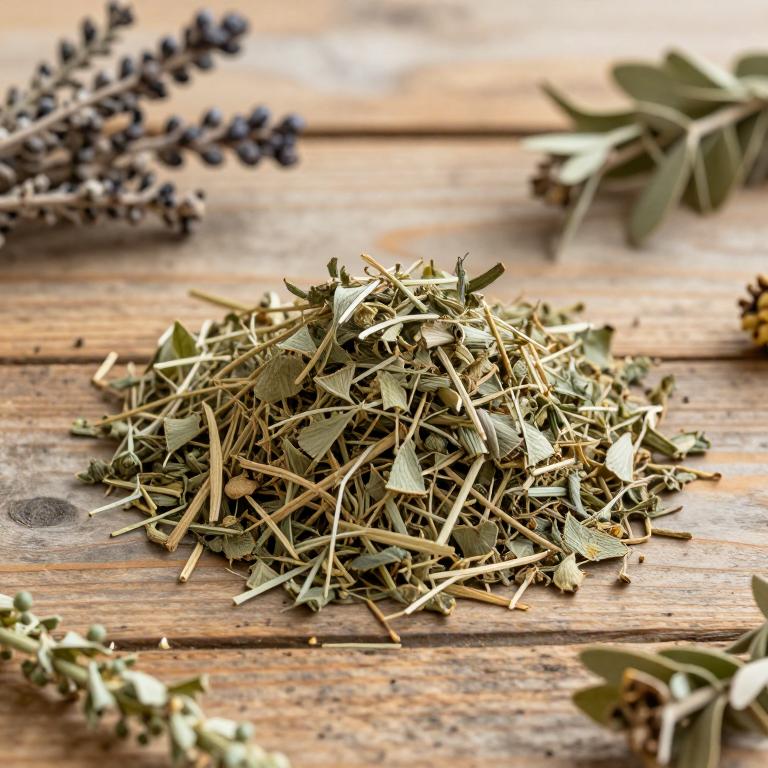
, scientifically known as Haloxylon ammodendron, is a resilient desert shrub prized for its diverse medicinal properties. Often referred to as the Saxaul tree, it contains bioactive compounds used in traditional remedies to treat inflammation, skin ailments, and respiratory issues, serving as a vital resource in arid ecosystems.
- Family
- Not available
- Native range
- Asia-Temperate
- Parts used
- Root
- Common names
- Not available
- Scientific synonyms
- Not available
Names and Synonyms
Scientific Names
Accepted name
Haloxylon ammodendronDistribution
This plant is primarily distributed throughout the vast regions of Central Asia. Its natural habitat spans across the nation of Kazakhstan, where it can be found in specific ecological niches. Additionally, the species is present within the borders of Kirgizstan and Turkmenistan. The distribution continues into the mountainous terrains of Tadzhikistan as well. Finally, the plant completes its regional range by occurring within Uzbekistan.
| Region | Area |
|---|---|
| Central Asia | Kazakhstan |
| Central Asia | Kirgizstan |
| Central Asia | Turkmenistan |
| Central Asia | Tadzhikistan |
| Central Asia | Uzbekistan |
| Western Asia | Afghanistan |
| Western Asia | Iran |
| China | Inner Mongolia |
| China | China North-Central |
| China | Qinghai |
Sources: The World Checklist of Vascular Plants (WCVP)
Botanical Identification
Ecology
The ecology of Haloxylon ammodendron is characterized by its specialized adaptation to arid environments, where it primarily inhabits desert landscapes and the riparian zones adjacent to rivers. This species is strategically positioned to manage extreme moisture fluctuations, thriving in sandy or silty soils typical of these ecosystems. Its distribution is closely tied to specific topographical settings, maintaining a mean elevational range of approximately 500 m AMSL. This placement within its ecological niche allows the plant to navigate the intense heat and water scarcity of desert climates while utilizing the relative moisture availability found near river systems.
- Elevational range mean:
- 500 m AMSL
- Habitat :
- desert, rivers
Life history
The life history of Haloxylon ammodendron is characterized by its classification as a perennial species, allowing it to establish a long-lasting presence within its arid ecosystem. As a perennial, the plant does not complete its life cycle in a single season but instead undergoes continuous growth and development over many years, which is a vital adaptation for surviving the fluctuating environmental conditions of desert habitats. This long-lived growth strategy enables the plant to develop extensive root systems and robust structures that can withstand prolonged periods of drought and seasonal variations, ensuring its persistence across multiple annual and biennial cycles within its natural range.
- Lifecycle :
- perennial
Morphology
The morphology of Haloxylon ammodendron is characterized by a woody growth form that primarily manifests as a shrub or a tree. It exhibits a versatile habitat adaptation, ranging from terrestrial to semiaquatic and aquatic environments. The plant is an independent organism, functioning without parasitic dependencies. In terms of stature, it reaches a height of at least 1 meter, with a maximum growth potential of up to 2 meters.
- Aquatic :
- terrestrial
- Growth form :
- tree
- Growth form :
- shrub
- Parasite :
- independent
- Plant height max:
- 2 m
- Plant height min:
- 1 m
- Woodiness :
- woody
Physiology
The physiology of Haloxylon ammodendron is characterized by highly specialized adaptations for survival in extreme arid environments, most notably through its efficient photosynthetic pathway. Unlike many desert plants that utilize Crassulacean Acid Metabolism (CAM) to conserve water, this species employs the C4 photosynthetic pathway, which allows it to effectively concentrate carbon dioxide and minimize photorespiration during periods of high light intensity and heat. This metabolic strategy enables the plant to maintain high rates of carbon fixation even when stomata are partially closed to mitigate transpiration losses. Furthermore, its physiological makeup includes robust mechanisms for osmotic adjustment and salt tolerance, allowing it to regulate internal water potential and manage ion concentrations within its tissues, ensuring metabolic stability despite the physiological drought typical of its desert habitat.
- Photosynthetic pathway :
- C4
Reproduction
The reproduction of Haloxylon ammodendron is characterized by a specific seasonal flowering window and the production of highly uniform, minute seeds. The flowering period typically commences in April and reaches its conclusion in May, although the timing can be variable across different environmental conditions. Following successful pollination, the plant produces seeds that exhibit extreme consistency in physical dimensions; the seed mass is remarkably stable, with a mean, maximum, and minimum value all recorded at 0.0026 g. This lack of variance in seed mass suggests a highly standardized reproductive output for the species.
- Flowering time :
- Apr
- Flowering time :
- May
- Seed mass mean:
- 0.0026 g
Sources: Global Inventory of Floras and Traits (GIFT)
Plant Parts
Haloxylon ammodendron has 1 reported plant parts identified across 1 scientific publications and several other databases that are studied for medicinal purposes. The most consistently reported plant part include root.
| Plant part | Supporting sources | Consensus |
|---|---|---|
| Root | 1 supporting sources | ★☆☆☆☆ |
Root
- Ying yong sheng tai xue bao = The journal of applied ecology
Preparations
Haloxylon ammodendron has 2 reported preparations identified across 1 scientific publications and several other databases. The most consistently reported preparations include root extracts extracted by ethanol, root extracts extracted by water.
| Preparation | Supporting sources | Consensus |
|---|---|---|
| Root extracts extracted by ethanol | 1 supporting sources | ★☆☆☆☆ |
| Root extracts extracted by water | 1 supporting sources | ★☆☆☆☆ |
Root extracts extracted by ethanol
- Ying yong sheng tai xue bao = The journal of applied ecology
Root extracts extracted by water
- Ying yong sheng tai xue bao = The journal of applied ecology