Halopeplis perfoliata
Halopeplis perfoliata · Accepted scientific name
Scientific literature: Very Sparse (1 studies) · ★☆☆☆☆
, scientifically known as Halopepliis perfoliata, is a resilient medicinal plant often found in coastal or saline environments. Renowned for its unique physiological adaptations, this species is valued in traditional medicine for its potential therapeutic properties, offering promising insights into treating inflammatory conditions and supporting overall holistic wellness.
- Family
- Amaranthaceae
- Native range
- Africa
- Parts used
- Not available
- Common names
- Not available
- Scientific synonyms
- Salicornia Perfoliata · Halostachys Perfoliata
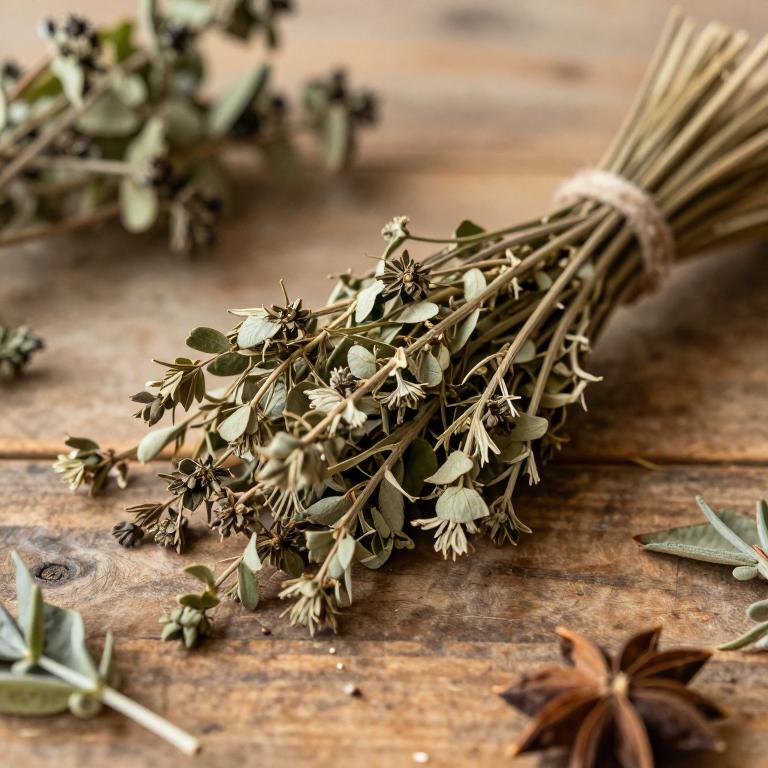
Names and Synonyms
Scientific Names
Accepted name
Halopeplis perfoliataSynonyms
- Salicornia perfoliata
- Halostachys perfoliata
Regional and Traditional Names
German:
- Salicornia perfoliata
- Halostachys perfoliata
Sources: Wikidata
Taxonomical Classification
This plant belongs to the kingdom Plantae and the phylum Streptophyta, falling under the class Equisetopsida and subclass Magnoliidae. Within the order Caryophyllales, it is classified under the family Amaranthaceae. Specifically, it is identified by the genus Halopeplis and the species name Halopepliis perfoliata.
| Rank | Classification |
|---|---|
| Kingdom | Plantae |
| Phylum | Streptophyta |
| Class | Equisetopsida |
| Subclass | Magnoliidae |
| Order | Caryophyllales |
| Family | Amaranthaceae |
| Genus | Halopeplis |
Sources: The World Checklist of Vascular Plants (WCVP)
Distribution
This plant exhibits a diverse geographical range spanning across several distinct regions. In Northern Africa, it can be found growing within the borders of Egypt. Its distribution extends into Northeast Tropical Africa, where it is documented in Eritrea as well as Sudan and South Sudan. Moving into Western Asia, the species is also present in Iran. Finally, the plant inhabits the Sinai region, completing its spread across these territories.
| Region | Area |
|---|---|
| Northern Africa | Egypt |
| Northeast Tropical Africa | Eritrea |
| Northeast Tropical Africa | Sudan-South Sudan |
| Western Asia | Iran |
| Western Asia | Sinai |
| Arabian Peninsula | Gulf States |
| Arabian Peninsula | Oman |
| Arabian Peninsula | Saudi Arabia |
| Arabian Peninsula | Yemen |
| Indian Subcontinent | Pakistan |
Sources: The World Checklist of Vascular Plants (WCVP)
Botanical Identification
Life history
The life history of Halopepliis perfoliata is characterized by a perennial lifecycle, allowing the plant to persist through multiple growing seasons. In terms of its structural life form, it is classified as a therophyte, meaning it completes its vegetative growth and relies on seeds to survive unfavorable periods, effectively functioning as an annual in its reproductive strategy while maintaining its perennial nature. This classification is further supported by its status as a therophyte under both life form designations, indicating a growth habit that remains close to the ground and relies on ephemeral seasonal activity for its survival and propagation.
- Life form :
- therophyte
- Lifecycle :
- perennial
Morphology
The morphology of Halopepliis perfoliata is characterized by a growth form that manifests as both a shrub and an herb, exhibiting a woody structure. This plant typically reaches an average height of approximately 1 meter. It is a terrestrial species, functioning as an independent organism rather than a parasite or an epiphyte, and it maintains a self-supporting habit without the need to climb.
- Aquatic :
- terrestrial
- Climber :
- self-supporting
- Epiphyte :
- terrestrial
- Growth form :
- shrub
- Growth form :
- herb
- Parasite :
- independent
- Plant height mean:
- 1 m
- Woodiness :
- woody
Physiology
The physiology of Halopeplis perfoliata is fundamentally characterized by its specialized metabolic adaptations to hypersaline and arid environments. A central component of its physiological framework is its photosynthetic pathway, which follows the C3 mechanism, necessitating precise internal regulation to manage gas exchange and water loss under high osmotic stress. To compensate for the limitations of the C3 pathway in saline conditions, the plant employs sophisticated osmoregulatory strategies, such as the accumulation of compatible solutes and the active sequestration of ions within vacuoles to maintain cellular turgor. This metabolic configuration, combined with its succulent morphological traits, allows the plant to maintain photosynthetic efficiency despite the high external salt concentrations that would otherwise disrupt enzymatic activities and carbon fixation processes.
- Photosynthetic pathway :
- C3
Reproduction
The reproduction of Halopepliis perfoliata is characterized by a highly flexible and variable flowering phenology, with the flowering period capable of occurring across all months of the year, from January through December. While the onset and conclusion of the flowering season are documented as being variable, the reproductive cycle is fundamentally defined by the production of extremely minute seeds. The seed mass of this species is remarkably consistent and minute, with a mean, maximum, and minimum value all recorded at 0.00012 g. This uniformity in seed size suggests a specialized dispersal strategy involving very light, uniform propagules.
- Flowering time :
- Mar
- Seed mass mean:
- 0.00012 g
Sources: Global Inventory of Floras and Traits (GIFT)
Chemicals
Halopeplis perfoliata has 1 reported phytochemicals identified across 0 scientific publications and several other databases. The most consistently reported chemicals include phenol.
| Chemical | Supporting sources | Consensus |
|---|---|---|
| phenol | 1 supporting sources | ★☆☆☆☆ |
phenol
- Saudi journal of biological sciences