Halocnemum strobilaceum
Halocnemum strobilaceum · Accepted scientific name
Scientific literature: Very Sparse (8 studies) · ★☆☆☆☆
Halocnemum strobilaceum, scientifically known as Halocnemum strobilaceum, is a salt-tolerant succulent shrub primarily found in saline desert ecosystems. Renowned for its resilience in harsh environments, this medicinal plant offers significant therapeutic potential, particularly in traditional practices for treating skin ailments and managing various inflammatory conditions through its bioactive compounds.
- Family
- Amaranthaceae
- Native range
- Europe
- Parts used
- Not available
- Common names
- Not available
- Scientific synonyms
- Halopeplis Strobilacea · Salicornia Drepanensis · 1 more
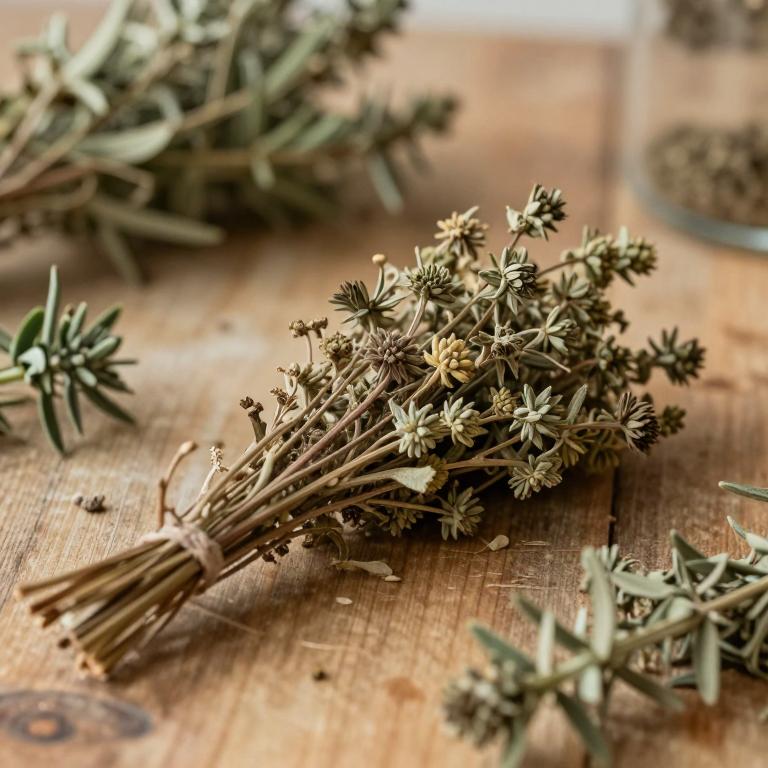
Names and Synonyms
Scientific Names
Accepted name
Halocnemum strobilaceumSynonyms
- Halopeplis strobilacea
- Salicornia drepanensis
- Sarcathria strobilacea
Regional and Traditional Names
Spanish:
- garbancillo
- salado
German:
- Salicornia strobilacea
- Halopeplis strobilacea
Sources: Wikidata, Catalogue of Life
Taxonomical Classification
This plant belongs to the kingdom Plantae and is classified within the phylum Streptophyta and the class Equisetopsida. Within the subclass Magnoliidae, it is organized under the order Caryophyllales and the family Amaranthaceae. It is further identified by its specific genus, Halocnemum.
| Rank | Classification |
|---|---|
| Kingdom | Plantae |
| Phylum | Streptophyta |
| Class | Equisetopsida |
| Subclass | Magnoliidae |
| Order | Caryophyllales |
| Family | Amaranthaceae |
| Genus | Halocnemum |
Sources: The World Checklist of Vascular Plants (WCVP)
Distribution
This plant exhibits a specific distribution pattern across several regions of Europe. In Southeastern Europe, its presence is documented in Albania, Greece, and Italy. It can also be found within the European portion of Türkiye. Additionally, the species extends into Eastern Europe, specifically throughout East European Russia. Together, these locations define the primary geographical range of Halocnemum strobilaceum.
| Region | Area |
|---|---|
| Southeastern Europe | Albania |
| Southeastern Europe | Greece |
| Southeastern Europe | Italy |
| Southeastern Europe | Türkiye-in-Europe |
| Eastern Europe | East European Russia |
| Northeast Tropical Africa | Eritrea |
| Northeast Tropical Africa | Sudan-South Sudan |
| Siberia | Altay |
| Siberia | Tuva |
| Siberia | West Siberia |
Sources: The World Checklist of Vascular Plants (WCVP)
Botanical Identification
Ecology
The ecology of Halocnemum strobilaceum is characterized by its highly specialized adaptation to hypersaline environments, specifically occupying saline places, seas, and coastal shores. This plant thrives in extreme saline conditions where few other species can survive, anchoring itself within coastal ecosystems. Its distribution is restricted to a specific altitudinal band, with an elevational range spanning from a minimum of 300 m AMSL to a maximum of 400 m AMSL.
- Elevational range max:
- 400 m AMSL
- Elevational range min:
- 300 m AMSL
- Habitat :
- saline places, sea, shores
Life history
The life history of Halochaenema strobilaceum is characterized by a perennial lifecycle, allowing the plant to persist through multiple growing seasons. In terms of its growth architecture and positioning relative to the ground surface, it is classified under the life form of a chamaephyte, a designation that reflects its habit of maintaining its buds and reproductive structures just above the soil level. This specific life form, consistent across both its structural classification (chamaephyte) and its ecological niche (chamaephyte), enables the species to navigate its specific environmental conditions through a stable, long-lived existence.
- Life form :
- chamaephyte
- Lifecycle :
- perennial
Morphology
The morphology of Halocnemum strobilaceum is characterized by its distinct growth form and ecological adaptations. It functions as a woody subshrub, exhibiting a structural habit that transitions between a small shrub and a more compact subshrub form. While it is primarily categorized as a terrestrial species in terms of its epiphytic status, its life cycle is deeply linked to saline environments, though it remains an independent organism rather than a parasite. The plant is entirely self-supporting, lacking any climbing or vine-like characteristics such as liana or facultative climbing mechanisms. Its physical structure is defined by its woody nature, providing the necessary rigidity for its development in its specific niche.
- Aquatic :
- terrestrial
- Climber :
- self-supporting
- Epiphyte :
- terrestrial
- Growth form :
- shrub
- Growth form :
- subshrub
- Parasite :
- independent
- Woodiness :
- woody
Physiology
The physiology of Halocnemum strobilaceum is fundamentally defined by its specialized adaptations to hypersaline and arid environments, characterized primarily by a C3 photosynthetic pathway. As a C3 plant, its carbon fixation process relies on the direct carboxylation of ribulose-1,5-bisphosphate by the enzyme RuBisCO within the mesophyll cells, which necessitates complex physiological mechanisms to manage the high osmotic stress inherent to its saline habitat. To maintain metabolic functions despite the C3 pathway's inherent vulnerability to photorespiration in high-temperature settings, the plant employs sophisticated osmoregulatory strategies, including the accumulation of compatible solutes and the sequestration of inorganic ions within vacuoles to regulate cellular water potential. This physiological framework allows the plant to sustain photosynthetic efficiency and gas exchange while navigating the extreme salinity and evaporative demands of its ecosystem.
- Photosynthetic pathway :
- C3
Reproduction
The reproduction of Halocnemum strobilaceum is characterized by a specific seasonal flowering window and highly uniform seed production. The flowering period typically commences in August and continues through October, though the timing can be variable depending on environmental conditions. During this reproductive phase, the plant produces seeds that exhibit remarkable consistency in size; the seed mass is measured at a mean of 8e-04 g, with both the minimum and maximum recorded values also being 8e-04 g, indicating a very narrow range of seed mass distribution.
- Flowering time :
- Aug
- Flowering time :
- Oct
- Seed mass mean:
- 8e-04 g
Sources: Global Inventory of Floras and Traits (GIFT)
Chemicals
Halocnemum strobilaceum has 5 reported phytochemicals identified across 0 scientific publications and several other databases. The most consistently reported chemicals include 7-hydroxy-3-methylcoumarin, Heraclenin, Icariin, Oreoselone, coumarin.
| Chemical | Supporting sources | Consensus |
|---|---|---|
| 7-hydroxy-3-methylcoumarin | 1 supporting sources | ★☆☆☆☆ |
| Heraclenin | 1 supporting sources | ★☆☆☆☆ |
| Icariin | 1 supporting sources | ★☆☆☆☆ |
| Oreoselone | 1 supporting sources | ★☆☆☆☆ |
| coumarin | 1 supporting sources | ★☆☆☆☆ |
7-hydroxy-3-methylcoumarin
- Fitoterapia
Heraclenin
- Fitoterapia
Icariin
- Iranian journal of pharmaceutical research : IJPR
Oreoselone
- Fitoterapia
coumarin
- Fitoterapia
Activities
Halocnemum strobilaceum has 2 reported activities identified across 0 scientific publications and several other databases. The most consistently reported activities include Antioxidant, Cytotoxic.
| Activity | Supporting sources | Consensus |
|---|---|---|
| Antioxidant | 1 supporting sources | ★☆☆☆☆ |
| Cytotoxic | 1 supporting sources | ★☆☆☆☆ |
Antioxidant
- Iranian journal of pharmaceutical research : IJPR
Cytotoxic
- Iranian journal of pharmaceutical research : IJPR