Harsh Hakea
Hakea prostrata · Accepted scientific name
Scientific literature: Very Sparse (1 studies) · ★☆☆☆☆
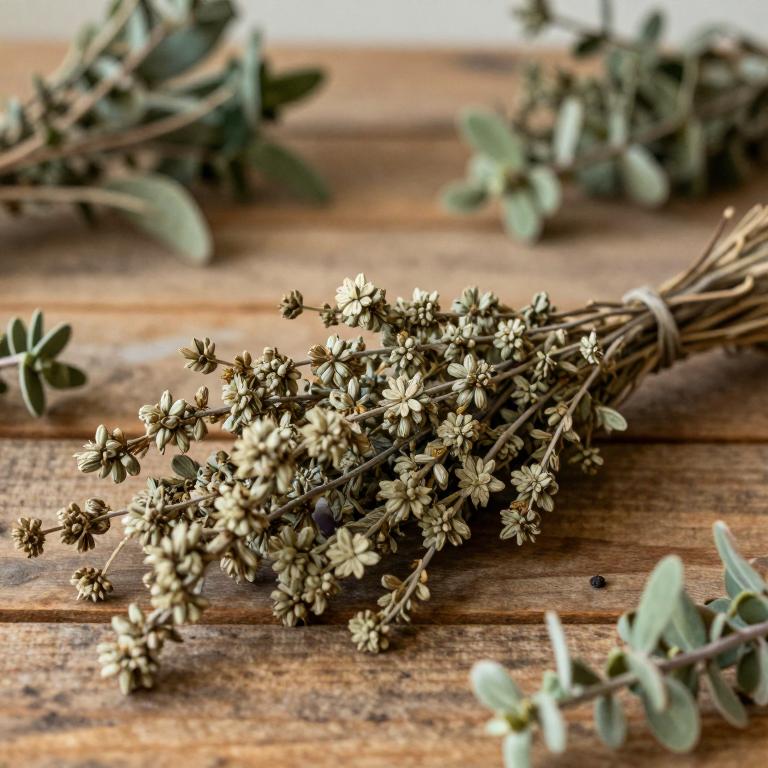
Harsh Hakea, scientifically known as Hakea prostrata, is a resilient, low-growing shrub native to Australia. Distinguished by its prostrate habit and delicate, needle-like foliage, this hardy plant thrives in sandy soils. It offers significant ornamental value, producing seasonal blooms that support local biodiversity and enhance natural landscape beauty.
- Family
- Proteaceae
- Native range
- Australasia
- Parts used
- Not available
- Common names
- Harsh Hakea
- Scientific synonyms
- Hakea Glabella · Hakea Glabella Subsp. Prostrata
Names and Synonyms
Common Names
- Harsh Hakea
Scientific Names
Accepted name
Hakea prostrataSynonyms
- Hakea glabella
- Hakea glabella subsp. prostrata
Sources: Wikidata, Catalogue of Life
Taxonomical Classification
This plant belongs to the kingdom Plantae and the phylum Streptophyta, falling under the class Equisetopsida and subclass Magnoliidae. Within the order Proteales, it is a member of the family Proteaceae. Finally, it is classified under the genus Hakea, specifically as the species Hakea prostata.
| Rank | Classification |
|---|---|
| Kingdom | Plantae |
| Phylum | Streptophyta |
| Class | Equisetopsida |
| Subclass | Magnoliidae |
| Order | Proteales |
| Family | Proteaceae |
| Genus | Hakea |
Sources: The World Checklist of Vascular Plants (WCVP)
Distribution
This plant is characterized by a very specific and localized geographical distribution. It is found exclusively within the country of Australia. More specifically, its occurrence is restricted to the state of Western Australia. Because of this limited range, it does not inhabit any other parts of the world. Consequently, its natural habitat is tied directly to the unique ecosystems of the Western Australian region.
| Region | Area |
|---|---|
| Australia | Western Australia |
Sources: The World Checklist of Vascular Plants (WCVP)
Botanical Identification
Life history
The life history of Hakea prostrata is characterized by its status as a perennial species, allowing it to maintain a presence in its natural habitat over multiple growing seasons. As a long-lived plant, it avoids the rapid turnover seen in annuals or biennials, instead investing energy into sustained structural growth and reproductive stability. This perennial lifecycle enables the plant to navigate seasonal fluctuations and establish a persistent footprint within its ecosystem, contributing to the long-term stability of its community.
- Lifecycle :
- perennial
Morphology
The morphology of Hakea prostata is characterized by its growth form as a woody shrub, which functions as a self-supporting plant rather than a climber. It is an independent species, not exhibiting any parasitic behavior, and thrives in terrestrial environments. In terms of stature, the plant typically reaches a minimum height of 1 meter, with the potential to grow up to a maximum height of 4 meters.
- Aquatic :
- terrestrial
- Climber :
- self-supporting
- Growth form :
- shrub
- Parasite :
- independent
- Plant height max:
- 4 m
- Plant height min:
- 1 m
- Woodiness :
- woody
Physiology
The physiology of Hakea prostata is characterized by a metabolic framework centered on a C3 photosynthetic pathway, which governs its carbon fixation and energy production processes. As a member of the Proteaceae family, its physiological adaptations are finely tuned to optimize gas exchange and water use efficiency within its specific environmental niche. Through the C3 pathway, the plant utilizes the enzyme RuBisCO to fix atmospheric carbon dioxide directly into organic compounds during the Calvin cycle. This metabolic strategy influences its stomatal conductance and transpiration rates, as the plant must balance the intake of CO2 for photosynthesis with the necessity of minimizing water loss. The efficiency of this photosynthetic mechanism, coupled with its specialized leaf morphology, dictates the plant's overall growth rate, biomass accumulation, and its ability to respond to varying light intensities and moisture availability in its habitat.
- Photosynthetic pathway :
- C3
Reproduction
Reproduction in Hakea prostrata is characterized by specific seed characteristics that facilitate its life cycle. The species produces seeds with a highly consistent mass, showing no variance across the recorded population. The seed mass remains constant at a mean value of 0.06 g, with both the maximum and minimum recorded values also being 0.06 g. This uniformity in seed mass suggests a highly stabilized reproductive strategy regarding the energy investment per individual propagule.
- Seed mass mean:
- 0.06 g
Sources: Global Inventory of Floras and Traits (GIFT)
Chemicals
Hakea prostrata has 1 reported phytochemicals identified across 0 scientific publications and several other databases. The most consistently reported chemicals include Pi.
| Chemical | Supporting sources | Consensus |
|---|---|---|
| Pi | 1 supporting sources | ★☆☆☆☆ |
Pi
- The New phytologist