African Redwood
Hagenia abyssinica · Accepted scientific name
Scientific literature: Very Sparse (25 studies) · ★☆☆☆☆
African Redwood, scientifically known as Hagenia abyssinica, is a majestic tree native to the high-altitude forests of East Africa. Renowned for its medicinal properties, various parts of this plant are traditionally used to treat ailments like inflammation, fever, and digestive issues, offering significant therapeutic potential in ethnobotanical studies.
- Family
- Rosaceae
- Native range
- Africa
- Parts used
- Flower · Leaf
- Common names
- African Redwood
- Scientific synonyms
- Hagenia Anthelmintica · Brayera Anthelmintica · 6 more
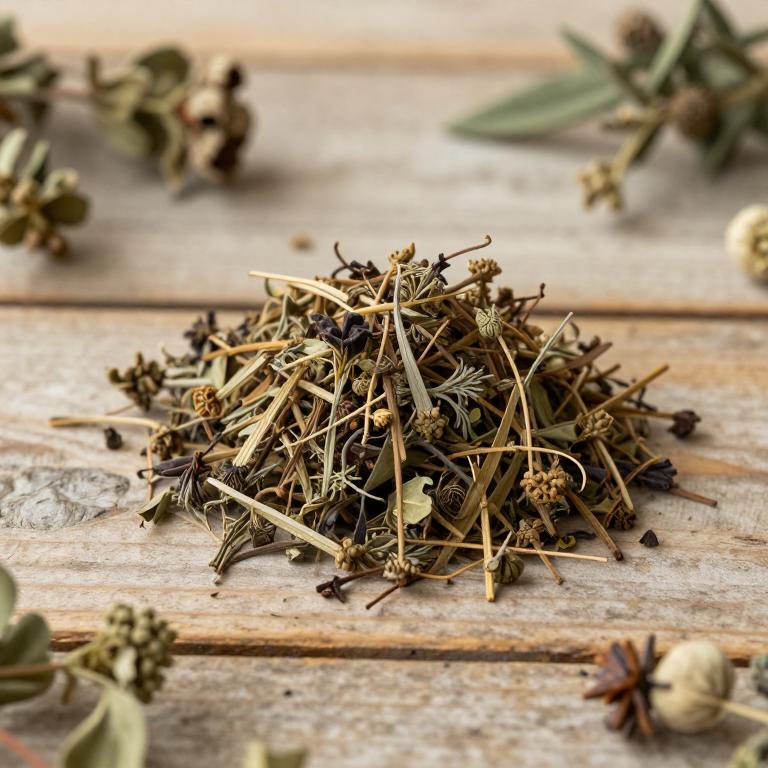
Names and Synonyms
Common Names
- African Redwood
Scientific Names
Accepted name
Hagenia abyssinicaSynonyms
- Hagenia anthelmintica
- Brayera anthelmintica
- Banksia abyssinica
- Brayera abyssinica
- Cusso abyssinica
- Hagenia abyssinica var. viridifolia
- Brayera anthelmintica var. psilanthera
- Brayera anthelmintica var. epirhagadotricha
Regional and Traditional Names
Spanish:
- Hagenia
- Brayera
- Brayera anthelmintica
- Banksia abyssinica
- Hagenia anthelmintica
German:
- Kosobaum
- Kossobaum
- Kosobaum
French:
- Brayera anthelmintica
- Brayera
- Cossoutier
Sources: Wikidata, Catalogue of Life
Taxonomical Classification
This plant, Hagenia abyssinica, belongs to the kingdom Plantae and the phylum Streptophyta. Within the class Equisetopsida and subclass Magnoliidae, it is classified under the order Rosales and the family Rosaceae. Its taxonomic identity is completed by its placement within the genus Hagenia.
| Rank | Classification |
|---|---|
| Kingdom | Plantae |
| Phylum | Streptophyta |
| Class | Equisetopsida |
| Subclass | Magnoliidae |
| Order | Rosales |
| Family | Rosaceae |
| Genus | Hagenia |
Sources: The World Checklist of Vascular Plants (WCVP)
Distribution
This plant exhibits a specific geographical distribution across several key regions of the African continent. In West-Central Tropical Africa, it can be found growing in Burundi and Rwanda. The species is also documented within the vast landscapes of the DR Congo. Moving toward Northeast Tropical Africa, its presence extends into Eritrea. Finally, it is well-established in the highland regions of Ethiopia.
| Region | Area |
|---|---|
| West-Central Tropical Africa | Burundi |
| West-Central Tropical Africa | Rwanda |
| West-Central Tropical Africa | DR Congo |
| Northeast Tropical Africa | Eritrea |
| Northeast Tropical Africa | Ethiopia |
| Northeast Tropical Africa | Sudan-South Sudan |
| East Tropical Africa | Kenya |
| East Tropical Africa | Tanzania |
| East Tropical Africa | Uganda |
| South Tropical Africa | Malawi |
Sources: The World Checklist of Vascular Plants (WCVP)
Botanical Identification
Ecology
The ecology of Hagenia abyssinica is defined by its specific niche within African montane ecosystems, where it primarily flourishes in high-altitude environments. Although certain ecological surveys may note its presence in various topographical zones, its distribution is most characteristic of Afro-alpine and sub-alpine belts. While some instances of its presence might be observed in lower elevations, its optimal growth occurs in the moist, temperate conditions of highland forests and scrublands. It typically thrives in areas with high humidity and well-drained soils, often serving as a key component of the canopy in transitional montane vegetation zones.
- Habitat :
- Lowland
Life history
The life history of Hagenia abyssinicica is characterized by its status as a perennial organism, allowing it to establish long-term presence within its high-altitude afro-alpine ecosystem. As a phanerophyte, the plant maintains its reproductive buds well above the ground level, typically developing into a large, woody tree or shrub structure that can dominate its habitat. Its biological classification as a phanerophyte ensures that its vital structures are elevated and protected, facilitating a stable life cycle that persists through various seasonal shifts over many years.
- Life form :
- phanerophyte
- Lifecycle :
- perennial
Morphology
The morphology of Hagenia abyssinicica is characterized by its robust growth form as a woody tree, reaching an average plant height of approximately 15 m. As an independent organism, it does not function as a parasite and is classified as a terrestrial plant rather than an epiphyte. The plant is a self-supporting species, meaning it does not require external structures for climbing, maintaining its structural integrity through its woody composition.
- Climber :
- self-supporting
- Epiphyte :
- terrestrial
- Growth form :
- tree
- Parasite :
- independent
- Plant height mean:
- 15 m
- Woodiness :
- woody
Physiology
The physiology of Hagenia abyssinica is characterized by a C3 photosynthetic pathway, which involves the direct fixation of carbon dioxide through the Calvin cycle, a common adaptation for plants growing in the temperate and afro-alpine environments it inhabits. In terms of nutrient acquisition and symbiotic relationships, this species is not a nitrogen fixer, meaning it lacks the specialized root nodules required to convert atmospheric nitrogen into a bioavailable form and must instead rely on the uptake of nitrates and ammonium from the soil.
- Nitrogen fixer :
- no
- Photosynthetic pathway :
- C3
Reproduction
The reproduction of Hagenia abyssinica is characterized by a biotic pollination syndrome, relying on living organisms to facilitate the transfer of pollen. Specifically, the plant utilizes insect-mediated pollination, with bees serving as a key functional group in the fertilization process. The species exhibits a lack of self-fertilization, indicating that it is an obligate outcrosser, which promotes genetic diversity within populations. Following successful pollination, the plant produces seeds with a highly variable mass, ranging from a minimum of 0.0025 g to a maximum of 4.202 g, with a calculated mean seed mass of 2.10225 g.
- Pollination syndrome :
- insect
- Pollination syndrome :
- bee
- Pollination syndrome :
- biotic
- Seed mass max:
- 4.202 g
- Seed mass mean:
- 2.10225 g
- Seed mass min:
- 0.0025 g
- Self fertilization :
- absent
Sources: Global Inventory of Floras and Traits (GIFT)
Plant Parts
Hagenia abyssinica has 3 reported plant parts identified across 7 scientific publications and several other databases that are studied for medicinal purposes. The most consistently reported plant part include flower, leaf, root.
| Plant part | Supporting sources | Consensus |
|---|---|---|
| Flower | 5 supporting sources | ★★★☆☆ |
| Leaf | 1 supporting sources | ★☆☆☆☆ |
| Root | 1 supporting sources | ★☆☆☆☆ |
Flower
- Journal of experimental pharmacology
- Journal of ethnobiology and ethnomedicine
- Phytomedicine : international journal of phytotherapy and phytopharmacology
- Journal of pharmaceutical and biomedical analysis
- PloS one
Leaf
- Evidence-based complementary and alternative medicine : eCAM
Root
- BMC veterinary research
Chemicals
Hagenia abyssinica has 4 reported phytochemicals identified across 7 scientific publications and several other databases. The most consistently reported chemicals include Ledol, Vanillic acid, p-Hydroxybenzoic acid, protocatechuic acid.
| Chemical | Supporting sources | Consensus |
|---|---|---|
| Ledol | 1 supporting sources | ★☆☆☆☆ |
| Vanillic acid | 1 supporting sources | ★☆☆☆☆ |
| p-Hydroxybenzoic acid | 1 supporting sources | ★☆☆☆☆ |
| protocatechuic acid | 1 supporting sources | ★☆☆☆☆ |
Ledol
- Phytomedicine : international journal of phytotherapy and phytopharmacology
Vanillic acid
- Journal of pharmaceutical and biomedical analysis
p-Hydroxybenzoic acid
- Journal of pharmaceutical and biomedical analysis
protocatechuic acid
- Journal of pharmaceutical and biomedical analysis
Activities
Hagenia abyssinica has 2 reported activities identified across 7 scientific publications and several other databases. The most consistently reported activities include Anthelmintic, Cytotoxic.
| Activity | Supporting sources | Consensus |
|---|---|---|
| Anthelmintic | 2 supporting sources | ★☆☆☆☆ |
| Cytotoxic | 1 supporting sources | ★☆☆☆☆ |
Anthelmintic
- Parasitology
- Journal of ethnobiology and ethnomedicine
Cytotoxic
- Phytomedicine : international journal of phytotherapy and phytopharmacology
Conditions
Hagenia abyssinica has 5 reported investigations on conditions identified across 7 scientific publications and several other databases. The most consistently reported conditions include diabetes mellitus, anthelmintic, bacterial infections, diarrhea, optic atrophy.
| Condition | Supporting sources | Consensus |
|---|---|---|
| Diabetes mellitus | 2 supporting sources | ★☆☆☆☆ |
| Anthelmintic | 1 supporting sources | ★☆☆☆☆ |
| Bacterial infections | 1 supporting sources | ★☆☆☆☆ |
| Diarrhea | 1 supporting sources | ★☆☆☆☆ |
| Optic atrophy | 1 supporting sources | ★☆☆☆☆ |
Diabetes mellitus
- Journal of experimental pharmacology
- Metabolism open
Anthelmintic
- Journal of ethnobiology and ethnomedicine
Bacterial infections
- Evidence-based complementary and alternative medicine : eCAM
Diarrhea
- Evidence-based complementary and alternative medicine : eCAM
Optic atrophy
- Toxicology and applied pharmacology
Preparations
Hagenia abyssinica has 12 reported preparations identified across 7 scientific publications and several other databases. The most consistently reported preparations include solvent fractions, 80% methanolic flower crude extract, Essential oils, Kosso, ethanol extracts.
| Preparation | Supporting sources | Consensus |
|---|---|---|
| Solvent fractions | 2 supporting sources | ★☆☆☆☆ |
| 80% methanolic flower crude extract | 1 supporting sources | ★☆☆☆☆ |
| Essential oils | 1 supporting sources | ★☆☆☆☆ |
| Kosso | 1 supporting sources | ★☆☆☆☆ |
| Ethanol extracts | 1 supporting sources | ★☆☆☆☆ |
| Ethyl acetate fraction | 1 supporting sources | ★☆☆☆☆ |
| Flower crude extract | 1 supporting sources | ★☆☆☆☆ |
| Flower extract | 1 supporting sources | ★☆☆☆☆ |
| Flowers | 1 supporting sources | ★☆☆☆☆ |
| Methanol crude extract | 1 supporting sources | ★☆☆☆☆ |
Solvent fractions
- Evidence-based complementary and alternative medicine : eCAM
- Journal of experimental pharmacology
80% methanolic flower crude extract
- Journal of experimental pharmacology
Essential oils
- Phytomedicine : international journal of phytotherapy and phytopharmacology
Kosso
- Toxicology and applied pharmacology
Ethanol extracts
- PloS one
Ethyl acetate fraction
- Journal of experimental pharmacology
Flower crude extract
- Journal of experimental pharmacology
Flower extract
- Journal of experimental pharmacology
Flowers
- Journal of ethnobiology and ethnomedicine
Methanol crude extract
- Evidence-based complementary and alternative medicine : eCAM