Haemodorum simplex
Haemodorum simplex · Accepted scientific name
Scientific literature: Very Sparse (11 studies) · ★☆☆☆☆
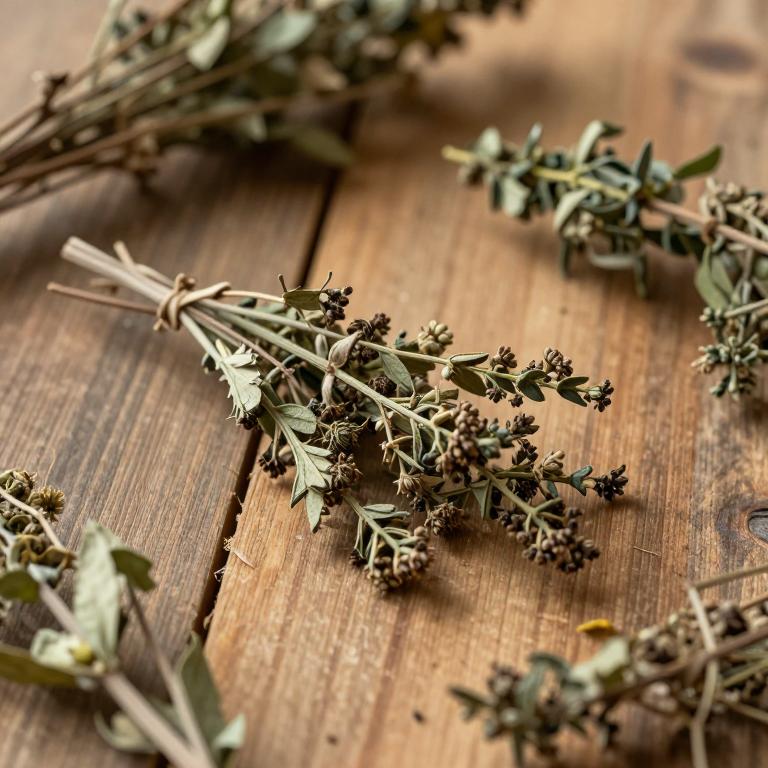
Haemodorum simplex, is a distinctive medicinal plant belonging to the Haemodoraceae family. Renowned for its vibrant floral displays and unique physiological properties, this species is valued in traditional medicine. It offers significant bioactive potential, making it a subject of interest for pharmacological research into its therapeutic healing capabilities.
- Family
- Haemodoraceae
- Native range
- Australasia
- Parts used
- Not available
- Common names
- Not available
- Scientific synonyms
- Haemodorum Polycephalum
Names and Synonyms
Scientific Names
Accepted name
Haemodorum simplexSynonyms
- Haemodorum polycephalum
Sources: Wikidata
Taxonomical Classification
This plant belongs to the kingdom Plantae and the phylum Streptophyta, falling under the class Equisetopsida and subclass Magnoliidae. Within the order Commelinales, it is classified under the family Haemodoraceae. Finally, it is identified by its genus, Haemodorum.
| Rank | Classification |
|---|---|
| Kingdom | Plantae |
| Phylum | Streptophyta |
| Class | Equisetopsida |
| Subclass | Magnoliidae |
| Order | Commelinales |
| Family | Haemodoraceae |
| Genus | Haemodorum |
Sources: The World Checklist of Vascular Plants (WCVP)
Distribution
This plant is specifically recognized for its limited and distinct geographical range. It is native to the continent of Australia, where it can be found growing in the wild. Within this vast landmass, its presence is primarily concentrated in the state of Western Australia. This localized distribution suggests that the species is adapted to the specific environmental conditions of that particular region. Consequently, researchers focusing on this species must direct their studies toward the western coastal or inland areas of the country.
| Region | Area |
|---|---|
| Australia | Western Australia |
Sources: The World Checklist of Vascular Plants (WCVP)
Botanical Identification
Life history
The life history of Haemodorum simplex is characterized by its status as a perennial plant, ensuring its presence in its ecosystem over multiple growing seasons. As a member of the cryptophyte group, it employs specialized survival strategies to protect its regenerative organs during unfavorable periods. Specifically, its life form is classified as a geophyte, meaning it survives through underground storage organs such as rhizomes or tubers that allow it to endure environmental stressors and emerge during favorable conditions.
- Life form :
- geophyte
- Life form :
- cryptophyte
- Lifecycle :
- perennial
Morphology
The morphology of Haemodorum simplex is characterized by its growth form as a non-woody herb, specifically classified as a forb. This plant is a self-supporting species that does not exhibit climbing behavior, functioning as an independent organism rather than a parasite. It primarily occupies terrestrial habitats, though its ecological range can span across aquatic and semiaquatic environments. In terms of stature, it is a relatively small plant, with a height ranging from a minimum of 0.2 m to a maximum of 0.65 m.
- Aquatic :
- terrestrial
- Climber :
- self-supporting
- Epiphyte :
- terrestrial
- Growth form :
- herb
- Parasite :
- independent
- Plant height max:
- 0.65 m
- Plant height min:
- 0.2 m
- Woodiness :
- non-woody
Reproduction
The reproduction of Haemodorum simplex is characterized by the production of seeds that exhibit a highly consistent and uniform physical profile. Detailed morphological analysis reveals that the seed mass is strictly uniform across observed samples, with a mean seed mass of 0.00512 g. This consistency is reflected in the specific data points for the species, as both the maximum and minimum recorded seed mass values are identical at 0.00512 g. This lack of variance in seed mass suggests a highly stabilized reproductive strategy regarding the energy investment per individual seed.
- Seed mass mean:
- 0.00512 g
Sources: Global Inventory of Floras and Traits (GIFT)
Chemicals
Haemodorum simplex has 5 reported phytochemicals identified across 0 scientific publications and several other databases. The most consistently reported chemicals include dilatrin, haemodorol, haemodorone, haemodorose, xiphidone.
| Chemical | Supporting sources | Consensus |
|---|---|---|
| dilatrin | 1 supporting sources | ★☆☆☆☆ |
| haemodorol | 1 supporting sources | ★☆☆☆☆ |
| haemodorone | 1 supporting sources | ★☆☆☆☆ |
| haemodorose | 1 supporting sources | ★☆☆☆☆ |
| xiphidone | 1 supporting sources | ★☆☆☆☆ |
dilatrin
- Journal of natural products
haemodorol
- Journal of natural products
haemodorone
- Journal of natural products
haemodorose
- Journal of natural products
xiphidone
- Journal of natural products
Activities
Haemodorum simplex has 4 reported activities identified across 0 scientific publications and several other databases. The most consistently reported activities include Antibacterial, Antifungal, Antiviral, Cytotoxic.
| Activity | Supporting sources | Consensus |
|---|---|---|
| Antibacterial | 1 supporting sources | ★☆☆☆☆ |
| Antifungal | 1 supporting sources | ★☆☆☆☆ |
| Antiviral | 1 supporting sources | ★☆☆☆☆ |
| Cytotoxic | 1 supporting sources | ★☆☆☆☆ |
Antibacterial
- Journal of natural products
Antifungal
- Journal of natural products
Antiviral
- Journal of natural products
Cytotoxic
- Journal of natural products
Preparations
Haemodorum simplex has 1 reported preparations identified across 0 scientific publications and several other databases. The most consistently reported preparations include crude extract of both the bulbaceous and aerial components.
| Preparation | Supporting sources | Consensus |
|---|---|---|
| Crude extract of both the bulbaceous and aerial components | 1 supporting sources | ★☆☆☆☆ |
Crude extract of both the bulbaceous and aerial components
- Journal of natural products